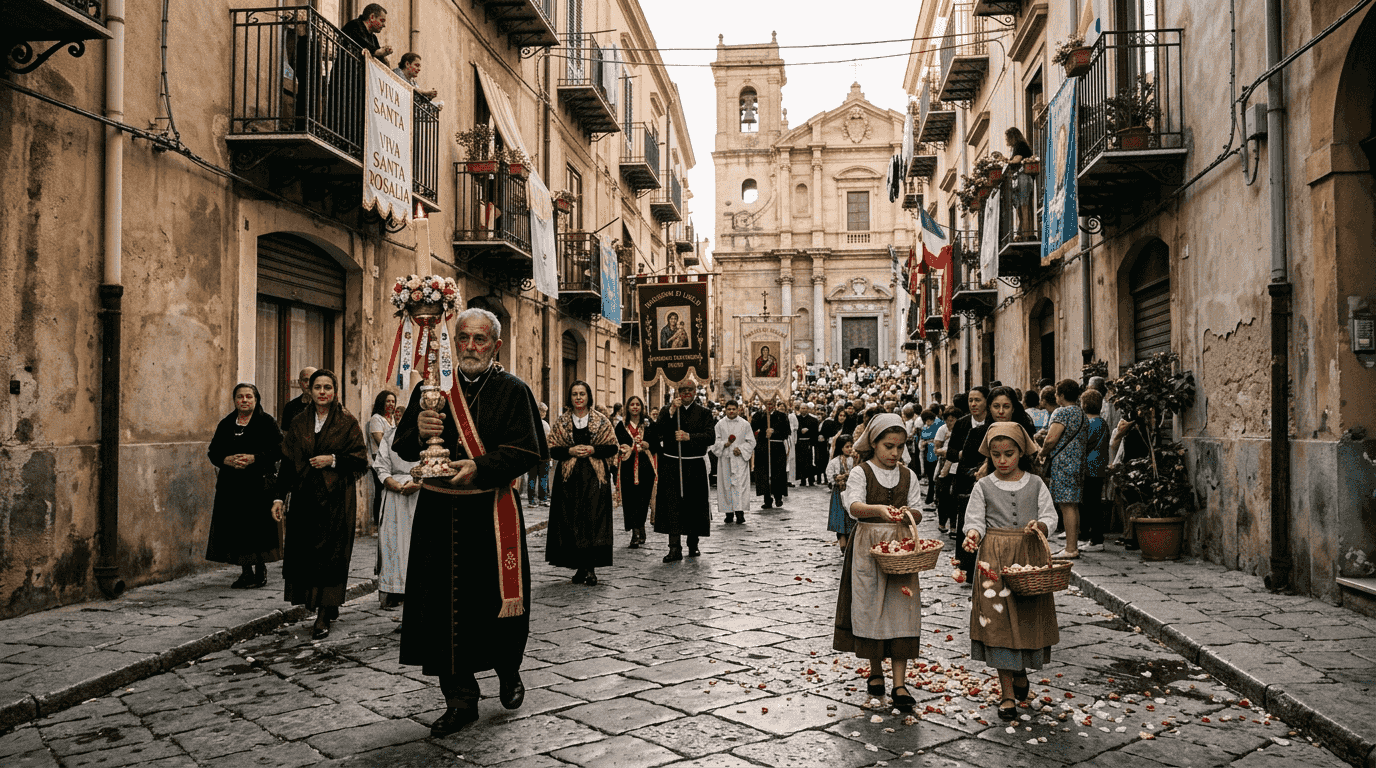

Sicily’s religious identity surprises many travelers who expect a purely Catholic island. Instead, you’ll discover a fascinating spiritual mosaic shaped by Greeks, Arabs, Normans, and Spanish rulers over millennia. This cultural blending created unique traditions where Christian saints share space with ancient rituals, where mosque architecture influences church design, and where festivals combine devotion with street food celebrations. Understanding this religious complexity unlocks deeper appreciation for Sicilian society, from vibrant processions in Catania to quiet pilgrimage routes crossing the interior. Religion here isn’t just Sunday practice, it’s the thread connecting art, identity, food, and community across generations.
Table of Contents
- The Historical Tapestry Of Religion And Culture In Sicily
- Religious Festivals: Windows Into Sicilian Faith And Culture
- Pilgrimage Routes And Sacred Sites: Exploring Sicily’s Spiritual Heart
- Religion’s Cultural Impact: Social Identity, Art, And Contemporary Challenges
- Plan Your Authentic Sicilian Cultural Experience
- Frequently Asked Questions
Key takeaways
| Point | Details |
|---|---|
| Multicultural religious roots | Sicilian faith blends Christian traditions with Greek, Arab, Norman, and Spanish influences creating unique hybrid practices. |
| Major festivals reveal identity | Events like Saint Agatha’s Festival combine spiritual devotion with cultural heritage, street food, and community participation. |
| Pilgrimage routes offer immersion | Ancient paths like Magna Via Francigena connect sacred sites and showcase living religious traditions beyond tourist centers. |
| Religion shapes social fabric | Faith influences Sicilian art, architecture, social identity, and daily life while facing modern challenges. |
The historical tapestry of religion and culture in Sicily
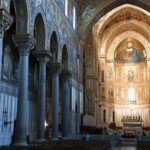
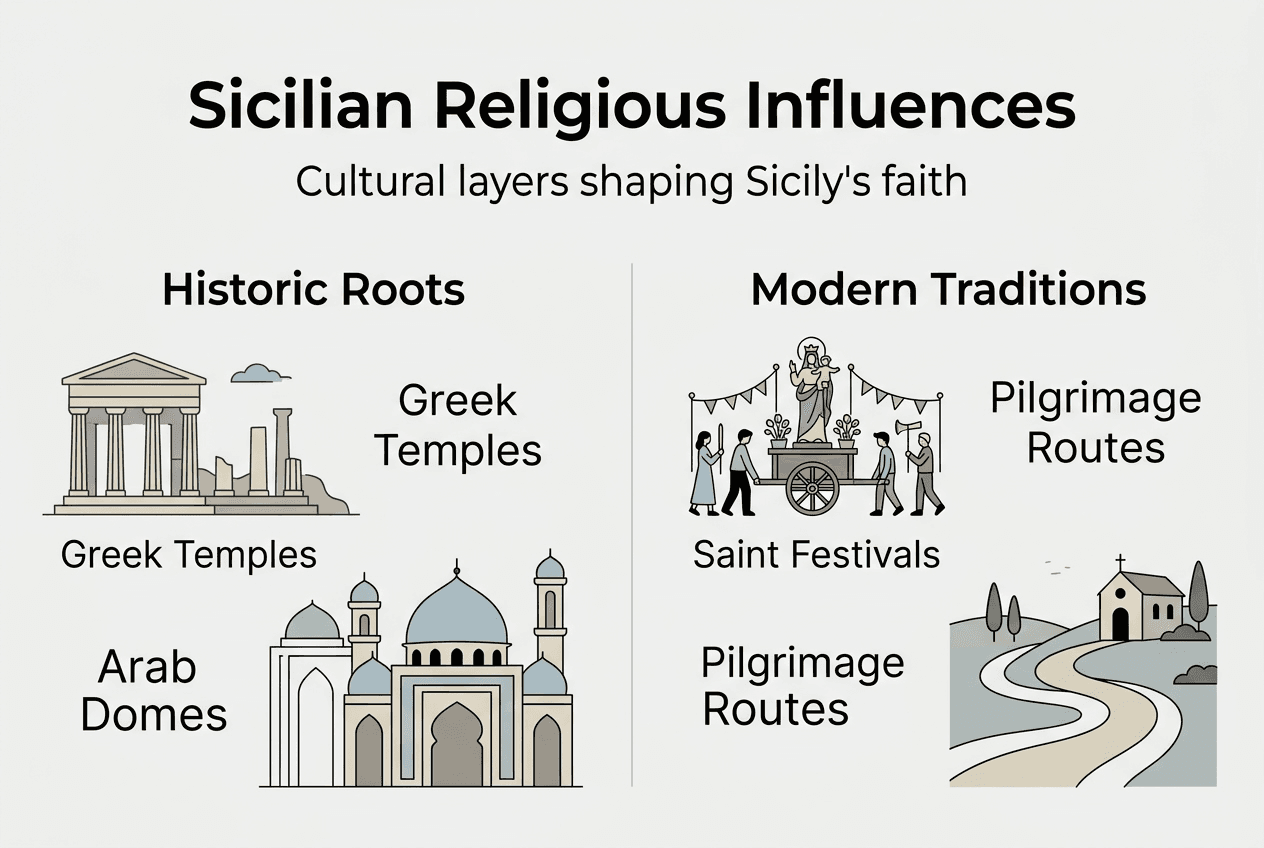
Sicily’s spiritual landscape resembles a palimpsest where each conquering culture added layers without erasing previous traditions. Sicilian religious practices shaped by Greek, Roman, Arab, Norman, and Spanish influences created a unique synthesis you won’t find elsewhere in Italy. Byzantine mosaics glitter in Norman cathedrals. Arabic geometric patterns decorate Christian churches. Spanish baroque facades hide Greek temple foundations.
The island’s geographic position made it a crossroads where Eastern and Western Christianity met, where Islam and Catholicism coexisted for centuries, and where ancient pagan practices transformed into Christian rituals. This wasn’t peaceful coexistence in every era, but the cultural exchange proved inevitable and profound. The interaction between Muslims and Christians led to a hybrid Sicilian multicultural identity that persists in language, architecture, and social customs today.
Consider how this religious blending manifests in daily life:
- Sicilian dialect contains Arabic words for religious concepts and sacred spaces
- Church bell towers often mirror minaret designs from the Arab period
- Festival foods combine North African spices with Christian symbolic meanings
- Saint veneration practices echo ancient Greek hero worship traditions
- Religious procession routes follow paths established by earlier civilizations
Pro Tip: Visit Palermo’s Cappella Palatina to see this cultural synthesis in one space, where Norman Christian architecture, Byzantine mosaics, and Arabic honeycomb ceilings create a unified sacred environment.
This layered history explains why defining Sicilian traditions requires understanding multiple cultural perspectives simultaneously. The Greek legacy established philosophical approaches to divinity and afterlife concepts. Roman occupation introduced organizational structures that later Christian churches adopted. Arab rule brought sophisticated theological debates and architectural innovations. Norman kings synthesized these elements into distinctly Sicilian expressions of faith. Spanish dominance reinforced Catholic orthodoxy while incorporating local variations.
These influences don’t exist as separate museum pieces. They actively shape how Sicilians practice religion today, from family rituals marking life transitions to community festivals celebrating patron saints. The result is a religious culture that feels simultaneously deeply Catholic and refreshingly syncretic, orthodox yet flexible, traditional while constantly evolving.
Religious festivals: windows into Sicilian faith and culture
Sicilian religious festivals transform cities into living theaters of devotion, spectacle, and community identity. The Festival of Saint Agatha is one of the largest Catholic religious festivals), drawing hundreds of thousands of participants annually to Catania. This three day February celebration honors the city’s patron saint martyred in 251 CE, combining spiritual intensity with cultural pageantry that reveals Sicily’s soul.
The festival follows a precise choreography developed over centuries:
- February 3rd begins with the offering of candles, where devotees present elaborate wax sculptures to Saint Agatha
- February 4th features the main procession carrying the saint’s relics through Catania’s streets for twelve hours
- February 5th concludes with the rientro, returning the relics to the cathedral amid fireworks and emotional farewells
- Throughout all three days, the candelore procession showcases massive wooden structures carried by guild members
- Evening concerts and street celebrations continue until dawn, blending sacred and secular elements
Pro Tip: Position yourself near Via Etnea for the best procession views, but arrive several hours early as crowds exceed 500,000 people during peak moments.
The festival’s cultural significance extends beyond religious devotion. Saint Agatha represents protection against Mount Etna’s eruptions, resistance against persecution, and Catanian identity itself. Her veil reportedly stopped lava flows multiple times throughout history, cementing her role as the city’s supernatural defender. This protective function makes the festival both thanksgiving and insurance, gratitude for past interventions and petition for future safety.
Religious festivals showcase spiritual intensity through processions, music, and reenactments that engage all senses simultaneously. The Saint Agatha celebration exemplifies this multisensory immersion. Incense clouds mix with street food aromas. Hymns blend with vendors’ calls. Baroque church facades provide backdrops for medieval pageantry. Silk banners flutter above crowds wearing traditional white robes and black caps.
Other major religious festivals across Sicily include:
- Holy Week processions in Trapani featuring life size statues carried for 24 continuous hours
- Infiorata flower carpet festivals creating religious images from petals in Noto
- Feast of Santa Rosalia in Palermo with fireworks, processions, and beach celebrations
- Mysteries of Marsala reenacting Christ’s passion with theatrical intensity
“Sicilian religious festivals aren’t performances for tourists. They’re living expressions of community identity where faith, history, and culture become inseparable.”
These celebrations reveal how religion functions as social glue in Sicilian society. Guild participation in candelore processions maintains medieval craft associations. Family attendance spans generations, with grandparents teaching grandchildren traditional chants. Street food vendors offer festival specific treats like Saint Agatha’s breasts, marzipan confections symbolizing the saint’s martyrdom. The festivals create temporary sacred geography, transforming ordinary streets into pilgrimage routes and commercial squares into outdoor cathedrals.
Understanding Catania cultural uniqueness requires experiencing Saint Agatha’s Festival firsthand, where the city’s volcanic landscape, baroque architecture, and religious fervor converge into unforgettable spectacle. The festival demonstrates how Sicilian Catholicism differs from mainland Italian practice, incorporating local saints, unique rituals, and cultural expressions shaped by the island’s distinct history.
Pilgrimage routes and sacred sites: exploring Sicily’s spiritual heart
Beyond urban festivals, Sicily’s countryside preserves ancient pilgrimage traditions connecting sacred sites across the island’s interior. The Magna Via Francigena is a revived ancient pilgrimage route crossing Sicily from Palermo to Agrigento, retracing paths medieval pilgrims walked en route to Jerusalem and Rome. This 186 mile journey offers modern travelers immersive encounters with living religious heritage far from tourist crowds.
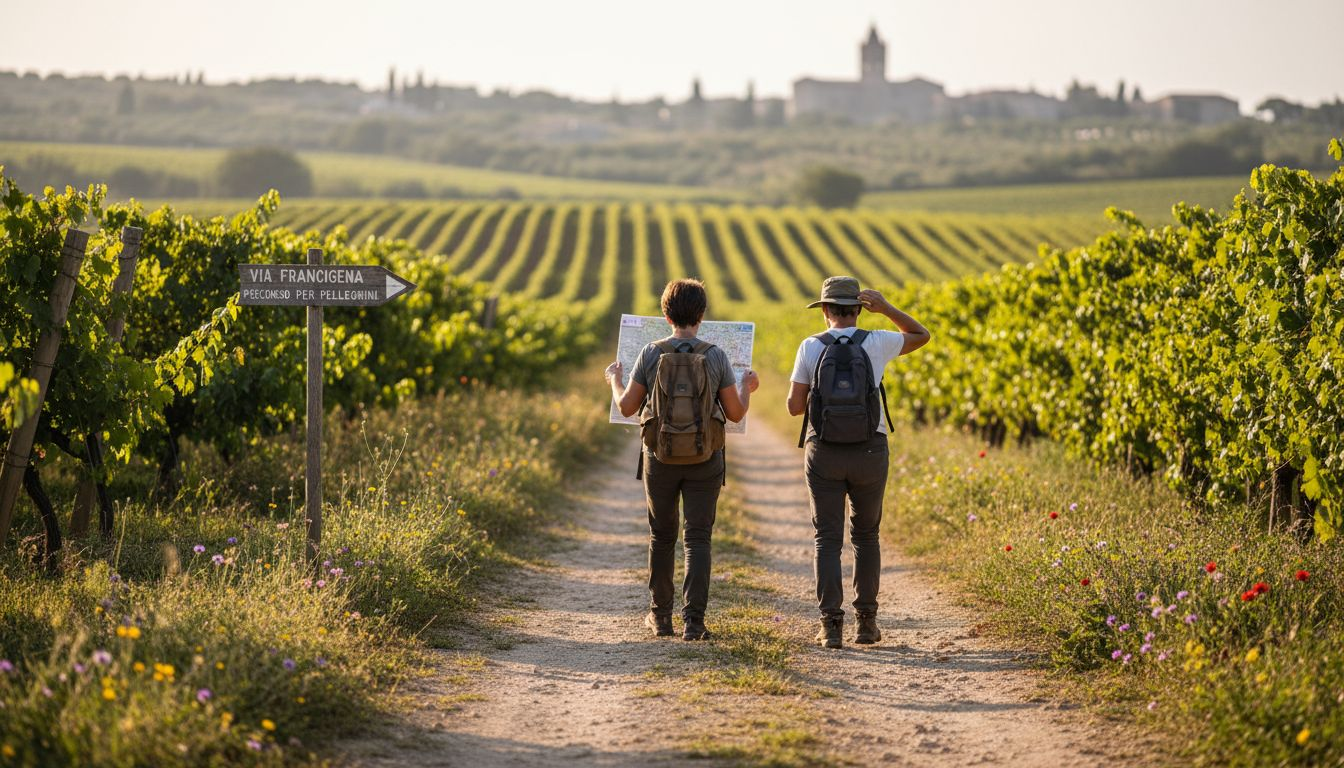
The route’s recent revival reflects growing interest in slow travel and spiritual tourism. Local communities along the path have restored waymarkers, opened pilgrim hostels, and trained guides to share regional religious traditions. Unlike commercialized pilgrimage routes elsewhere in Europe, the Magna Via Francigena maintains authentic rural character where you’ll encounter working shepherds, family run shrines, and villages where religious processions remain community events rather than tourist attractions.
Key towns along pilgrimage routes showcase Sicily’s multicultural religious heritage:
- Sutera perches on a hilltop where Christian hermits occupied caves previously used by Greek mystics
- Caltanissetta preserves baroque churches built atop Arab era mosques and Roman temples
- Enna’s cathedral sits on ancient Demeter worship sites, layering Christian devotion over Greek goddess veneration
- Piazza Armerina combines Norman religious architecture with Byzantine spiritual traditions
| Route Name | Distance | Key Highlights | Cultural Significance |
|---|---|---|---|
| Magna Via Francigena | 186 miles | Palermo to Agrigento, medieval villages, mountain sanctuaries | Connects coastal cities through rural heartland |
| Cammino di San Giacomo | 124 miles | Follows apostle James traditions, coastal and inland mix | Links Sicily to broader European pilgrimage networks |
| Via Francigena Siciliana | 280 miles | Extended route including Messina, comprehensive island crossing | Most thorough exploration of Sicilian sacred geography |
Pro Tip: Spring and fall offer ideal pilgrimage conditions with mild temperatures and fewer crowds, while summer heat makes the inland routes challenging without early morning starts.
Pilgrimage experiences in Sicily differ fundamentally from passive tourism. You’ll walk the same paths medieval travelers used, sleep in restored monasteries and convents, share meals with local families maintaining hospitality traditions centuries old. The physical challenge of multi day walking creates mental space for reflection unavailable during rushed sightseeing. Many pilgrims report the journey’s rhythm, sunrise departures, midday rest, evening arrival at the next sanctuary, produces meditative states enhancing cultural appreciation.
Sacred sites along these routes reveal Sicily archaeology and heritage spanning millennia. Cave churches preserve Byzantine frescoes. Hilltop sanctuaries occupy positions chosen for spiritual significance by successive civilizations. Wayside shrines mark locations of reported miracles, visions, or saint appearances. Each site tells layered stories where Christian narratives overlay older sacred geographies.
Practical considerations for pilgrimage travelers include researching accommodation options in advance, as rural hostels fill quickly during peak seasons. Carry sufficient water between towns, especially on interior routes crossing agricultural land. Learn basic Italian phrases for religious contexts, enhancing interactions with local clergy and pilgrims. Respect active worship spaces by observing silence, modest dress, and photography restrictions.
The pilgrimage experience ultimately offers what rushed tourism cannot: time to absorb Sicily’s spiritual landscape, conversations with locals sharing religious traditions, and personal transformation through physical journey mirroring internal exploration. These routes preserve religious culture as living practice rather than historical artifact, inviting travelers into ongoing traditions rather than observing from outside.
Religion’s cultural impact: social identity, art, and contemporary challenges
Religion permeates Sicilian social identity in ways that surprise visitors from more secularized societies. Faith shapes family structures, community organization, artistic expression, and daily rhythms. Understanding this integration reveals why religious elements appear in contexts Americans might consider purely secular, from business negotiations invoking saints to political campaigns emphasizing Catholic credentials.
Sicilian religious art and architecture demonstrate the island’s syncretic history. Baroque churches incorporate Arabic calligraphic patterns. Norman cathedrals blend Northern European solidity with Byzantine decorative exuberance. Renaissance paintings depict biblical scenes in distinctly Sicilian landscapes with Mount Etna backgrounds. This artistic synthesis reflects theological openness where multiple cultural expressions of faith coexist rather than compete.
| Festival | Location | Primary Elements | Social Impact |
|---|---|---|---|
| Saint Agatha | Catania | Processions, candelore, relics | Reinforces city identity, guild participation |
| Santa Rosalia | Palermo | Beach celebrations, fireworks, street food | Combines sacred and secular, attracts diaspora |
| Holy Week | Trapani | 24 hour procession, mystery groups | Maintains medieval confraternity structures |
| Infiorata | Noto | Flower carpets, artistic competition | Blends religious devotion with aesthetic expression |
Religious festivals entwined with local arts, food, and social organizations like guilds) create economic and cultural ecosystems supporting traditional crafts, culinary specialties, and performance arts. Candelore construction requires specialized carpentry passed through families. Festival foods preserve recipes centuries old. Musicians learn traditional hymns and procession music maintaining oral traditions.
Contemporary challenges complicate this religious cultural landscape. Mafia infiltration investigations show challenges in safeguarding religious events) from criminal influence seeking to exploit festival economies and social prestige. Anti mafia prosecutors have documented how organized crime groups attempt controlling vendor permits, construction contracts, and donation flows during major religious celebrations. This tension between sacred intentions and criminal exploitation creates ongoing debates about festival governance and transparency.
Secularization pressures, while less intense than Northern Europe, affect younger Sicilians’ religious participation. Church attendance declines in urban areas even as festival participation remains strong, suggesting cultural identity motivations increasingly outweigh purely devotional ones. This shift raises questions about tradition preservation when religious foundations weaken.
Travelers can respectfully engage with Sicilian religious culture through several approaches:
- Attend festivals as observers, maintaining respectful distance during sacred moments while participating in public celebrations
- Visit active churches outside service times, leaving donations and observing photography restrictions
- Learn basic religious customs like covering shoulders and knees in sacred spaces
- Support traditional artisans creating religious art, candles, and festival items
- Engage local guides who can explain religious symbolism and contemporary significance
- Avoid treating religious events as mere photo opportunities or exotic spectacles
Understanding how Sicilian street food and culture intertwine with religious traditions enhances appreciation for both. Festival foods carry symbolic meanings: cassatelle represent resurrection, Saint Joseph’s pastries honor the patron saint of workers, Saint Agatha’s breasts commemorate martyrdom. These culinary traditions preserve religious narratives through taste and communal eating.
Religion’s cultural impact ultimately extends beyond visible manifestations into subtle social dynamics. Patron saint devotion creates neighborhood identities within cities. Religious feast days structure annual calendars more powerfully than secular holidays. Church affiliated organizations provide social services, youth programs, and community gathering spaces. Family religious practices, Sunday meals, saint name days, baptism celebrations, mark life rhythms and strengthen intergenerational bonds.
This deep integration means understanding Sicilian culture requires engaging its religious dimensions, not as separate category but as fundamental element shaping art, food, social organization, and collective identity. The challenge for travelers involves moving beyond superficial observation toward genuine appreciation of how faith functions in Sicilian life.
Plan your authentic Sicilian cultural experience
Experiencing Sicily’s religious and cultural heritage authentically requires moving beyond surface level tourism into deeper engagement with local traditions. Sicilian Traveler provides expert resources helping you navigate this complex cultural landscape with respect and understanding. Our guides connect you with experiences revealing the island’s spiritual heart, from booking Sicily tours focused on religious heritage to practical advice ensuring meaningful interactions.

First time visitors benefit from our comprehensive Sicily travel tips covering everything from festival timing to appropriate behavior in sacred spaces. We emphasize slow travel approaches allowing time for genuine cultural absorption rather than rushed sightseeing. Our Sicilian traditions guide explores how religious practices interweave with daily life, helping you recognize and appreciate subtle cultural expressions you might otherwise miss. Let us help you craft a journey honoring Sicily’s living traditions while creating transformative personal experiences.
Frequently asked questions
What is the significance of Saint Agatha’s Festival in Sicily?
Saint Agatha’s Festival represents Catania’s most important cultural and religious event, honoring the patron saint martyred in 251 CE. The three day February celebration combines spiritual devotion with cultural identity, featuring massive processions, guild participation, and community rituals passed through generations. Beyond religious significance, the festival reinforces Catanian identity and provides protection against Mount Etna’s volcanic threats through the saint’s intercession.
How do religious and social elements combine in major Sicilian festivals?
Sicilian festivals seamlessly blend sacred devotion with secular celebration through processions incorporating street food, guild competitions, musical performances, and family gatherings. Religious rituals provide the framework while cultural expressions, traditional foods, artisan crafts, and community participation, create comprehensive experiences engaging entire populations. This integration reflects how Sicilian society views religion as inseparable from cultural identity rather than a separate sphere of life.
How do pilgrimage routes enhance cultural tourism in Sicily?
Pilgrimage routes like the Magna Via Francigena offer immersive experiences connecting travelers with rural Sicily’s living religious traditions away from tourist crowds. Walking these ancient paths provides time for cultural absorption, interactions with local communities, and encounters with sacred sites spanning multiple civilizations. The physical journey creates mental space for deeper appreciation of Sicily’s spiritual landscape while supporting rural economies through accommodation, meals, and guide services.
What role do multicultural influences play in contemporary Sicilian religion?
Greek, Arab, Norman, and Spanish cultural layers created Sicily’s unique religious synthesis visible in architecture, festivals, language, and social practices today. This multicultural foundation explains why Sicilian Catholicism differs from mainland Italian practice, incorporating local saints, hybrid rituals, and artistic expressions reflecting diverse historical influences. Contemporary religious life maintains this openness, blending orthodox Catholic doctrine with distinctly Sicilian cultural interpretations shaped by centuries of cross cultural exchange.
What challenges do religious events face and how can visitors show respect?
Modern challenges include mafia infiltration attempts, secularization pressures among younger generations, and balancing tradition preservation with contemporary governance needs. Visitors demonstrate respect by observing appropriate dress codes in sacred spaces, maintaining distance during intimate religious moments, avoiding treating ceremonies as photo opportunities, supporting traditional artisans, and engaging knowledgeable guides who explain religious significance. Approaching festivals as cultural participants rather than passive spectators honors the communities maintaining these traditions.