
Every travel enthusiast searching for Sicily’s most authentic urban adventure soon encounters Catania—a city whose entire identity has been shaped by centuries of dramatic change and renewal. What makes Catania stand out is not only its ancient foundation by the Chalcidian Greeks but also its resilience forged from living in the shadow of Mount Etna. For North American travelers craving genuine cultural immersion, Catania offers living history, iconic Baroque architecture, and traditions that connect past and present in every street and piazza.
Table of Contents
- Catania’s Distinct Identity and Historical Roots
- Baroque Architecture and Iconic Landmarks
- Vibrant Street Life and Local Traditions
- Culinary Diversity Shaped by Volcano and Sea
- Comparing Catania to Other Sicilian Destinations
Key Takeaways
| Point | Details |
|---|---|
| Catania’s Historical Roots | The city’s foundation by the Chalcidian Greeks in the 8th century BC shapes its unique cultural identity and resilience through adversity. |
| Baroque Influence | Post-1693 earthquake reconstruction under Giovanni Battista Vaccarini resulted in distinctive baroque architecture that symbolizes Catania’s survival and identity. |
| Vibrant Local Traditions | Catania boasts dynamic street life and cultural practices, such as the Saint Agatha Religious Festival, reflecting a deep community connection. |
| Culinary Diversity | Local cuisine thrives on the volcanic soil and coastal resources, offering unique flavors that embody the region’s heritage. |
Catania’s Distinct Identity and Historical Roots
Catania’s story begins with the Chalcidian Greeks who founded the city in the 8th century BC. This ancient origin shaped everything that followed, creating a cultural foundation unlike anywhere else in Sicily.
What makes Catania truly distinctive is how it transformed through repeated destruction and rebuilding. Earthquakes and Mount Etna eruptions reshaped the city multiple times, yet each cycle reinforced its resilience and connection to the volcano. This isn’t just historical background—it’s woven into the city’s DNA.
The city’s distinct identity formed through strategic location on the Ionian Sea and proximity to Mount Etna, creating a unique position for Mediterranean trade. Roman conquest, medieval influences, and constant cultural exchanges all left their mark.
Key periods that shaped Catania:
- 8th century BC: Greek colonization establishes the city’s foundation
- Ancient Rome: Economic growth and urban expansion under Roman rule
- Medieval Period: Arab and Norman influences add layers of cultural complexity
- 1693 Earthquake: Massive destruction leading to baroque reconstruction
- Modern Era: A city balancing volcanic heritage with contemporary identity
Catania’s repeated cycles of destruction and renewal created a population that knows how to rebuild, not just buildings but entire identities.
Unlike Palermo or Syracuse, Catania’s identity centers on its relationship with Mount Etna. The volcano isn’t a backdrop—it’s a constant presence shaping how people live, work, and build. This volcanic influence touches everything from architecture to agriculture to daily life.
The city’s baroque architecture (rebuilt after the 1693 earthquake) tells this story physically. Street layouts, building designs, and public squares reflect both the trauma of destruction and the determination to create something magnificent.
Trade and commerce historically defined Catania as a cosmopolitan city. Merchants from across the Mediterranean brought goods, ideas, and cultural traditions that blended with local Sicilian culture. This exchange created a dynamic urban identity that remains visible today.
Pro tip: Visit the Civic Museum or explore the historic center early morning to see how the city’s baroque rebuilt sections integrate with ancient Greek ruins and volcanic stone walls—you’ll physically see layers of history in single streets.
Here’s how Catania’s historic influences shape its modern identity:
| Historical Influence | Lasting Impact on Catania | Visible Today |
|---|---|---|
| Greek Foundation | Urban planning, cultural roots | City layout, ancient ruins |
| Roman Rule | Economic development, trade connections | Infrastructure, market culture |
| Arab and Norman Era | Diverse traditions, architectural styles | Language, food, city districts |
| Mount Etna Events | Resilience, volcanic materials | Lava stone buildings, agriculture |
| Baroque Rebuilding | Magnificent city center, unity | Landmark architecture, plazas |
Baroque Architecture and Iconic Landmarks
Catania’s baroque skyline rises from tragedy. After the devastating 1693 earthquake destroyed much of the city, architect Giovanni Battista Vaccarini reimagined Catania as a monumental baroque masterpiece. This wasn’t just reconstruction—it was cultural reinvention through stone and design.
What makes Catania’s baroque style distinctive is its character. Earthquake Baroque architecture blends practical urban planning with imperial symbolism, creating streets that feel grand yet livable. Every building tells a story of resilience.
The city’s iconic landmarks showcase this distinctive approach:
- Cathedral of Saint Agatha: Dominates Piazza Duomo with massive columns and ornate facades
- Palazzo Biscari: A nobleman’s residence showcasing private baroque luxury and artistic detail
- San Benedetto Church: Features intricate staircases and vertical design emphasizing height and spirituality
- Via Etnea: The main thoroughfare rebuilt as a grand boulevard connecting neighborhoods
- Piazza Duomo: The heart of the city featuring the elephant fountain, symbol of Catania
Catania’s baroque wasn’t imposed from outside—it emerged from the city’s determination to rebuild itself stronger, making every street a statement of survival.
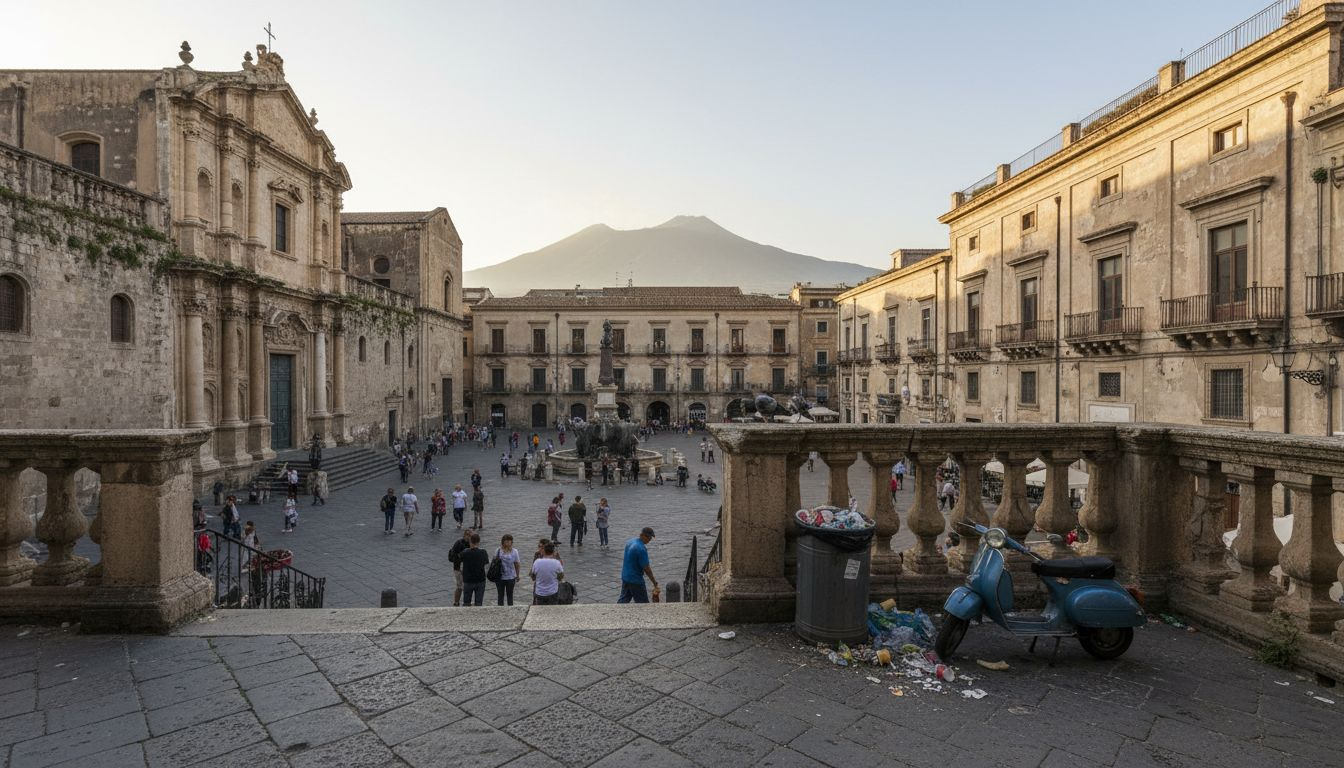
The elephant fountain (the Fontana dell’Elefante) stands in Piazza Duomo as Catania’s most recognizable symbol. Local lava stone forms the elephant, topped with an Egyptian obelisk. This fusion of materials and cultures represents Catania’s layered identity perfectly.
Vaccarini’s urban planning created wide streets and open plazas intentionally. After centuries of cramped medieval layouts, the new design emphasized light, air, and movement. North American visitors recognize this as modern city planning—ahead of its time by centuries.
The architectural details reward close observation. Wrought iron balconies, carved stone ornaments, and decorative cornices showcase craftsmanship. Many buildings feature unique characteristics, so no two facades feel identical despite the unified baroque style.
Pro tip: Walk Via Etnea during late afternoon when sunlight hits the stone facades at an angle, revealing architectural details invisible in harsh midday sun—bring a camera and comfortable shoes for exploring the full two-kilometer stretch.
Vibrant Street Life and Local Traditions
Catania’s streets pulse with energy that feels unmistakably local. Walk through the historic center and you’ll witness centuries-old traditions unfolding in real time—not preserved in museums, but alive in daily community life.
The Saint Agatha Religious Festival demonstrates this vibrancy perfectly. Nearly one million people converge on Catania annually for this major cultural celebration that blends spiritual devotion with social participation. For five days, the entire city transforms into a celebration of faith, family, and shared identity.
What makes the festival distinctive isn’t just the spectacle. It represents how religious tradition and community cohesion intertwine in Catania. You’ll see residents from all walks of life participating—vendors, families, clergy, and visitors creating something genuinely collaborative.
Local traditions shape everyday street culture too:
- Opera dei Pupi: Traditional Sicilian puppet theater telling stories of knights, romance, and heroic deeds
- Sicilian Cart Decorations: Ornate painted wooden carts with intricate designs and vibrant colors
- Street Markets: Daily commerce blending haggling, gossip, and neighborhood ritual
- Oral Storytelling: Cultural narratives passed between generations through conversation
- Seasonal Celebrations: Festivals tied to saints, harvests, and community identity
Catania’s traditions aren’t performance pieces for tourists—they’re the genuine fabric of how locals live, celebrate, and understand their place in the world.
Sicilian puppet theater and cart decorations express rich cultural storytelling maintained through direct transmission from parents to children. These practices create continuous dialogue between past and present, keeping heritage alive while remaining dynamic.
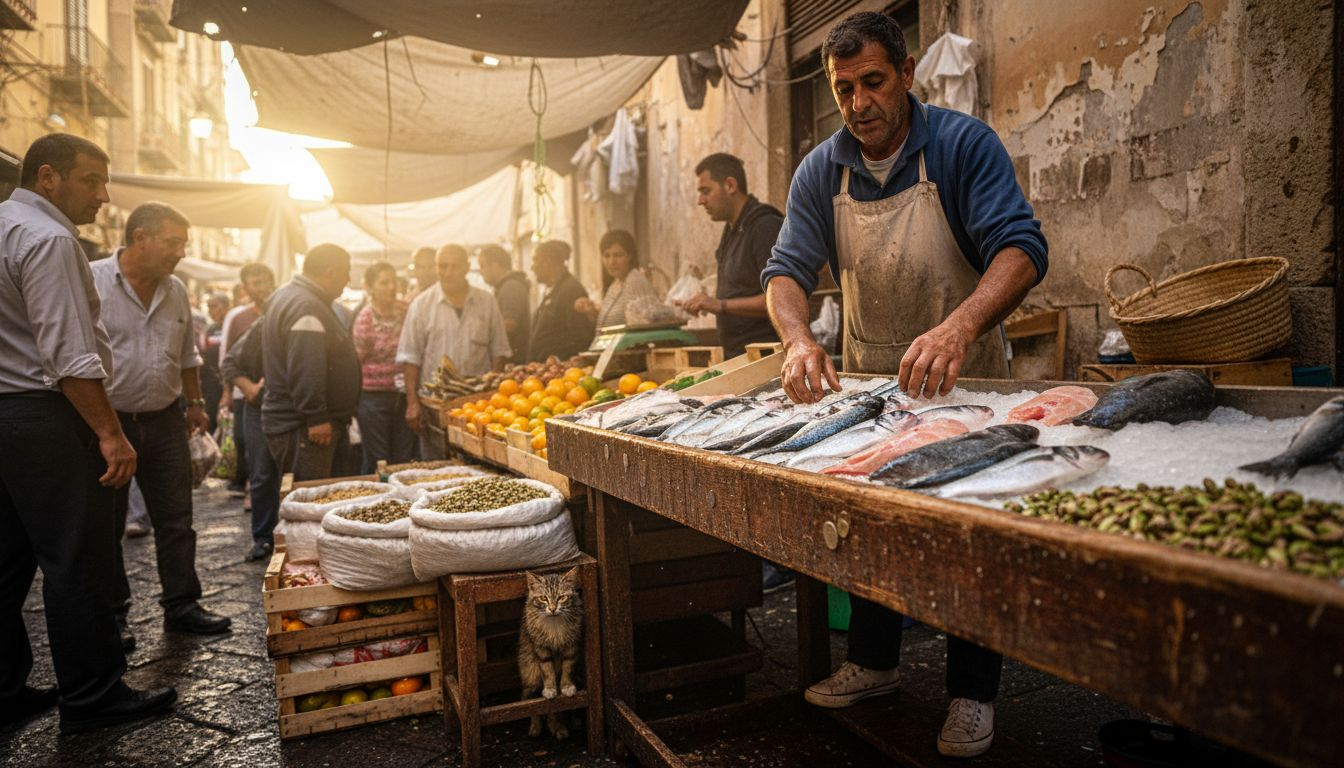
The street markets remain essential to daily life. Morning visits to fish markets, fruit vendors, and neighborhood shops reveal authentic Catania—not sanitized for tourism, but genuine commerce with character. The energy, voices, and activity create an atmosphere unique to Mediterranean cities.
You’ll notice locals gathering in piazzas during evening hours. This passeggiata (evening stroll) tradition brings neighbors together for casual socializing. Watching this unfold reveals how Catania prioritizes community connection over individual isolation.
Pro tip: Visit markets early morning (6:30-8:00 AM) before tourist crowds arrive, then return to a piazza during evening hours (7:00-9:00 PM) to experience authentic passeggiata with locals—you’ll capture the real rhythm of Catania’s social life.
Culinary Diversity Shaped by Volcano and Sea
Catania’s food story is written in volcanic soil and Mediterranean salt water. The city sits between two powerful forces—Mount Etna’s fertile slopes and the Ionian Sea’s abundant coastline. This geographic reality creates a culinary ecosystem unlike anywhere else in Sicily.
Volcanic soil produces unique crops that reflect the volcanic terroir, giving Catania’s ingredients distinctive character. The mineralized earth nourishes fruits, vegetables, and grains with flavors you won’t find elsewhere. This isn’t marketing—it’s geology expressing itself through food.
Mount Etna’s slopes yield treasures that define local cuisine:
- Pistachios: Small, intensely flavored nuts grown only in volcanic regions
- Citrus: Oranges, lemons, and grapefruits with exceptional sweetness and acidity
- Chestnuts: Rich, earthy nuts used in both savory and sweet dishes
- Wines: Unique varieties like Nerello Mascalese grown on volcanic slopes
- Cheeses: Ricotta and other dairy products from animals grazing volcanic pastures
The volcano doesn’t just create dramatic landscapes—it creates flavors. Every meal in Catania carries Etna’s influence.
The sea contributes equally to Catania’s culinary identity. Fresh fish arrives daily at markets—swordfish, tuna, sardines, and sea urchins. Catania’s location means seafood is never frozen, never distant from ocean to plate. This freshness defines coastal Sicilian cooking.
The fertile volcanic environment supports sustainable agricultural practices that have endured for millennia. Local farmers rotate crops, respect seasons, and maintain traditions passed through generations. This isn’t industrial agriculture—it’s a living relationship between people and land.
The fusion of mountain and sea creates distinctive dishes. Pasta alla Norma combines eggplant grown on Etna’s slopes with fresh tomatoes and sea-urchin roe. Arancini feature rice cooked with ragù, topped with fresh seafood. Even simple dishes reveal this dual identity—tomatoes grown in volcanic soil paired with salt from the sea.
Wine production demonstrates this perfectly. Wines grown on Etna’s slopes taste nothing like wines from flat terrain. The mineral content, steep slopes, and volcanic minerals create complexity and depth that collectors and sommeliers recognize instantly.
Pro tip: Visit the Vucciria market early morning, sample pistachios and fresh citrus from vendors, then book a lunch reservation at a restaurant listing “Etna wines” on the menu—you’ll taste the complete volcano-to-sea story in single meal.
Comparing Catania to Other Sicilian Destinations
Sicily offers multiple compelling destinations, but Catania stands apart in specific ways. Understanding these differences helps you choose the right base for your North American adventure.
Catania vs. Palermo represents Sicily’s two major urban experiences. Catania’s youthful energy contrasts with Palermo’s historic grandeur, creating distinctly different atmospheres. Palermo dominates in museum-worthy architecture and elaborate street food markets, while Catania offers direct access to Mount Etna and nearby beaches.
Key differences between these cities:
- Catania: Younger demographic, outdoor-focused, volcanic influences, beach access
- Palermo: Historic sites, grand baroque architecture, legendary street food, cultural museums
- Catania Energy: Dynamic, gritty, university-town vibe
- Palermo Energy: Romantic, historic, culturally layered
- Catania Base: Better for volcano exploration and coastal activities
- Palermo Base: Better for history immersion and architectural tours
Both cities offer genuine Sicily, just different expressions of it. Your choice depends on whether you want nature and energy or history and culture.
Catania vs. Taormina shows a starker contrast. Taormina caters to luxury tourism with its clifftop setting and high-end hotels, while Catania provides authentic urban experience with better affordability. Taormina feels like a Mediterranean resort; Catania feels like a real Sicilian city where locals actually live.
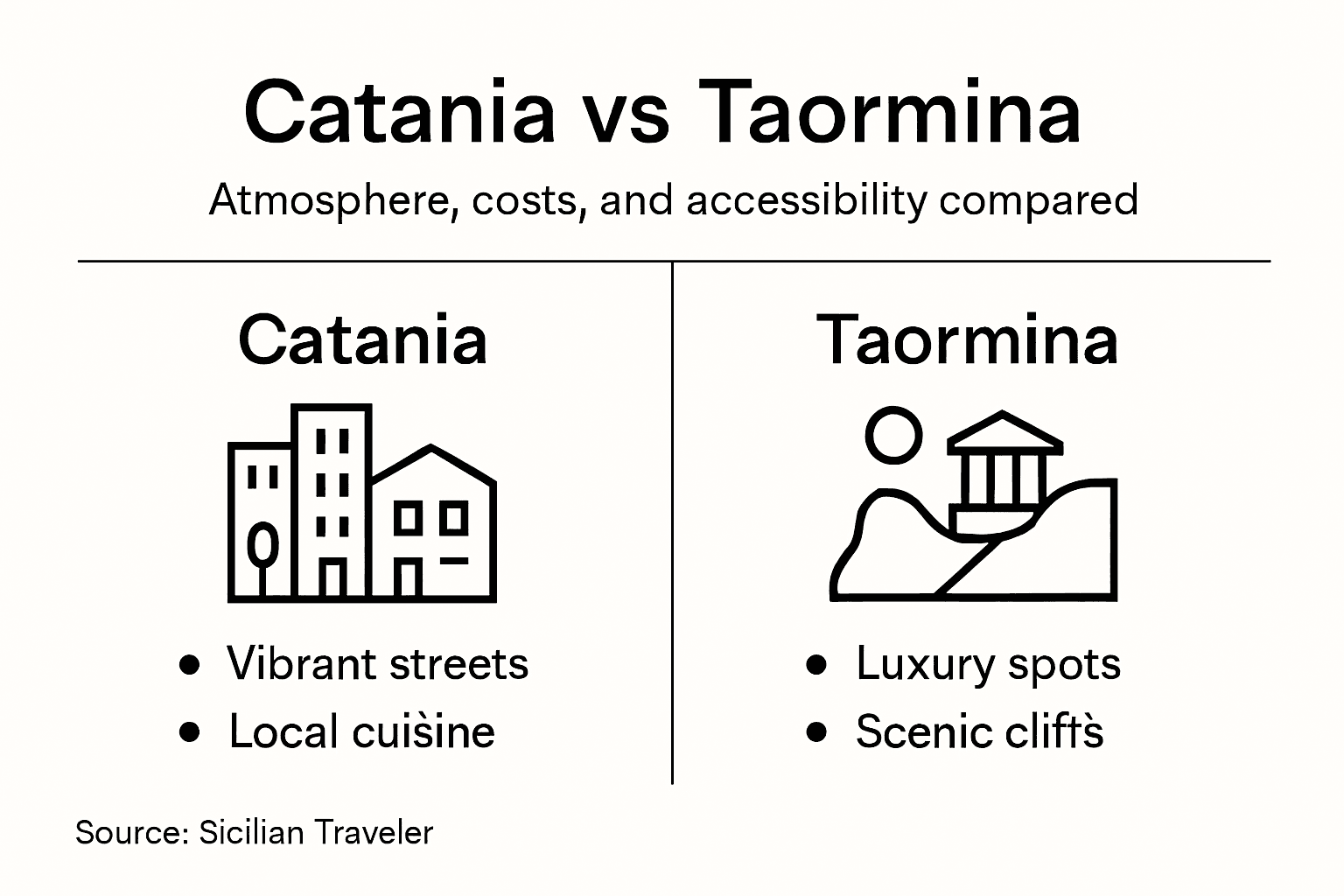
The practical reality: Taormina’s beauty costs significantly more. Hotels, restaurants, and tours charge premium prices for those postcard views. Catania offers comparable cultural experiences at half the price, plus university-town atmosphere and younger crowds.
Catania also functions as a strategic base better than isolated Taormina. The city sits centrally on Sicily’s eastern coast, making day trips feasible to Mount Etna, Mondello beaches, and smaller towns. Taormina’s location means you’re somewhat stranded—great for staying put, limiting for exploring.
Why North American travelers choose Catania over alternatives: authentic street life without tourist inflation, direct volcano access, beach proximity, affordable dining, and genuine interaction with locals. You’re not performing tourism here—you’re living it.
Pro tip: Base yourself in Catania for 4-5 days, use it as your Sicilian hub for excursions, then decide if you want to day-trip to Palermo (90 minutes by train) or Taormina (90 minutes by train) rather than relocating hotels and losing momentum.
Here’s a practical comparison of Catania, Palermo, and Taormina for travelers:
| City | Atmosphere | Accessibility | Cost Level |
|---|---|---|---|
| Catania | Energetic, youthful | Central base, easy day trips | Affordable dining, mid-range hotels |
| Palermo | Historic, grand | Extensive museums, direct flights | Mid-to-high, luxury options present |
| Taormina | Picturesque, upscale | Isolated, limited day trips | High-end lodging, premium attractions |
Discover Catania’s Cultural and Culinary Treasures with Sicilian Traveler
Planning a trip to Catania means embracing its unique spirit shaped by Mount Etna’s volcanic force and centuries of rich culture. If you want to fully experience Catania’s authentic street life, vibrant baroque architecture, and unforgettable flavors from sea to volcano, you need guidance that goes beyond typical travel tips. Many travelers struggle to connect with the real essence of the city amid crowded tourist spots or miss out on the hidden traditions and culinary gems that define this Sicilian jewel.

Let Sicilian Traveler help you unlock Catania’s magic by providing insider knowledge on where to witness the Saint Agatha Festival, how to choose the best local markets, and where to savor dishes made with Etna’s volcanic ingredients. Don’t settle for superficial sightseeing when you can dive deep into the city’s resilient identity and lively street culture. Visit Sicilian Traveler now to start planning your immersive Catania adventure. Explore more about Catania’s cultural wonders and let us guide your journey through Sicily’s heart and soul.
Frequently Asked Questions
What is the historical significance of Catania?
Catania’s history dates back to the 8th century BC when it was founded by the Chalcidian Greeks. The city has undergone numerous destructions and reconstructions, particularly due to earthquakes and volcanic eruptions, shaping its unique identity and resilience.
How does Mount Etna influence Catania’s culture and economy?
Mount Etna plays a pivotal role in Catania’s identity, influencing everything from agriculture to architecture. The fertile volcanic soil produces unique crops, while the proximity to the volcano attracts tourism and enhances local traditions.
What makes Catania’s baroque architecture unique?
Catania’s baroque architecture, mainly reconstructed after the devastating 1693 earthquake, features distinctive character that blends imperial symbolism with practical urban design. This architectural style reflects the city’s resilience and rich historical narrative.
How does Catania’s culinary scene reflect its cultural identity?
Catania’s cuisine is shaped by its volcanic soil and coastal location, resulting in unique ingredients like pistachios and fresh seafood. The fusion of mountain and sea influences culinary traditions, creating distinctive dishes that embody the region’s heritage.