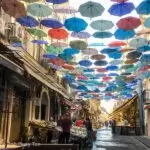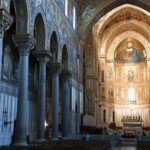

Sicily’s traditions aren’t a single story. Travelers often expect one unified culture, but the island offers a mosaic shaped by Greek temples, Arab markets, Norman castles, and Spanish baroque. This guide reveals how diverse influences created unique customs across regions, helping you connect with authentic experiences beyond stereotypical postcards. You’ll discover festivals rooted in devotion, crafts alive with heritage, and daily rituals that welcome curious visitors into Sicily’s living culture.
Table of Contents
- Foundations of Sicilian Cultural Traditions
- Family, Community, And Daily Rituals
- Festivals And Religious Rituals
- Traditional Crafts And Artisanship
- Language And Music As Cultural Identity
- Common Misconceptions About Sicilian Traditions
- How To Engage With Sicilian Traditions Authentically
- Modernity And The Preservation Of Traditions
- Explore Authentic Sicilian Culture With Us
Key takeaways
| Point | Details |
|---|---|
| Historical layers | Greek, Arab, Norman, Spanish, and Italian influences created Sicily’s diverse cultural identity |
| Family centrality | Daily rituals like Sunday lunches and evening passeggiata strengthen community bonds |
| Festival authenticity | Major celebrations like Saint Agatha’s feast reflect genuine devotion, not tourist spectacle |
| Living crafts | Traditional ceramics and carretti preserve ancestral skills across generations |
| Regional variations | Dialects and music styles express distinct local identities shaped by historical context |
Foundations of Sicilian cultural traditions
Sicily’s cultural richness stems from waves of conquest and trade spanning three millennia. Sicilian cultural heritage blends Greek, Arab, Norman, Spanish, and Italian influences shaped by centuries of migration. Each civilization left architectural marvels, linguistic traces, and social customs that merged rather than replaced previous traditions.
Greek colonizers established theaters and philosophical schools that still echo in modern festivals. Arab rule introduced irrigation systems, spices, and geometric art patterns visible in architecture today. Norman conquerors built cathedrals blending Byzantine mosaics with Islamic arches. Spanish governance brought baroque drama to religious processions and artistic expression. Italian unification in the 19th century added another layer without erasing regional distinctiveness.
This layered history explains why a single Sicilian tradition often contains multiple cultural threads. A religious festival might feature Arab-influenced sweets, Norman architectural backdrops, and Spanish-style processions. Understanding these foundations helps travelers recognize authentic cultural expressions beyond surface appearances.
Key historical influences include:
- Greek theaters and philosophical traditions (8th-3rd centuries BCE)
- Arab agricultural innovations and architectural geometry (9th-11th centuries CE)
- Norman administrative systems and religious art fusion (11th-12th centuries)
- Spanish baroque aesthetics and ceremonial grandeur (16th-18th centuries)
- Italian linguistic and political integration (1860s onward)
These periods weren’t isolated. They overlapped, contested, and ultimately created Sicily’s unique cultural DNA that distinguishes it from mainland Italy.
Family, community, and daily rituals
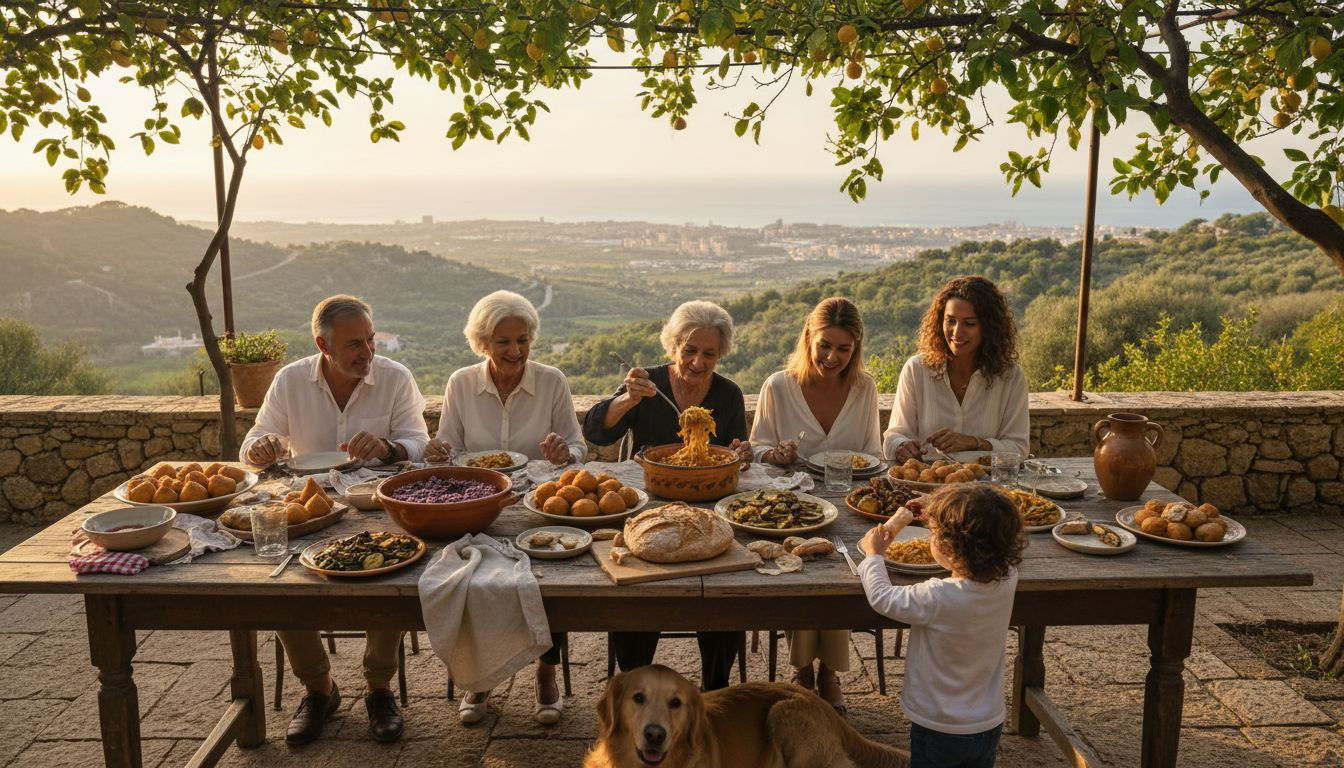
Family structures form the bedrock of Sicilian social life. Extended families gather for weekly Sunday lunches that stretch hours, serving multiple courses and strengthening intergenerational bonds. These meals aren’t formal events but relaxed celebrations where stories pass between generations and recipes carry family history.
Evening passeggiata transforms town centers into communal living rooms. Residents stroll main streets, greeting neighbors and maintaining social networks that predate digital connectivity. This ritual reinforces community cohesion and provides informal support systems that visitors can observe in any Sicilian town.
Daily customs embody values of hospitality and continuity. Coffee breaks become social rituals rather than caffeine deliveries. Market visits allow relationship building with vendors who remember preferences and family milestones. These practices create cultural texture that guidebooks often miss.
Key daily traditions include:
- Multi-hour Sunday family lunches with traditional recipes
- Evening passeggiata in town squares and main streets
- Morning market visits for fresh ingredients and social connection
- Coffee bar conversations that strengthen neighborhood ties
- Seasonal food preservation activities involving multiple generations
Pro Tip: Visiting one of the best Sicilian towns for culture during evening hours lets you experience passeggiata firsthand. Join the flow, stop for gelato, and observe how community bonds form through simple daily presence.
Festivals and religious rituals
Sicilian festivals blend religious devotion with community identity in spectacular displays. The Feast of Saint Agatha attracts thousands annually and reflects deep community devotion rather than tourism-focused spectacle. These celebrations reveal Sicily’s soul through processions, music, and rituals passed down centuries.
Major festivals operate on religious calendars but incorporate pre-Christian elements. Carnival celebrations mix Catholic traditions with ancient fertility rites. Easter processions feature Byzantine icons alongside Spanish-influenced dramatic staging. Each festival tells multiple stories simultaneously.
Key Sicilian festivals by significance:
- Feast of Saint Agatha (Catania, February 3-5): Three-day celebration with candle-lit processions and the saint’s silver reliquary
- Holy Week (Easter, island-wide): Elaborate passion plays and hooded penitent processions
- Carnival (February-March, Acireale and Sciacca): Allegorical float parades with papier-mâché sculptures
- Feast of Saint Rosalia (Palermo, July 10-15): Patron saint celebration with street theater and fireworks
- Infiorata festivals (Spring, Noto): Streets carpeted with intricate flower petal designs
| Festival | Date | Region | Cultural Features |
|---|---|---|---|
| Saint Agatha | February 3-5 | Catania | Byzantine devotion, silver reliquary procession, candle bearers |
| Easter Week | March-April | Island-wide | Passion plays, hooded confraternities, Spanish baroque influence |
| Carnival | February-March | Acireale, Sciacca | Satirical floats, papier-mâché art, pre-Christian revelry elements |
| Saint Rosalia | July 10-15 | Palermo | Norman-era origins, street theater, fireworks, civic identity |
| Infiorata | May-June | Noto, other towns | Flower petal art, Corpus Domini celebration, community cooperation |
Pro Tip: Research festival etiquette before attending. Some processions require respectful silence during sacred moments. Learning basic customs through booking authentic Sicily tours helps you participate meaningfully rather than observe as an outsider.
Traditional crafts and artisanship
Sicilian craftsmanship transforms functional objects into cultural statements. Handcrafted ceramics in Caltagirone and ornate Sicilian carretti symbolize cultural heritage passed down through generations. These traditions survive because communities value craftsmanship as identity expression, not merely commercial products.
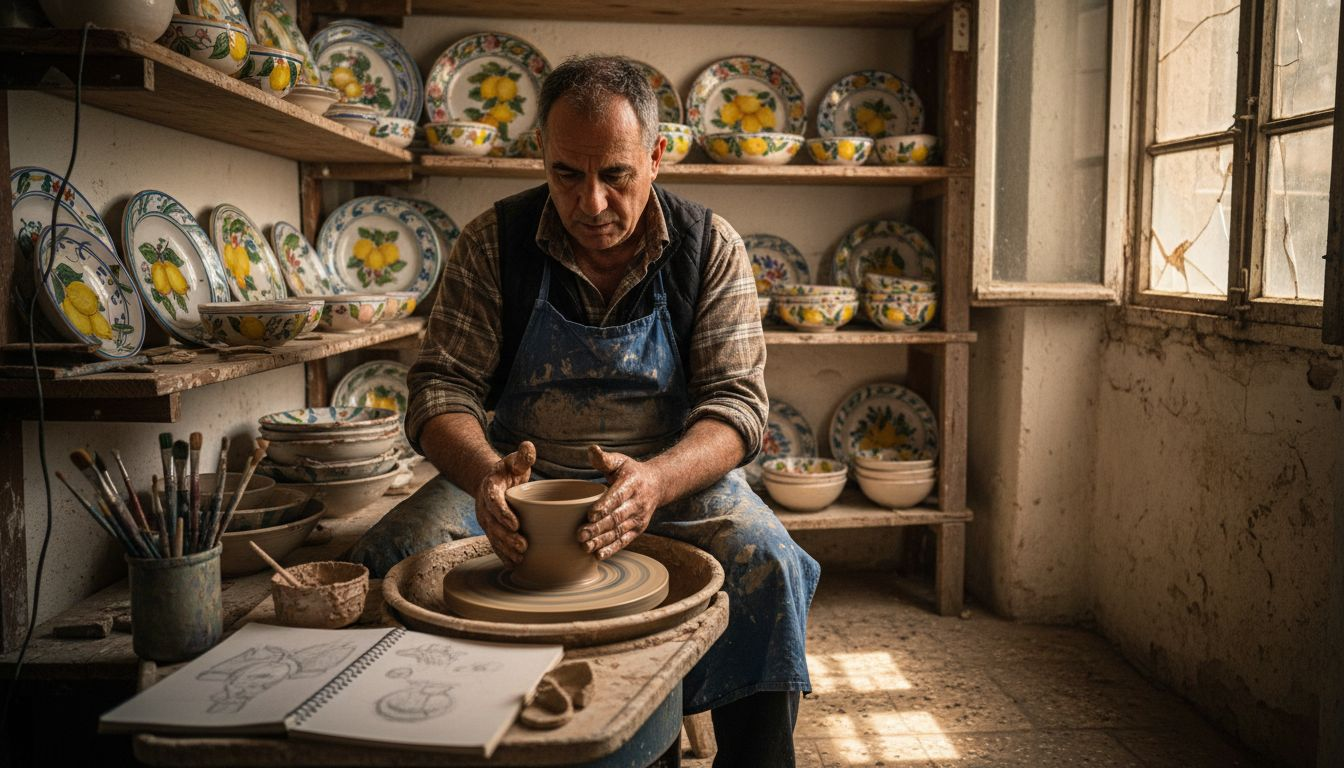
Caltagirone’s ceramic tradition dates to Arab rule when potters developed distinctive glazing techniques. Today’s artisans still hand-paint geometric patterns and figurative scenes on everything from tiles to decorative plates. Workshop visits reveal techniques unchanged for centuries, where apprentices learn through observation rather than formal instruction.
Sicilian carretti (decorated carts) showcase elaborate woodwork and vibrant painted panels depicting historical battles, religious scenes, and folk tales. These two-wheeled carts once transported goods but now serve as mobile art galleries celebrating Sicilian storytelling traditions. Craftsmen spend months carving intricate details and applying traditional color schemes.
| Craft | Origin | Materials | Cultural Meaning |
|---|---|---|---|
| Caltagirone ceramics | Arab-Norman period | Terracotta clay, mineral glazes | Geometric patterns reflect Islamic influence; figurative scenes show Christian narratives |
| Sicilian carretti | 19th century rural life | Wood, iron wheels, oil paints | Painted panels preserve oral history; craftsmanship demonstrates family pride |
| Pupa dolls | Medieval folk tradition | Painted terracotta | Courtship symbols and decorative art combining function with storytelling |
| Coral jewelry | Trapani coastal tradition | Mediterranean red coral, silver | Maritime heritage and protective symbolism in religious contexts |
Key craft centers worth visiting:
- Caltagirone for ceramic workshops and the 142-step staircase adorned with majolica tiles
- Santo Stefano di Camastra for contemporary ceramic innovations respecting traditional methods
- Trapani for coral workshops demonstrating intricate carving techniques
Exploring Sicilian artisan towns provides direct access to craftspeople who explain techniques and historical context. These interactions transform souvenirs into meaningful cultural connections.
Language and music as cultural identity
Sicilian dialects reveal the island’s complex heritage through vocabulary and pronunciation. Sicilian dialects contain Arabic and Norman language elements and vary widely across regions, while music traditions animate social and religious events. Linguistic diversity mirrors Sicily’s geographical and historical fragmentation into distinct communities.
The Sicilian language differs substantially from standard Italian, incorporating Arabic nouns, Norman syntax, and Greek grammatical structures. Eastern dialects around Catania sound different from western Palermo speech. These variations aren’t accents but distinct linguistic systems that linguists classify separately from Italian.
Traditional music forms express regional identity through rhythm and instrumentation. Tarantella dances feature rapid tambourine patterns and couple formations that vary by province. Catalan-influenced sardana songs in western regions maintain medieval musical scales. Folk musicians preserve these styles through oral transmission rather than written notation.
Key linguistic and musical features:
- Arabic loanwords in everyday Sicilian (cassata, zibibbo, gebbia)
- Norman French syntax patterns in older rural dialects
- Greek phonetic traces in southeastern coastal communities
- Tarantella variations unique to each province
- Catalan sardana traditions in Trapani and western areas
- Marranzanu (jaw harp) providing distinctive metallic percussion
Festivals showcase these traditions when musicians perform without amplification, using instruments crafted locally. The combination of dialect storytelling and traditional melodies creates immersive cultural experiences that recordings can’t replicate.
Experiencing Sicilian language and music tours with local guides helps decode linguistic nuances and musical contexts that casual visitors might miss.
Common misconceptions about Sicilian traditions
Stereotypes obscure Sicily’s cultural complexity. Many believe all Sicilian festivals are commercialized, but in reality, many like the Feast of Saint Agatha are deeply religious and community-centered. Correcting these myths helps travelers distinguish genuine traditions from tourist-oriented performances.
The uniformity myth assumes one Sicilian culture exists. Reality reveals dozens of microcultures varying by valley and coastline. Palermo’s street food culture differs dramatically from Ragusa’s agricultural festivals. Eastern baroque towns celebrate different saints than western fishing villages.
| Myth | Reality | Example |
|---|---|---|
| All festivals target tourists | Most celebrations serve local religious and social functions | Saint Agatha procession requires community participation, not audience |
| Sicilian culture is uniform | Dozens of distinct regional traditions exist | Trapani’s Catalan influences contrast sharply with Syracuse’s Greek heritage |
| Modernization erased authenticity | Communities actively preserve traditions | Caltagirone artisans still use medieval ceramic techniques |
| Mafia defines Sicilian identity | Rich cultural heritage predates and transcends organized crime | Festivals, crafts, and music express identity independent of criminal stereotypes |
Common traveler pitfalls to avoid:
- Assuming coastal resort experiences represent authentic culture
- Expecting mainland Italian customs to apply in Sicily
- Overlooking smaller towns where traditions thrive most strongly
- Treating festivals as entertainment rather than sacred community events
- Confusing tourist-focused performances with genuine cultural expressions
Recognizing these distinctions requires research and willingness to venture beyond major tourist centers where authentic traditions continue undiluted by commercial pressures.
How to engage with Sicilian traditions authentically
Genuine cultural immersion requires intentional choices about where to go and how to participate. Authentic engagement includes participation in local festivals, tasting home-cooked meals, and artisan visits instead of tourist traps. These experiences transform passive observation into active cultural exchange.
Joining local festivals means understanding their religious and social significance. Arrive early to see preparation rituals. Observe how community members participate versus how tourists photograph. Some processions welcome visitor involvement, others require respectful distance. Learning these distinctions shows cultural sensitivity that locals appreciate.
Artisan workshop visits provide hands-on cultural insight. Many craftspeople welcome visitors who show genuine interest rather than shopping intentions. Ask about technique origins and family traditions. These conversations reveal cultural continuity that museum displays can’t communicate.
Authentic engagement strategies:
- Attend weekday religious services to observe traditions without tourist crowds
- Visit family-run agriturismos offering home-cooked meals using estate-grown ingredients
- Schedule artisan workshops where you learn traditional techniques directly
- Explore inland hill towns rarely visited by tour buses
- Time visits to coincide with local festivals rather than high tourist season
- Learn basic Sicilian phrases showing respect for linguistic heritage
Pro Tip: Planning through authentic Sicily tours booking connects you with local guides who facilitate genuine interactions. They arrange access to family meals, artisan studios, and community events that independent travelers struggle to discover.
Sicilian culinary tours focused on traditional food preparation teach cultural values through cooking techniques passed between generations. These experiences contextualize food within broader cultural frameworks.
Following essential Sicily travel tips helps you navigate cultural nuances, from appropriate dress at religious sites to proper market etiquette when buying from vendors.
Modernity and the preservation of traditions
Sicily balances tradition preservation against modern economic pressures. Despite challenges from tourism and globalization, communities actively sustain traditions through local initiatives and cultural pride. This ongoing negotiation shapes which traditions thrive and which risk fading.
Tourism brings economic benefits that fund festival restorations and artisan workshops. However, commercial pressures sometimes simplify traditions into marketable performances. Communities combat this through cultural associations that document authentic practices and train younger generations in traditional skills.
Younger Sicilians increasingly value heritage as economic asset and identity source. Social media helps artisans reach markets without compromising traditional methods. Cultural festivals attract diaspora Sicilians who return annually, reinforcing intergenerational transmission of customs.
Preservation strategies and traveler roles:
- Community cultural centers documenting oral histories and traditional techniques
- Artisan cooperatives maintaining quality standards and training apprentices
- Festival committees resisting commercial simplification of religious rituals
- Language preservation programs in schools teaching Sicilian alongside Italian
- Agriturismo networks promoting traditional agriculture and cooking methods
- Travelers supporting authentic businesses rather than mass-market souvenirs
Your choices as a traveler impact cultural sustainability. Purchasing directly from artisans funds tradition preservation. Attending genuine festivals rather than staged performances validates community efforts. Respecting cultural protocols demonstrates that authenticity attracts mindful visitors willing to engage on local terms.
Explore authentic Sicilian culture with us
Ready to experience Sicily’s living traditions beyond guidebook highlights? Our curated cultural experiences connect you with local families, artisan workshops, and festivals where traditions thrive authentically. Expert guides facilitate genuine interactions that independent travelers rarely access.

We specialize in booking authentic Sicily tours that prioritize cultural depth over tourist checklists. Our Sicily travel tips for first-timers prepare you for meaningful engagement. Discover the best towns for authentic culture where traditions remain vibrant and welcoming.
Pro Tip: Early booking secures access to exclusive local events and artisan workshops with limited availability.
Frequently asked questions
What are the most important Sicilian festivals for travelers?
The Feast of Saint Agatha in Catania (February) and Holy Week celebrations island-wide offer the most profound cultural immersion. These events combine religious devotion with centuries-old traditions, providing authentic experiences beyond typical tourist activities.
How do Sicilian traditions differ from mainland Italian culture?
Sicilian traditions incorporate Greek, Arab, Norman, and Spanish influences absent in mainland Italy. The Sicilian language differs substantially from Italian, festivals blend multiple cultural layers, and family structures maintain stronger extended kinship networks than northern regions.
Can travelers participate in local festivals or just observe?
Many festivals welcome respectful participation, especially during processions and community meals. However, some sacred moments require silent observation. Research specific festival etiquette beforehand or join guided experiences that explain appropriate participation levels.
Where can I find authentic artisan workshops in Sicily?
Caltagirone for ceramics, Santo Stefano di Camastra for contemporary pottery, and Trapani for coral work offer concentrated artisan communities. Smaller hill towns often house individual craftspeople working in traditional techniques. Local cultural associations can arrange workshop visits.
How has tourism affected authentic Sicilian traditions?
Tourism provides economic support for tradition preservation but also creates pressure to commercialize cultural practices. Communities actively resist simplification through cultural associations and quality standards. Travelers supporting authentic businesses rather than mass-market experiences help sustain genuine traditions.
What’s the best time to experience Sicilian cultural traditions?
Spring (March-May) and fall (September-November) offer optimal conditions with major festivals, pleasant weather, and fewer crowds than summer. Timing visits around specific festivals requires advance planning, as accommodations fill quickly during major celebrations.