
Sicily transforms Easter into a theatrical celebration unlike anywhere else. While most of the world marks Easter with quiet church services and family dinners, Sicilian towns erupt into days-long spectacles featuring midnight processions, elaborate statue parades, and ancient rituals passed down through centuries. This guide reveals the unique customs that make Sicilian Easter an unforgettable cultural experience, from the haunting processions of Trapani to the symbolic foods that grace every table. You’ll discover how to witness these traditions authentically and understand the deep cultural significance behind each ritual.
Table of Contents
- The Origins And Cultural Significance Of Sicilian Easter
- Iconic Processions And Rituals Across Sicilian Towns
- Traditional Sicilian Easter Foods And Their Symbolic Meanings
- Tips For Travelers To Experience Sicilian Easter Authentically
- Explore Sicily’s Rich Easter Culture With Expert Support
- FAQ
Key takeaways
| Point | Details |
|---|---|
| Religious and cultural fusion | Sicilian Easter blends religious devotion with vibrant local traditions creating unique celebrations found nowhere else. |
| Town-specific celebrations | Each Sicilian town hosts distinct processions and rituals reflecting centuries of local heritage and community identity. |
| Symbolic Easter foods | Traditional dishes like cassata and cuddura carry deep meanings of rebirth, sacrifice, and communal joy. |
| Growing visitor interest | Easter events draw thousands of travelers seeking authentic cultural immersion beyond typical tourist experiences. |
| Planning requirements | Early booking and cultural preparation ensure respectful participation in these sacred yet welcoming celebrations. |
The origins and cultural significance of Sicilian Easter
Sicily’s Easter celebrations emerged from a fascinating collision of influences. When Christianity spread across the Mediterranean, it encountered Sicily’s Greek, Roman, and later Arab cultural layers. The result became something entirely distinctive. Religious rituals in Sicily are deeply tied to Easter celebrations, creating a festival that honors both Catholic doctrine and island-specific customs dating back over a millennium.
The Easter season in Sicily represents far more than religious observance. It embodies themes of renewal that resonate through Sicilian identity: the rebirth of spring, the triumph of life over death, and the strength of community bonds. These themes took root during periods when Sicilians faced invasions, poverty, and natural disasters, making Easter a profound expression of resilience and hope.
Key religious and cultural components shape the festival:
- Passion Week reenactments that dramatize Christ’s final days through living tableaux
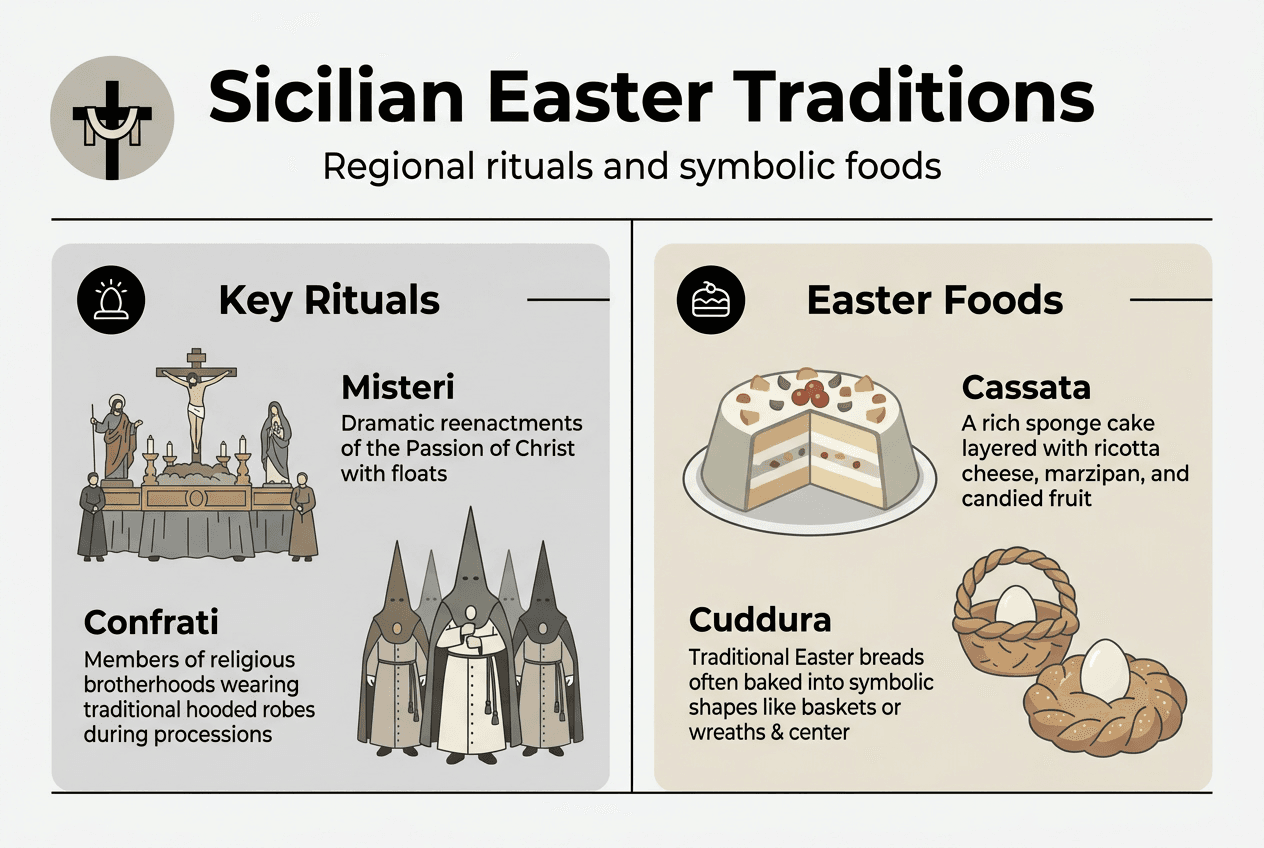
- Brotherhood confraternities organizing processions wearing traditional robes and hoods
- Baroque church decorations featuring flowers, candles, and intricate altar displays
- Community meals breaking Lenten fasts with symbolic foods shared among neighbors
- Musical traditions including sacred hymns and mournful brass bands
Regional variations add remarkable diversity. Western towns like Trapani emphasize solemn overnight processions, while eastern communities in Enna stage dramatic encounters between statues. Coastal areas incorporate maritime blessings, and mountain villages maintain medieval customs lost elsewhere. This geographic variety means no two Sicilian Easter experiences match exactly.
Pro Tip: Visit smaller inland towns like Prizzi or San Fratello to witness Easter traditions with fewer crowds and more authentic local participation than major tourist centers.
Understanding these Sicilian traditions helps travelers appreciate why Easter remains Sicily’s most emotionally charged festival. The celebrations aren’t performances for tourists but living expressions of identity that communities preserve fiercely. This depth transforms casual observers into moved witnesses of something genuinely sacred.
Iconic processions and rituals across Sicilian towns
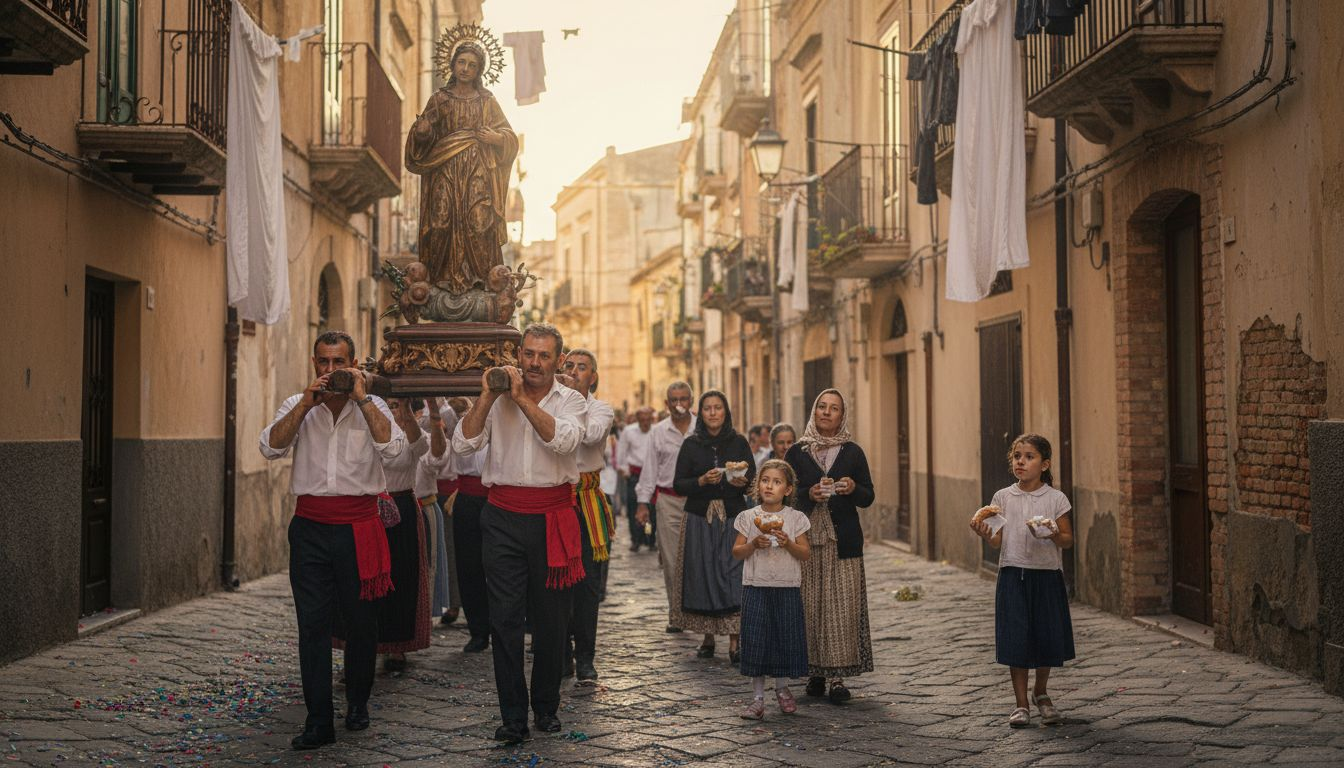
The Misteri di Trapani stands as Sicily’s most renowned Easter spectacle. Starting Good Friday afternoon, twenty groups of life-sized wooden statues depicting Christ’s Passion parade through Trapani’s streets for 24 continuous hours. Hooded members of ancient confraternities carry these heavy sculptures in a swaying motion called the “annacata,” creating an almost hypnotic rhythm. The procession doesn’t end until Saturday afternoon, with participants walking through the night accompanied by brass bands playing funeral marches.
Enna hosts equally dramatic celebrations with a different character. On Good Friday, thousands of hooded “Confrati” march in absolute silence through medieval streets, creating an eerie atmosphere. Easter Sunday brings joy as statues of the risen Christ and Mary meet in the town square, symbolizing reunion. The contrast between Friday’s somber mourning and Sunday’s explosive celebration captures Easter’s emotional journey.
Processions and rituals vary by town and reflect deep cultural heritage, as this comparison shows:
| Town | Key Ritual | Date/Time | Visitor Tips |
| — | — | — |
| Trapani | 24-hour Misteri procession with 20 statue groups | Good Friday 2pm to Saturday 2pm | Arrive early Friday for best viewing spots along Corso Vittorio Emanuele |
| Enna | Silent hooded march and Sunday statue encounter | Good Friday evening, Easter Sunday noon | Book accommodation months ahead as hotels fill completely |
| Marsala | Processione del Giovedì Santo with living statues | Holy Thursday evening | Join locals in historic center for intimate atmosphere |
| Caltanissetta | Real Maestranza procession with 16 statue groups | Holy Wednesday through Good Friday | Watch from balconies on Via Roma for aerial perspective |
Typical procession elements create unforgettable sensory experiences:
- Elaborate baroque statues dressed in velvet and gold, some weighing over 1,000 pounds
- Participants wearing centuries-old robes, hoods, and ceremonial regalia specific to each confraternity
- Brass bands performing mournful funeral marches composed specifically for Easter
- Thousands of candles and torches illuminating nighttime processions
- Flower petals scattered by children along processional routes
- Incense clouds drifting through narrow medieval streets
Community participation defines these events. Families compete for the honor of carrying statues, with positions often passed down through generations. Locals line balconies for hours, some setting up chairs days in advance. The atmosphere blends reverence with festival energy as entire towns pause normal life.
Pro Tip: Position yourself at key turning points where statue carriers must navigate tight corners. The skill required to maneuver heavy sculptures through narrow streets without touching walls showcases impressive coordination and creates dramatic moments.
These processions aren’t museum pieces but living traditions. The same confraternities organizing today’s events trace their origins to the 1600s. Understanding this continuity helps visitors recognize they’re witnessing something far deeper than top Sicilian attractions but rather participation in Sicily’s cultural soul.
Traditional Sicilian Easter foods and their symbolic meanings
Sicilian Easter tables overflow with dishes carrying centuries of symbolism. Lamb dominates as the central protein, representing Christ’s sacrifice. Families roast whole lambs or prepare “agnello al forno” with potatoes, rosemary, and wine. The meal breaks the Lenten fast, making it both spiritually and physically satisfying after 40 days of restricted eating.
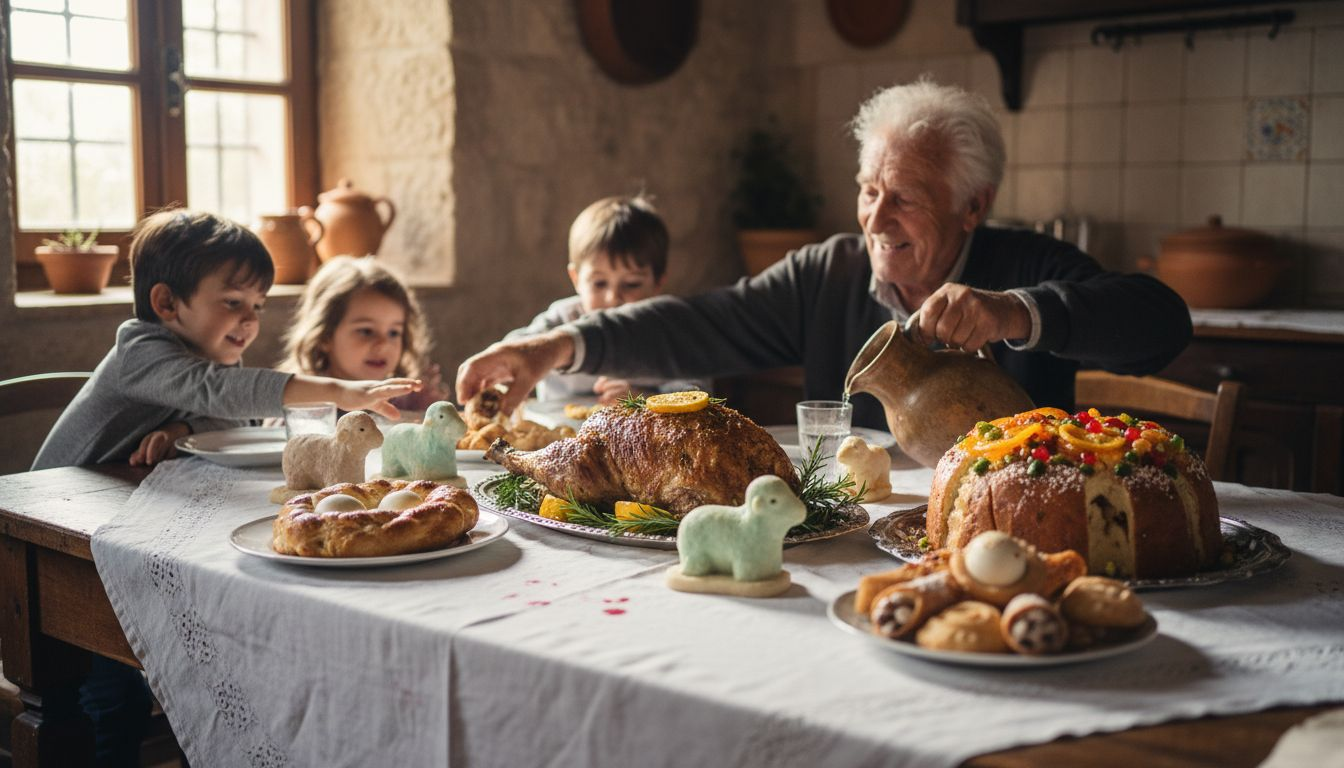
Sweet traditions reveal Sicily’s Arab-influenced pastry expertise. Cassata Siciliana, the island’s most famous dessert, appears exclusively during Easter season. Layers of sponge cake, sweetened ricotta, marzipan, and candied fruits create a baroque masterpiece symbolizing the joy of resurrection. Each element carries meaning: ricotta represents purity, marzipan shows craftsmanship, and bright candied fruits celebrate spring’s return.
Cuddura, also called “pupi cu l’ova,” are decorated bread sculptures shaped like baskets, dolls, or animals with hard-boiled eggs baked into the dough. Children receive these as gifts, with the eggs symbolizing new life and rebirth. Grandmothers spend days crafting elaborate designs, passing down techniques through generations. The tradition connects modern families to centuries of Sicilian Easter celebrations.
Traditional Sicilian Easter foods symbolize rebirth and community, as this table details:
| Dish | Key Ingredients | Symbolic Meaning | Regional Variations |
|---|---|---|---|
| Agnello (Lamb) | Lamb, rosemary, garlic, white wine | Sacrifice and redemption through Christ | Western Sicily adds potatoes, eastern areas prefer herbs |
| Cassata Siciliana | Ricotta, marzipan, sponge cake, candied fruits | Joy, abundance, resurrection celebration | Palermo version uses green marzipan, Messina prefers white |
| Cuddura/Pupi cu l’ova | Bread dough, eggs, anise, decorative icing | New life, fertility, childhood innocence | Shapes vary: eastern Sicily favors dolls, west prefers baskets |
| Scacce | Thin dough, ricotta or vegetables, olive oil | Breaking the fast, community sharing | Ragusa fills with ricotta, Catania uses greens |
| Colomba Pasquale | Sweet bread, almonds, pearl sugar | Peace through the dove symbol | Adopted from northern Italy but Sicilian versions add pistachios |
Easter food customs extend beyond individual dishes. Families gather for marathon meals lasting hours, with multiple courses served in specific order. The “pranzu di Pasqua” (Easter lunch) often includes 10 to 15 dishes, each prepared by different family members. This communal cooking and eating reinforces bonds and honors tradition.
Food sharing etiquette reflects Sicilian hospitality:
- Neighbors exchange plates of homemade specialties, especially sweets
- Inviting guests to Easter meals shows respect and friendship
- Refusing offered food can cause offense, accept at least a small portion
- Complimenting the cook’s skill is expected and appreciated
- Bringing wine or pastries when invited demonstrates proper manners
These culinary traditions connect directly to Sicilian cuisine uniqueness, showcasing how food carries cultural memory. Every bite tells stories of invasion, adaptation, and survival. The Arab influence in marzipan, the Spanish introduction of chocolate, and the Greek origins of ricotta cheese all converge on Easter tables.
Tips for travelers to experience Sicilian Easter authentically
Successful Easter travel to Sicily requires strategic planning months in advance. Follow these steps for optimal experiences:
- Book accommodation by January for popular towns like Trapani, Enna, and Marsala, as hotels fill completely by February.
- Research specific town schedules since procession times vary, some starting as early as Wednesday and continuing through Sunday.
- Arrange transportation between towns carefully, as public transit reduces service during Easter weekend.
- Purchase travel insurance covering potential schedule changes, as Easter events can shift due to weather.
- Reserve restaurant tables for Easter Sunday lunch weeks ahead, or risk finding everything fully booked.
- Download offline maps since cell service becomes unreliable with crowd density during major processions.
- Pack layers for unpredictable April weather, as temperatures range from cool evenings to warm afternoons.
Respectful behavior during religious ceremonies preserves the sacred nature of events. Dress modestly with covered shoulders and knees when attending church services or processions. Many Sicilians wear black on Good Friday as a sign of mourning, and visitors following this custom show cultural awareness. Maintain silence during solemn moments, especially when processions pass or during church services.
Photography requires sensitivity and awareness. While processions are public events, avoid using flash during nighttime ceremonies as it disrupts the atmosphere and bothers participants. Never step into processional routes for better angles, as this shows disrespect and creates safety hazards. Ask permission before photographing individuals, especially children or elderly participants. Some confraternities prohibit photos of hooded members’ faces to preserve anonymity and tradition.
Pro Tip: Arrive at procession routes 90 minutes early to secure viewing spots, but choose locations where you can leave easily if needed. Corner positions offer dynamic views as statue carriers navigate turns, while straight stretches allow seeing the full procession length.
Local customs enhance authentic experiences:
- Greet locals with “Buona Pasqua” (Happy Easter) during the holiday period
- Accept offered food or drink from friendly residents, refusing can seem rude
- Learn basic Italian phrases beyond tourist vocabulary to show respect
- Support local businesses by purchasing Easter sweets from family bakeries
- Attend smaller neighborhood processions in addition to major events
- Join locals in applauding when statue carriers complete difficult maneuvers
Practical considerations improve comfort during long events. Wear comfortable walking shoes as processions cover miles of cobblestone streets. Bring water and snacks since finding open shops during peak procession hours proves difficult. Carry a small flashlight for navigating dark medieval alleys. Keep valuables secure as pickpockets target distracted crowds.
Engaging with locals deepens cultural understanding. Sicilians generally welcome respectful questions about traditions and often invite curious travelers to join family celebrations. Strike up conversations at cafes or while waiting for processions. Many older residents speak limited English but appreciate attempts to communicate. Younger Sicilians often translate and enjoy sharing their heritage.
Consider booking Sicily tours with cultural experts who provide context and access to experiences independent travelers might miss. Guides explain symbolism, introduce you to confraternity members, and navigate logistics smoothly. Getting around Sicily during Easter requires flexibility, as road closures and crowds complicate travel between towns.
These Sicily travel tips apply doubly during Easter when normal tourist advice needs adjustment for massive crowds and altered schedules. The effort pays off through unforgettable encounters with living traditions that have survived centuries unchanged.
Explore Sicily’s rich Easter culture with expert support
Experiencing Sicilian Easter’s depth requires more than showing up. You need insider knowledge about which towns host the most authentic celebrations, how to navigate complex schedules, and where to find experiences beyond tourist crowds. Sicilian Traveler specializes in connecting you with Sicily’s genuine cultural heart.

Our comprehensive guides help you plan every detail, from selecting the right towns for your interests to understanding the symbolism behind each ritual. We’ve spent years documenting Easter traditions across Sicily, building relationships with local communities, and identifying the moments that transform casual visits into profound cultural experiences. Whether you want to witness the Misteri di Trapani’s full 24 hours or discover hidden village celebrations unknown to guidebooks, our resources provide the roadmap.
Book authentic Sicily tours through our trusted partners who respect traditions while ensuring you don’t miss crucial moments. Access our Sicily travel tips tailored specifically for Easter season challenges. Explore our curated best Sicily travel resources that go beyond generic advice to deliver genuine local insight. Let us help you experience Easter the way Sicilians do, with respect, wonder, and deep appreciation for traditions that have endured centuries.
FAQ
What is the most famous Sicilian Easter procession?
The Misteri di Trapani holds the distinction as Sicily’s most renowned Easter celebration. This 24-hour continuous procession features twenty groups carrying life-sized wooden statues through the city from Good Friday afternoon until Saturday. The event attracts thousands of visitors annually who witness hooded confraternity members performing the traditional swaying walk while brass bands play mournful marches. Learn more about this and other Sicilian traditions that define the island’s cultural identity.
When is Sicilian Easter celebrated in 2026?
Easter Sunday falls on April 5, 2026, with Holy Week events beginning the preceding Sunday, March 29. Major processions typically occur from Holy Thursday (April 2) through Easter Sunday, though some towns start celebrations as early as Holy Wednesday. Specific timing varies by location, with western Sicilian towns often emphasizing Good Friday events while eastern communities focus more on Easter Sunday celebrations. Check individual town schedules as local traditions determine exact dates and times for specific rituals.
How can visitors participate respectfully in Sicilian Easter events?
Respectful participation starts with modest dress covering shoulders and knees, especially during church services and solemn processions. Maintain quiet during sacred moments and never interrupt processional routes for photos or better viewing positions. Ask permission before photographing individuals, and avoid flash photography during nighttime ceremonies. Engage with locals through friendly conversation but recognize when silence is appropriate. Following these guidelines allows you to witness profound traditions without disrupting their sacred nature while locals generally welcome respectful visitors who show genuine interest in understanding their cultural heritage.
What traditional foods should travelers try during Sicilian Easter?
Travelers must experience cassata Siciliana, the elaborate layered cake with ricotta, marzipan, and candied fruits available only during Easter season. Try cuddura, decorative bread sculptures with baked eggs symbolizing rebirth and new life. Sample roasted lamb prepared with rosemary and local wine, representing the traditional Easter sacrifice. Visit family bakeries for regional specialties like scacce filled with ricotta or seasonal vegetables. Many restaurants offer special Easter menus featuring multiple traditional courses, providing opportunities to taste dishes rarely available other times of year.
Which Sicilian towns offer the best Easter experiences for first-time visitors?
Trapani delivers the most famous experience with its 24-hour Misteri procession offering impressive scale and continuous activity. Enna provides dramatic contrasts between Good Friday’s silent mourning and Easter Sunday’s joyful celebration in a stunning hilltop setting. Marsala offers more intimate experiences with easier logistics and fewer crowds while maintaining authentic traditions. Caltanissetta presents elaborate processions through baroque streets with excellent viewing opportunities. First-time visitors should consider attending events in two different towns to appreciate regional variations, balancing a major celebration like Trapani with a smaller community experience for deeper cultural immersion.