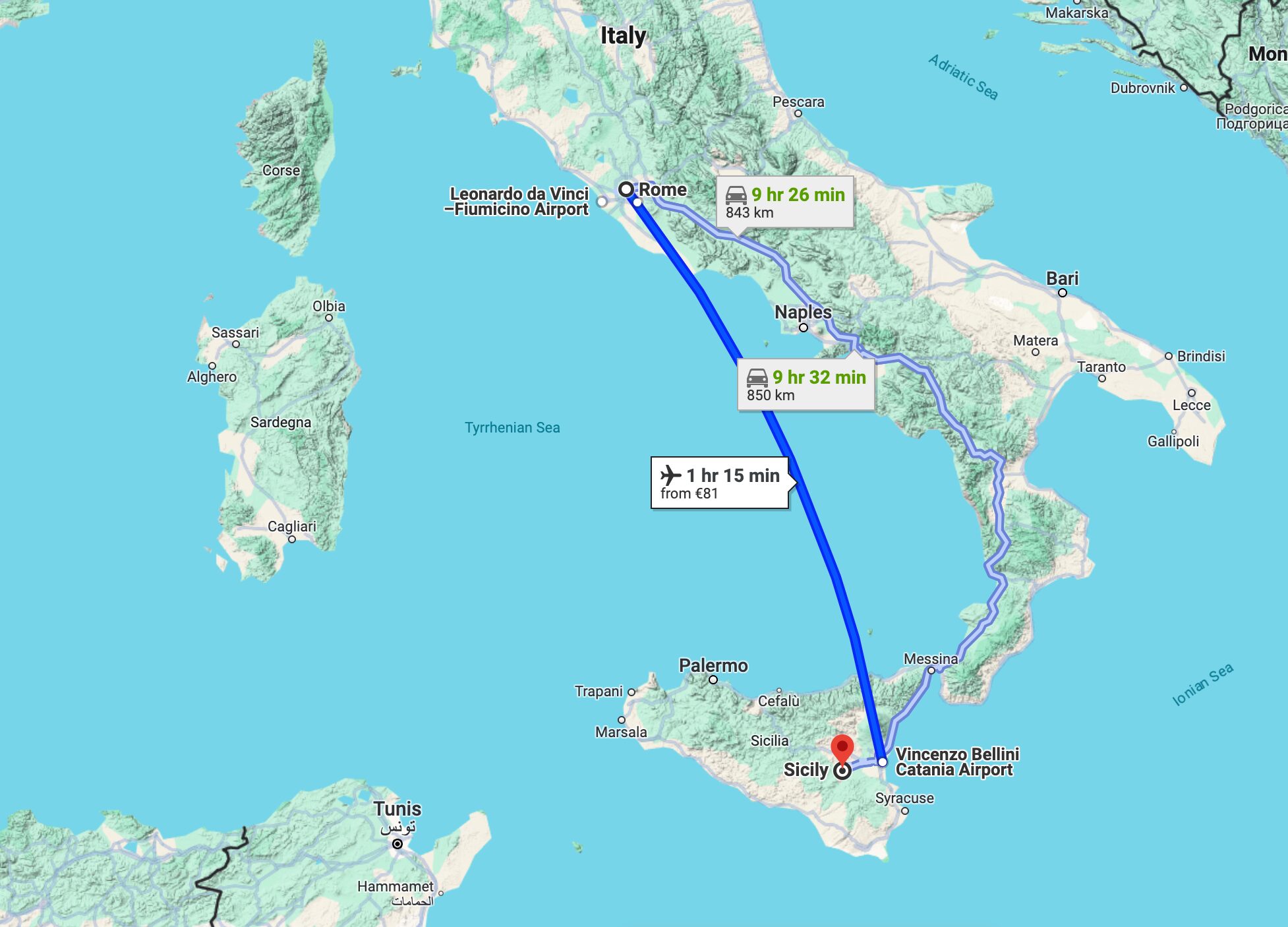
The best way to travel from Rome to Sicily depends on where you are going. Fly to Catania for eastern Sicily and Palermo for western Sicily if time matters. Take the direct night train if you prefer a slower journey and want to avoid an airport transfer.
| Option | Best for | What to know |
|---|---|---|
| Flight | A short trip | Fastest, but include airport time |
| Direct night train | Comfort and city-centre travel | The train boards the ferry to Sicily |
| Coach | A low fare | Long journey, usually overnight |
| Car | A road trip around Sicily | You cross the Strait of Messina by ferry |
| Ferry from the mainland | Travelling with a car or cabin | Routes and frequency vary by season |
Prices and timetables change often, so compare the complete journey rather than the headline fare.
Flying from Rome to Sicily
Flying is normally the sensible choice for a trip of a week or less. Direct services operate from Rome to Sicily’s main airports, but the right airport is more important than finding the cheapest ticket.
- Catania (CTA): best for Catania, Syracuse, Taormina, the Val di Noto and Mount Etna.
- Palermo (PMO): best for Palermo, Cefalù, Castellammare del Golfo and much of western Sicily.
- Trapani (TPS) and Comiso (CIY): useful only when the route and dates suit your itinerary.
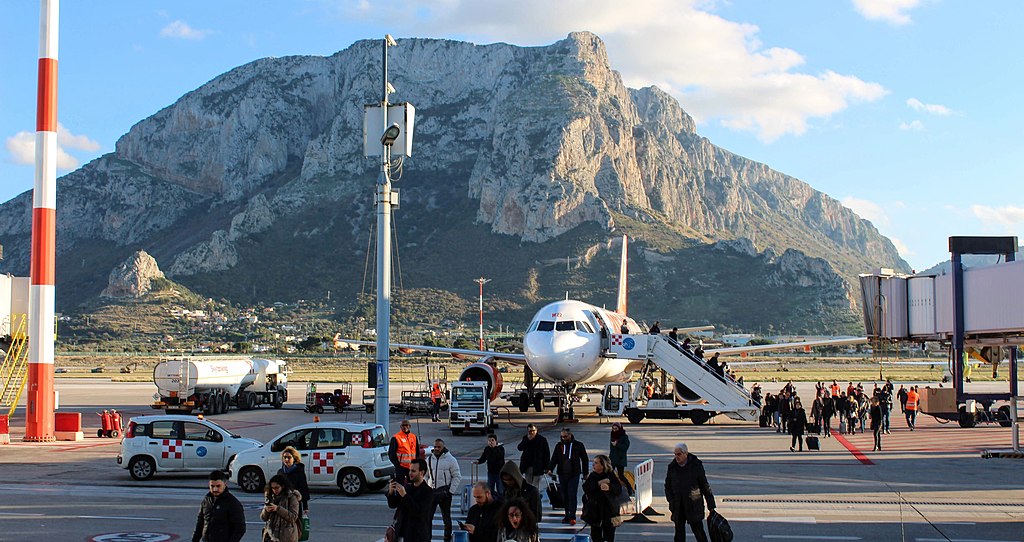
A flight may take little more than an hour, but the real journey includes travel to the airport, security and the transfer at the other end. Our guide to Sicily’s airports explains which one fits each part of the island.
Taking the direct train
Rome has direct Intercity and Intercity Notte trains to Sicilian cities including Messina, Catania, Syracuse and Palermo. At Villa San Giovanni, the train is divided and loaded onto a ferry. You stay with the same service while it crosses the Strait of Messina.
This is one of the few journeys in Europe where a long-distance train boards a ship. It is also practical: an overnight compartment can replace a hotel night, and you arrive closer to the city centre than you would by plane.
The journey is long, and delays on such a complex route are possible. Reserve a couchette or sleeper if you intend to sleep; a standard seat for the entire night is much less comfortable. Check the exact service on Trenitalia, as departure times and carriage arrangements can change.
Travelling by coach
Long-distance coaches connect Rome with Messina, Catania and Palermo. They usually travel overnight and board the ferry at Villa San Giovanni.
The coach can be cheaper than a late flight or sleeper cabin, but it offers less space and the arrival time is vulnerable to road and ferry traffic. Compare FlixBus and Autoservizi Salemi for your date, and check whether the service is direct before booking.
Driving from Rome to Sicily
Driving only makes sense if the car is useful for the rest of your trip. The road from Rome to Villa San Giovanni is a full day’s drive before stops, traffic and the ferry. At the port, vehicles board a short crossing to Messina.
Caronte & Tourist runs the Strait service throughout the day and night, with lower frequency during quieter hours. Allow time for queues in summer and on holiday weekends.
Before taking a rental car across the Strait, check the rental company’s rules, one-way charges and ferry coverage. A car is useful in rural areas, but it is often a burden in Palermo, Catania and other historic centres. Read our guide to getting around Sicily before deciding.
Taking a ferry from Civitavecchia or Naples
Passenger and vehicle ferries connect mainland ports with Palermo and other Sicilian ports. Civitavecchia is Rome’s port, but Naples may offer a more useful sailing on some dates.
This option works best when you are bringing a car, want a cabin or prefer an overnight sea crossing. It is rarely the fastest route for a foot passenger once the trip from central Rome to the port is included. Operators and schedules vary by season, so confirm the exact port, check-in deadline and arrival time before paying.
Which option should you choose?
- For Catania, Syracuse or Taormina: fly to Catania, or take a direct night train if you have more time.
- For Palermo and western Sicily: fly to Palermo, or use the direct night train.
- For a road trip: drive only if you want the same car in Sicily and are comfortable with a long first day.
- For the experience: take the sleeper train. The ferry crossing is part of the journey rather than a separate transfer.
Once you arrive, use our Sicily travel guide to build the rest of the route.