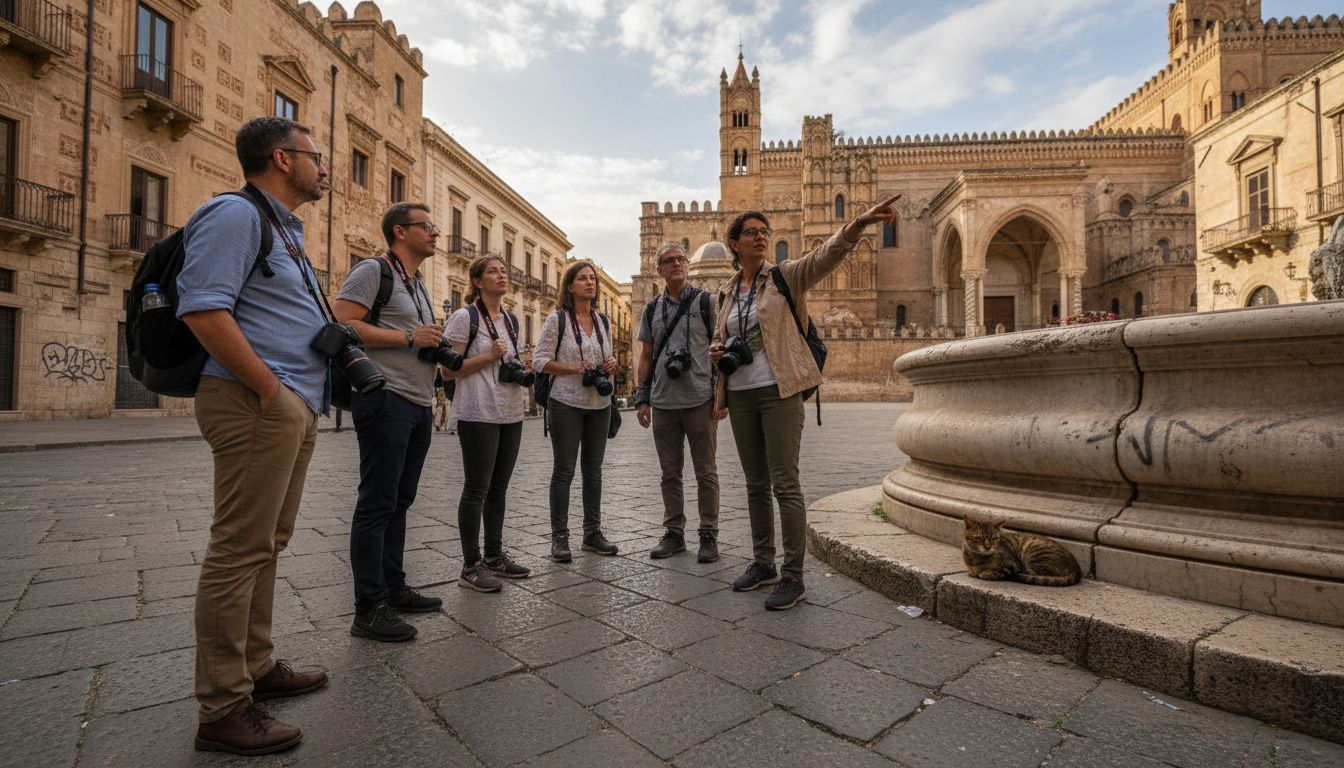

Every traveler searching for more than just postcards finds themselves drawn to cities where cultures blend in everyday life. Palermo, the heart of Sicily, goes beyond simple historical sites with its mix of Arab, Norman, Spanish, and Jewish influences living side by side. The city’s multicultural identity serves as a catalyst for urban renewal and community engagement, creating spaces where architecture, food, and street life feel genuine and vibrant. This guide shows how Palermo’s unique roots invite you to experience history that’s still evolving.
Table of Contents
- Palermo’s Multicultural Roots And Identity
- Unique Architecture And Historical Landmarks
- World-Famous Sicilian Food And Markets
- Vibrant Street Life And Local Traditions
- Beaches, Nature, And Day Trip Destinations
Key Takeaways
| Point | Details |
|---|---|
| Cultural Integration | Palermo’s multicultural roots have led to a unique blend of influences that coexist, shaping its identity today. |
| Architectural Diversity | The city’s architecture showcases a rich tapestry of styles, reflecting its historical layers and cultural interactions. |
| Vibrant Street Life | Daily life in Palermo is marked by traditions and communal spaces that foster social interaction and cultural engagement. |
| Access to Nature | Palermo’s proximity to beautiful beaches and mountainous landscapes enhances its appeal and showcases the region’s character. |
Palermo’s Multicultural Roots and Identity
Palermo’s story is one of collision, blending, and transformation. The city didn’t develop a single identity—it collected them all. Centuries of rulers, merchants, and migrants from across the Mediterranean left their fingerprints on every street, building, and tradition.
The layers run deep. Arab traders introduced farming and irrigation techniques. Norman kings built Christian churches with Islamic architectural elements. Spanish rulers left baroque facades. Jewish communities established thriving quarters. Each wave of influence didn’t erase what came before—it added to the cultural fabric.
What makes this different from other Mediterranean cities? Palermo actually integrated rather than segregated its populations. You see it in the architecture, the food, the street names, the festivals.
This multicultural foundation shaped how Palermo functions today:
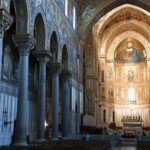
- A city where Norman and Arab design exist in the same cathedral
- Neighborhoods where multiple immigrant communities live alongside longtime residents
- Food traditions that are impossible to trace back to a single origin
- Religious sites representing Christianity, Islam, Judaism, and other faiths
Palermo’s multicultural makeup, with diverse migrant populations, particularly visible in neighborhoods like Albergheria, continues to shape the social and cultural identity of the city. Despite tourism pressures and gentrification, these areas maintain their unique cultural character by preserving historic identity alongside new immigrant influences.
This isn’t a museum piece. It’s living. When you walk through the markets, you’re seeing Palermo’s multicultural roots in action—vendors from different backgrounds, languages mixing, flavors combining.
Palermo’s multicultural identity serves as a catalyst for urban renewal and community engagement, positioning the city as a model for cultural coexistence in the Mediterranean.
The city’s candidacy for European Capital of Culture in 2019 wasn’t just tourism marketing. It reflected genuine recognition that Palermo’s multicultural heritage and community engagement represent something rare and valuable.
When you visit, you’re not seeing remnants of history. You’re experiencing a living, breathing multicultural community that has continuously reinvented itself while staying rooted in its diverse past.
Pro tip: Visit neighborhoods beyond the main tourist zones—places like Albergheria and Vucciria—where you’ll find authentic multicultural character, local shops, and street food vendors representing the real multicultural identity that guides the city.
Here’s how different cultures have left a lasting mark on Palermo’s identity:
| Culture/Influence | Lasting Contribution | Modern-Day Example |
|---|---|---|
| Arab | Advanced irrigation techniques, use of spices | Geometric building motifs, spicy street foods |
| Norman | Church and palace construction, mosaics | Norman-Arab cathedral architecture |
| Spanish | Baroque artistic style, culinary influences | Decorative building facades, sweet pastries |
| Jewish | Established vibrant quarters, culinary input | Synagogue remnants, preserved food recipes |
Unique Architecture and Historical Landmarks
Palermo’s skyline tells a thousand-year story without speaking a word. Every building you see represents a different era, a different ruler, a different cultural moment. The architecture isn’t uniform or cohesive—it’s beautifully contradictory.
Walk through the old town and you’ll spot a Norman church next to an Arab marketplace. Then a baroque palace appears. A Gothic arch frames a view of Islamic geometric patterns. This layering is intentional—it reflects how Palermo actually developed, with each civilization adding to what already existed.
Why does Palermo’s architecture matter to travelers? Because you’re not just looking at old buildings. You’re reading the city’s history through stone, tile, and design.
The most iconic landmarks showcase this fusion:
- Palazzo dei Normanni: Royal palace with the Palatine Chapel featuring stunning Byzantine mosaics that blend Christian and Islamic art
- Palermo Cathedral: A cathedral that looks like five different buildings combined, reflecting Norman, Gothic, baroque, and neoclassical styles
- Teatro Massimo: Italy’s largest opera house, showcasing neoclassical grandeur and engineering that took 26 years to complete
- The Kalsa District: Medieval tower houses and palaces displaying a fusion of Islamic, Norman, and Gothic architectural elements
Palermo’s historical center demonstrates architectural fusion across its neighborhoods. The recovery of medieval tower houses in the Kalsa district reveals how buildings tell stories of historical coexistence and cultural exchanges throughout centuries.
These aren’t just pretty facades. The architecture solved practical problems for different populations. Arab design brought water management systems and covered markets. Norman construction adapted to Mediterranean climate. Each style answered the needs of its time.
Palermo’s buildings are living testimony to cultural coexistence—each stone tells a story of a different civilization choosing to build rather than destroy what came before.
When you visit, notice small details. Look at doorways, window frames, decorative tiles, and rooflines. You’ll see the handwriting of different architects, different eras, different values expressed in design.
The city’s UNESCO recognition acknowledges this architectural significance. Palermo doesn’t have uniform medieval charm like some European cities—it has something rarer: authentic architectural complexity that shows how different cultures actually lived together.
Pro tip: Hire a local guide for walking tours through the Kalsa and Vucciria districts; they’ll point out architectural details you’d miss alone and explain how specific design elements reflect the different cultures that shaped each building.
World-Famous Sicilian Food and Markets
Palermo’s food isn’t something you read about in a guidebook—it’s something you experience with every sense. The markets assault you in the best way possible: vendors shouting prices, sizzling pans, spices mixing with salt air, colors exploding from fruit and fish displays.
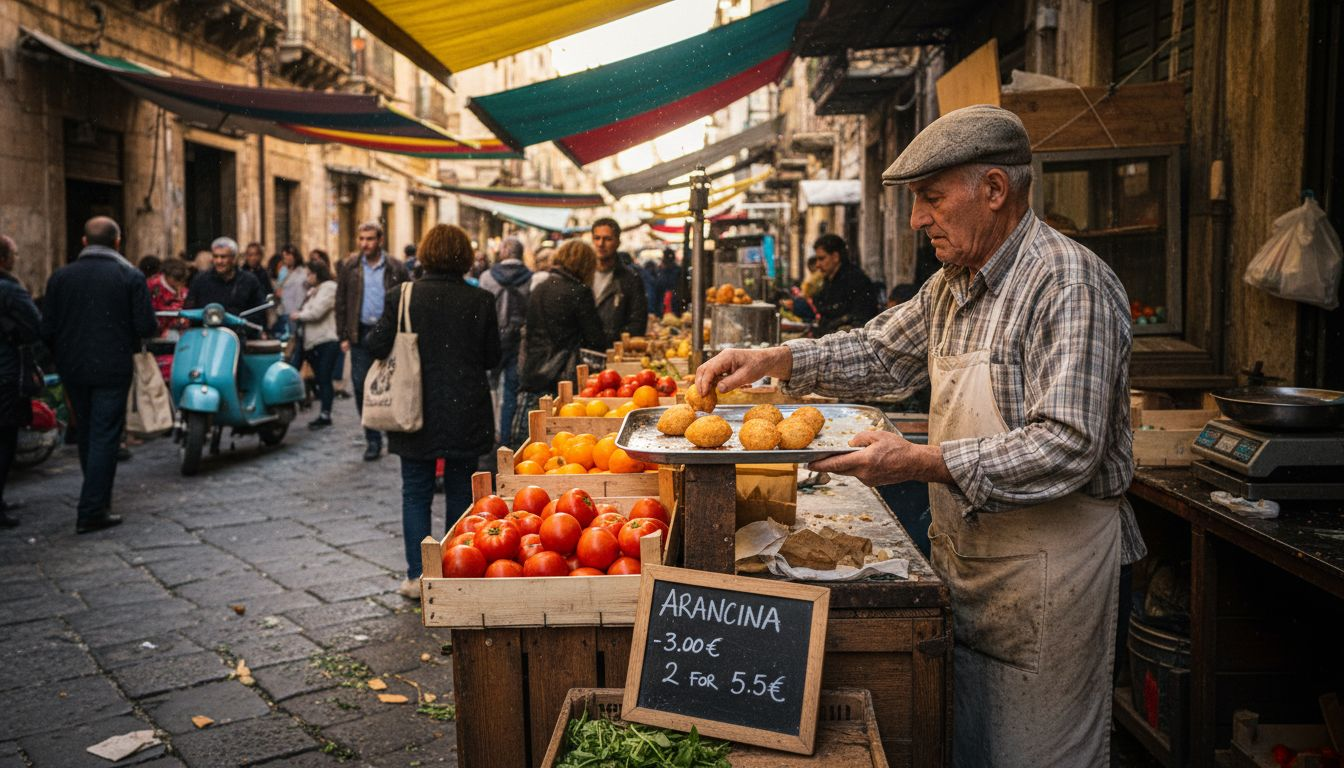
This is where Sicilian food lives. Not in fancy restaurants, but in the streets, in the markets, in the hands of people who’ve been making the same dishes for generations.
The food reflects Palermo’s multicultural past. Arab traders brought citrus and spices. Normans added meat techniques. Spanish rulers introduced new ingredients. Jewish communities developed their own specialties. Every flavor you taste is a conversation between centuries of cultures.
The most legendary street foods aren’t accidents. They’re solutions. People needed affordable, portable food that could be eaten while working or shopping.
- Arancina: Rice balls filled with ragù, peas, and cheese—a Arab-Norman fusion that became Sicilian identity
- Pane e panelle: Chickpea fritter sandwich that’s been feeding Palermo for centuries
- Sfincionello: Sicilian pizza with tomato, onion, and anchovy
- Panelle: Crispy chickpea flour cakes served hot from the fryer
- Caponata: Sweet and savory eggplant dish blending Norman and Arab flavors
Street food culture embodies Palermo’s culinary heritage and social traditions. Vendors preserve history and identity through food, making markets cultural hubs where tradition meets modern urban life.
Visit Vucciria, Capo, or Ballarò markets early morning. You’ll see vendors preparing street food the way their families have for decades. Watch them work. The skill is invisible until you see it—how they move, how they know exactly when something’s ready, how they interact with regular customers.
Palermo’s markets are living proof that food isn’t just about flavor—it’s about community, history, and identity served on a plate.
These aren’t tourist attractions pretending to be authentic. They’re actual markets where locals shop, eat breakfast, and catch up with neighbors. You’re not an observer—you’re participating in daily Palermo life.
The traditional Sicilian street foods blend centuries of culinary influences with authentic preparation methods that make each bite taste exactly right. You can taste the history in every ingredient.
When you eat arancina from a street vendor, you’re not just having lunch. You’re tasting the same food that workers, students, and families have eaten for generations.
Pro tip: Go to markets between 7 and 10 AM before the afternoon crowds; ask vendors where they source their ingredients and watch them prepare food—street vendors love sharing their craft with curious travelers.
See how Palermo’s top food markets each offer a unique experience:
| Market Name | Main Highlights | Typical Atmosphere |
|---|---|---|
| Vucciria | Classic street food, late hours | Lively, eclectic, youthful spots |
| Capo | Historic produce displays, family-run stalls | Bustling, traditional, local-focused |
| Ballarò | Multicultural vendors, diverse snacks | Energetic, boisterous, cosmopolitan crowd |
Vibrant Street Life and Local Traditions
Palermo doesn’t wind down after sunset—it wakes up. The evening passeggiata transforms the streets into a social stage where locals stroll, chat, and see each other. This isn’t something tourists do. This is how Palermitans actually live.
The rhythm of daily life here follows traditions that have survived centuries of change. People know their neighbors. Shop owners remember regular customers’ names. Conversations happen in doorways and on corners. This social fabric is what makes Palermo feel alive in ways other cities don’t.
Street life isn’t random chaos. It follows patterns rooted in culture, religion, and community values that run deeper than most visitors realize.
Key traditions that shape daily Palermo:
- Evening passeggiata: The ritual evening walk where families and friends dress up and stroll main streets
- Market culture: Daily gathering spaces where commerce meets social interaction and gossip
- Feast celebrations: Religious festivals blending devotion, music, food, and street performances
- Coffee rituals: Morning espresso at neighborhood bars, a time for news and connection
- Sunday traditions: Church, family meals, and outdoor gatherings that anchor weekly life
Historic markets remain central to Palermo’s urban identity and livelihood. These vibrant spaces offer essential areas for social interaction and cultural expression despite urban pressures.
The Feast of Santa Rosalia exemplifies this blend perfectly. For five days each July, the city explodes with energy—religious processions, street food stalls, music performances, and thousands of people celebrating together. Yet it’s not manufactured tourism. Families have observed this feast the same way for generations.
Palermo’s traditions aren’t performances for outsiders—they’re the actual heartbeat of how the city functions and how Palermitans connect with each other.
When you walk through neighborhoods at 9 PM, you’ll see families sitting on stoops, teenagers gathered on corners, older men playing cards. This isn’t quaint folklore. This is normal Wednesday night.
The traditions persist because they serve real purposes. Markets remain gathering spaces. Festivals build community bonds. Evening strolls are affordable entertainment and social connection. These aren’t dying customs—they’re actively maintained because they work.
Understanding Palermo’s festivals and local celebrations reveals how religious devotion, music, and community celebration shape the city’s cultural heartbeat.
When you visit, stop trying to be a tourist. Sit at a bar and watch people. Join the evening passeggiata without an agenda. Visit markets multiple times to see how they actually function. Attend a local festival if your timing allows. You’ll understand Palermo differently.
Pro tip: Walk the main streets (via Maqueda, via Roma) between 7 and 9 PM to experience the passeggiata; dress nicely because locals do, and you’ll blend in rather than stand out as a tourist.
Beaches, Nature, and Day Trip Destinations
Palermo sits at the intersection of mountains, beaches, and countryside. You can spend the morning wandering medieval streets, then escape to nature within an hour. This proximity to natural beauty is one of Palermo’s best-kept advantages.
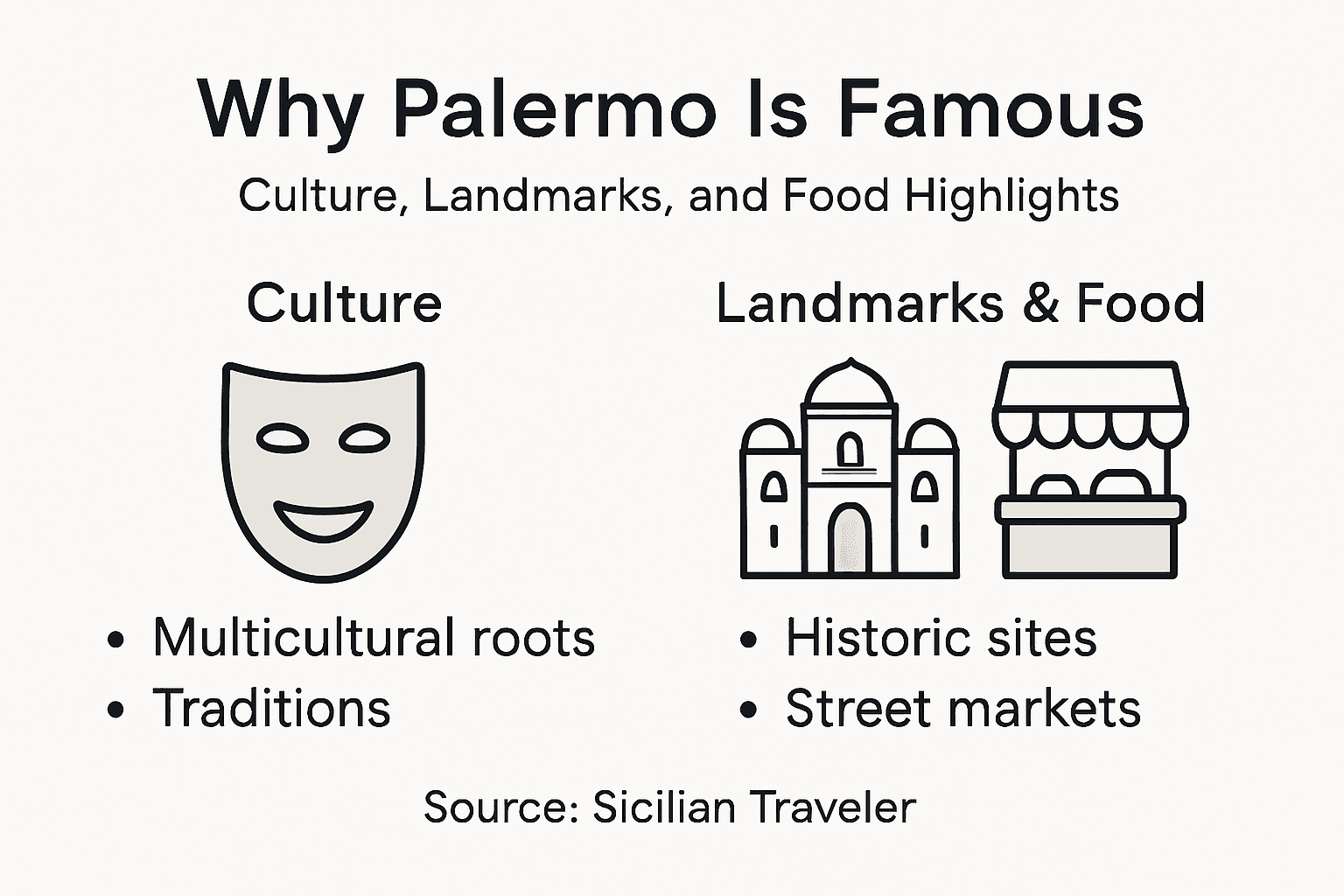
The city isn’t just urban chaos. It’s a gateway to Sicily’s coastal and rural landscapes. Many travelers miss this entirely, staying confined to the historic center.
Why leave the city? Because Palermo’s true character emerges when you see how it connects to the surrounding region. The food, culture, and traditions extend beyond city limits.
Top destinations within easy reach of Palermo:
- Cefalù: Picturesque beach town with historic old town, dramatic mountain backdrop, and accessible hiking
- Mondello Beach: Just 30 minutes away, offering sandy shores and seaside restaurants
- Mondello Pier: A restored vintage pier perfect for sunset walks and evening strolls
- Ustica Island: Small island with pristine beaches, snorkeling, and marine reserves
- Monreale: Mountain town famous for a stunning cathedral with golden mosaics
- Segesta: Greek archaeological ruins set in dramatic countryside with valley views
Day trips from Palermo like Cefalù offer a blend of natural beauty and cultural richness. These locations provide scenic coastal charm within a short journey from the city.
Cefalù deserves special mention. It’s close enough for a day trip yet feels worlds apart. The town clings to a rocky headland with a massive mountain rising behind it. The beach curves along turquoise water. The historic center features narrow streets and a stunning Norman cathedral. You can hike La Rocca mountain for panoramic views, then eat fresh seafood dinner watching the sunset.
One day trip reveals more about Sicily than a week confined to Palermo—these surrounding areas show how culture, food, and landscape actually connect.
Mondello offers something different. It’s the beach escape for Palermitans themselves. Local families come here on weekends. The water is warmer and clearer than many Mediterranean beaches. You’ll find unpretentious beach bars and gelato shops, not tourist traps.
Monreale works as a contrasting escape. Instead of beaches, you’re climbing into mountains to see one of Sicily’s greatest artistic treasures—a cathedral floor-to-ceiling in golden Byzantine mosaics.
These aren’t curated tourist experiences. They’re actual places where locals spend their leisure time. That distinction matters. You’re seeing Sicily as Sicilians experience it.
Pro tip: Rent a car or book a private driver for day trips; public transportation exists but is slower, and having flexibility lets you explore villages between major destinations and discover local restaurants locals actually use.
Discover Palermo’s Rich Culture and Landmarks Like a Local
Palermo’s unique blend of multicultural history, stunning architecture, and vibrant street life offers travelers an unforgettable experience. However, navigating its intricate neighborhoods, authentic markets, and diverse culinary traditions can feel overwhelming. You want to truly experience Palermo beyond typical tourist spots and connect with its living heritage.
Start your journey with Sicilian Traveler where expert insights and insider tips reveal Palermo’s hidden gems and authentic encounters. From exploring the historic Kalsa district to tasting legendary street foods in bustling markets like Vucciria and Ballarò, our travel blog guides help you unlock the real soul of Palermo. Visit Sicilian Traveler now and plunge into the heart of Sicilian culture, history, and food. Don’t just visit Palermo—experience it deeply today!
Explore more about Palermo’s culture and landmarks, and plan your adventure with trusted advice only at Sicilian Traveler.
Frequently Asked Questions
Why is Palermo famous for its multicultural roots?
Palermo is famous for its multicultural roots because various civilizations, including Arabs, Normans, and Spaniards, influenced its architecture, cuisine, and traditions, creating a unique blend that still exists today.
What are some key architectural landmarks in Palermo?
Key architectural landmarks in Palermo include the Palazzo dei Normanni, Palermo Cathedral, Teatro Massimo, and the Kalsa District, each showcasing a fusion of different styles and cultural influences.
What makes Sicilian food in Palermo unique?
Sicilian food in Palermo is unique because it reflects a rich history of cultural influences, with dishes that combine flavors from Arab, Norman, Jewish, and Spanish cuisine, such as arancina, panelle, and caponata.
How do local traditions shape life in Palermo?
Local traditions in Palermo shape everyday life through practices like the evening passeggiata, market culture, and religious festivals, fostering a strong sense of community and connection among residents.