
Agrigento stands as Italy’s 2026 Capital of Culture, a recognition that elevates this southern Sicilian gem into the spotlight for travelers seeking authentic cultural depth. This ancient city offers far more than weathered temples. You’ll discover Mediterranean cliffs, vibrant street art, and culinary traditions that have survived millennia. Whether you’re drawn to archaeological wonders or contemporary Sicilian life, Agrigento delivers both in remarkable abundance.
Table of Contents
- Introduction To Agrigento’s Cultural Significance
- The Historical And Archaeological Heritage Of The Valley Of The Temples
- Cultural And Urban Heritage Of Agrigento
- Natural Wonders Around Agrigento
- Culinary And Cultural Experiences In Agrigento
- Visitor Experience And Tourism Practicalities
- Common Misconceptions About Agrigento
- Plan Your Agrigento Visit With Sicilian Traveler
- Frequently Asked Questions
Key Takeaways
| Point | Details |
|---|---|
| Cultural Recognition | Agrigento earned the Italian Capital of Culture designation for 2026, spotlighting its historical and artistic importance. |
| Archaeological Wealth | The Valley of the Temples features seven Doric temples dating to the 6th century BC, recognized as a UNESCO World Heritage Site since 1997. |
| Natural Beauty | Scala dei Turchi’s white marl cliffs provide stunning coastal scenery complementing ancient ruins. |
| Living Culture | Urban areas showcase medieval, Baroque, and Norman architecture alongside contemporary festivals and street art. |
| Practical Appeal | Spring and fall offer optimal visiting conditions with milder weather and fewer crowds than peak summer months. |
Introduction to Agrigento’s Cultural Significance
The Italian Capital of Culture designation for 2026 transforms Agrigento from a regional attraction into a national priority. This recognition brings increased cultural programming, enhanced visitor infrastructure, and international attention to a city that has quietly preserved 2,600 years of history. The designation acknowledges not just ancient monuments but the living community that maintains cultural traditions through generations.
Sicilian and Italian tourism officials view Agrigento as a cornerstone of Mediterranean cultural heritage. The city occupies a strategic position in promoting Sicily’s diverse attractions beyond the typical tourist circuit. You’ll find that 2026 brings expanded museum hours, new cultural exhibitions, and special events designed to showcase both historical depth and contemporary creativity.
This elevated profile impacts your travel experience directly. Expect improved signage, multilingual guides, and enhanced accessibility to archaeological sites that were previously understaffed. The city has invested in training local guides, upgrading visitor centers, and creating digital resources that contextualize ancient ruins within broader Mediterranean history.
“Agrigento’s 2026 designation represents a commitment to sustainable cultural tourism that benefits both visitors and residents, preserving authenticity while improving access to Sicily’s most significant historical treasures.”
The designation also encourages deeper engagement with local communities. Cultural programming extends beyond major sites into neighborhood festivals, artisan workshops, and culinary events that reveal how ancient traditions shape modern Sicilian life. This recognition positions Agrigento as essential for travelers who seek substance over superficial sightseeing.
The Historical and Archaeological Heritage of the Valley of the Temples
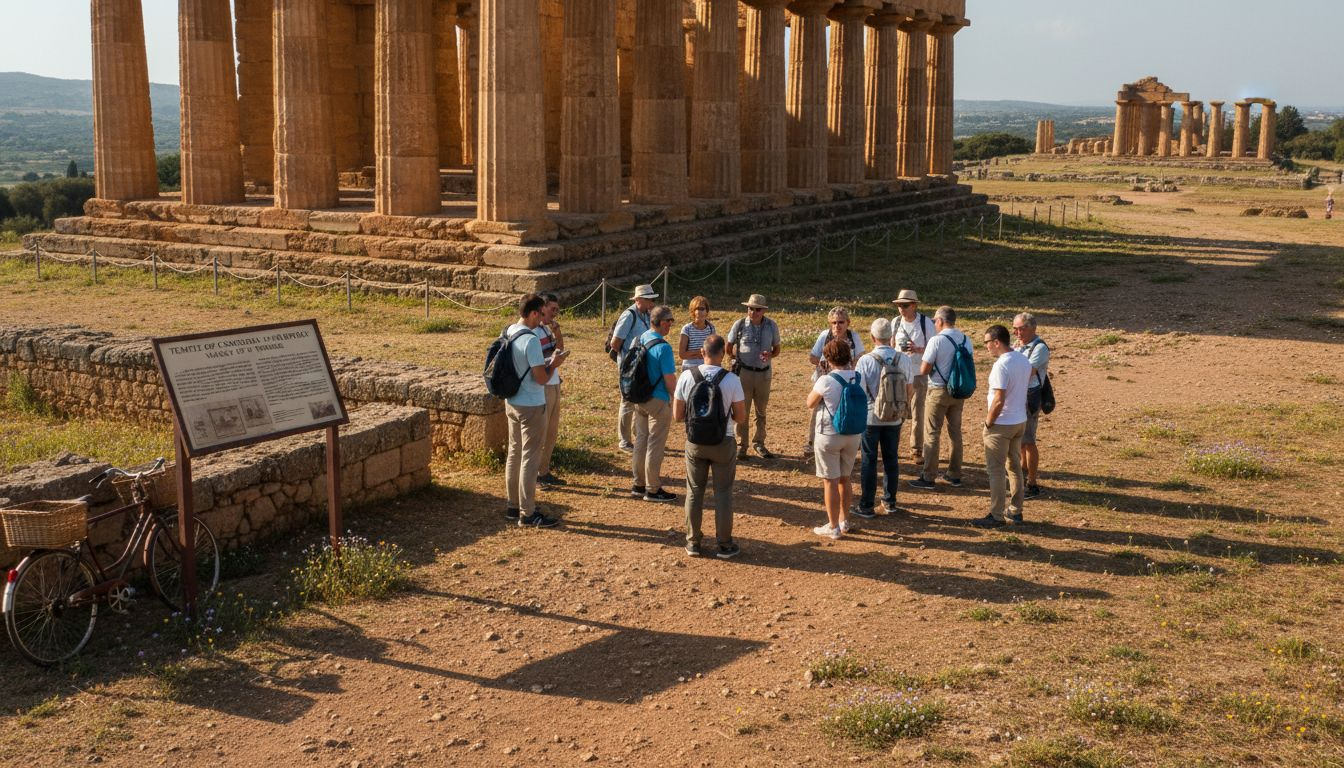
Founded around 582 BC by Greek colonists from Gela, Agrigento once ranked among the Mediterranean’s wealthiest and most powerful cities. Ancient writers described Akragas, as Greeks called it, as a place of extraordinary beauty and prosperity. The Valley of the Temples represents one of the best-preserved ancient Greek temple complexes outside Greece, earning UNESCO World Heritage status in 1997 for its outstanding universal value.
Seven Doric temples anchor the archaeological park, each revealing distinct aspects of ancient Greek religious practice and architectural innovation. These structures survived earthquakes, medieval stone quarrying, and centuries of neglect through a combination of robust construction techniques and geographical fortune. The temples sit on a ridge overlooking the Mediterranean, a location that provided both defensive advantages and symbolic prominence.
Key temples that demand your attention include:
- Temple of Concordia, dating from 440 BC, stands as the most complete ancient Greek temple outside Athens
- Temple of Hera occupies the eastern ridge with commanding coastal views and traces of ancient fire damage
- Temple of Heracles, the oldest at the site, preserves eight standing columns from the original 38
- Temple of Zeus, though largely ruined, would have been among the largest Doric temples ever constructed
UNESCO designation ensures rigorous preservation standards for Valley of the Temples attractions that maintain authenticity while allowing public access. Conservation teams work continuously to stabilize structures, prevent erosion, and document changes using digital scanning technology. This commitment means you’ll experience temples much as travelers did decades ago, with minimal modern intrusion beyond necessary safety measures.
The archaeological park spans 1,300 hectares, making it one of the largest ancient sites in the Mediterranean. Beyond temples, you’ll discover necropoli, ancient water systems, and residential areas that reveal daily life in a thriving Greek colony. These elements combine to present not just religious monuments but a complete picture of an ancient urban civilization.
Key Temples and Architectural Highlights
The Temple of Concordia stands as one of the most complete Doric temples worldwide, rivaling even the Parthenon in preservation quality. Built in the 5th century BC, it survived largely because early Christians converted it into a church in the 6th century AD. This repurposing meant continuous maintenance that prevented the collapse afflicting nearby temples. You’ll notice how each column maintains its original fluting and how the entablature preserves intricate details often lost to time.
The Temple of Hera, also called Juno’s Temple, crowns the eastern ridge with dramatic Mediterranean views. Built around 450 BC, it shows clear evidence of fire damage from Carthaginian attacks in 406 BC. The reddish staining on some stones comes from that ancient conflagration. Archaeologists have partially reconstructed the colonnade, giving you a clear sense of the temple’s original proportions and spatial relationships.
The Temple of Heracles represents the oldest structure at the site, dating to approximately 510 BC. Only eight columns stand today, raised during 20th century restoration work. Despite its fragmentary state, the temple’s massive foundation and remaining architectural elements convey the scale of early Greek religious architecture in Sicily. The temple honored Heracles, the mythological hero particularly revered in Greek Sicily.
These temples reveal ancient Greek religious practices through their orientation, proportions, and decorative programs. Each faced east to catch the rising sun during religious ceremonies. The Doric order’s mathematical proportions created visual harmony that ancient architects believed reflected cosmic order. Sculptural decoration, though mostly lost, originally depicted mythological narratives that reinforced civic values and religious devotion.
Pro Tip: Visit the archaeological museum before exploring the temples to understand architectural details and historical context. The museum displays original sculptures and artifacts that help you visualize how these structures looked when new. Early morning visits to the temple sites offer the best light for photography and the most comfortable temperatures during summer months.
Consider the temples’ placement within the broader landscape. Ancient city planners positioned these monuments to be visible from the sea, announcing Akragas’s power and prosperity to arriving ships. This strategic placement combined religious, political, and economic messaging in a unified urban design that influenced Mediterranean city planning for centuries.
Cultural and Urban Heritage of Agrigento
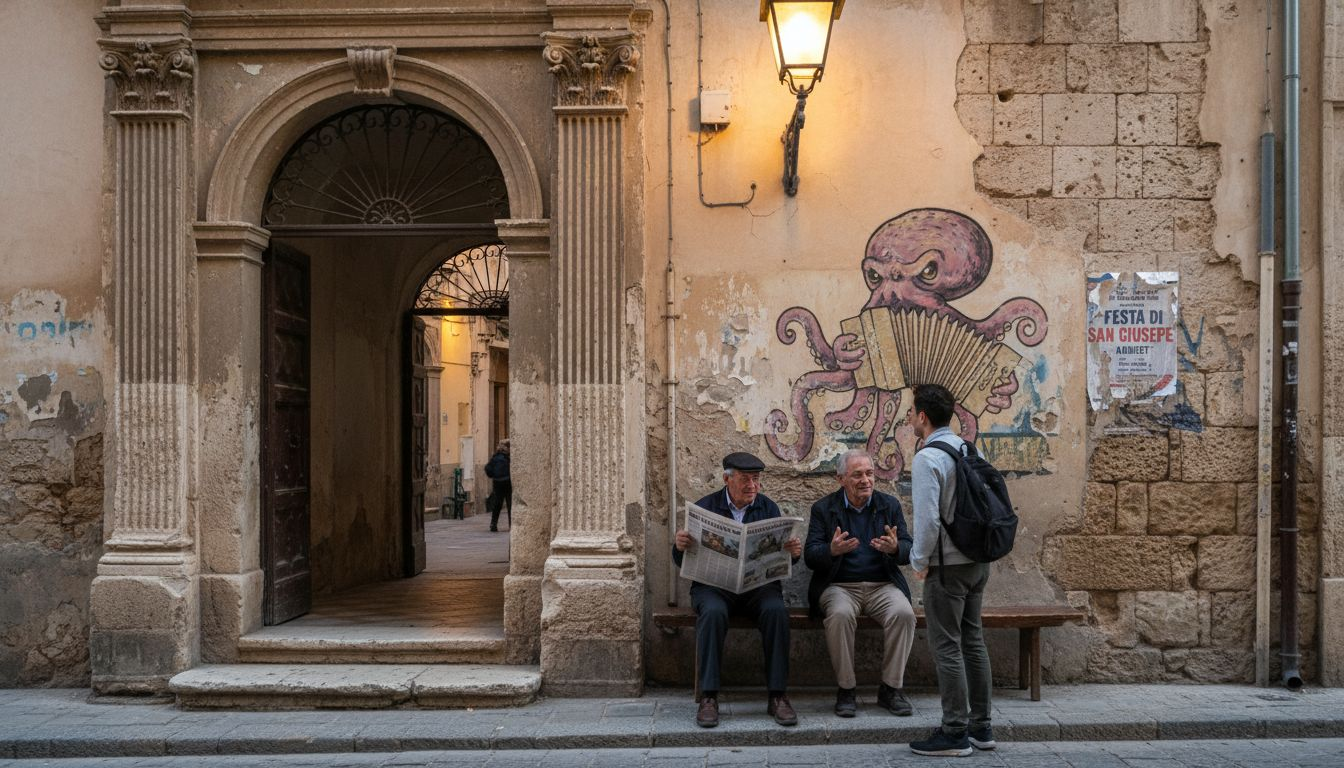
Beyond ancient temples, Agrigento offers dynamic urban culture including street art, festivals, and local community events that reflect Sicily’s layered history. The historic center weaves together medieval alleys, Baroque churches, and Norman fortifications into a compact urban fabric. Each architectural layer reveals a different chapter in Sicily’s complex past, from Arab occupation through Spanish rule to modern Italian unification.
Medieval structures cluster around Via Atenea, the city’s main commercial street. You’ll find 13th century churches with Gothic elements alongside 18th century palaces displaying elaborate Baroque facades. The Cathedral of San Gerlando, begun in the 11th century, combines Norman, Gothic, and Baroque elements added across eight centuries of construction. This architectural mixing reflects Sicily’s position as a Mediterranean crossroads where multiple cultures converged.
Contemporary cultural life thrives in unexpected ways throughout Agrigento:
- Street art installations transform neglected buildings into public galleries celebrating Sicilian identity
- The Farm Cultural Park in nearby Favara has revitalized an abandoned neighborhood into a contemporary art hub
- Annual almond blossom festivals in February combine ancient agricultural traditions with modern celebrations
- Summer concert series at the archaeological park blend classical music with ancient architecture
Pro Tip: Explore Agrigento’s historic center during evening passeggiata when locals promenade along Via Atenea. This traditional social hour reveals authentic community life beyond tourist attractions. Small cafes and family-run trattorias offer the most genuine experiences, often featuring recipes passed down through generations.
The 2026 Capital of Culture programming emphasizes how traditional crafts, culinary practices, and social customs persist in modern contexts. You’ll encounter workshops where artisans maintain centuries-old ceramic techniques, bakeries producing bread according to ancient methods, and festivals that reenact historical events with community participation. This integration of past and present creates a living museum experience where culture remains active rather than preserved behind glass.
Natural Wonders Around Agrigento
The Scala dei Turchi consists of white marl cliff formations shaped naturally over millennia by wind and water. Located along the coast between Realmonte and Porto Empedocle, these stepped cliffs contrast dramatically with the surrounding golden beaches and azure Mediterranean waters. The brilliant white stone, technically a sedimentary rock rich in limestone and clay, reflects sunlight so intensely that sunglasses become essential.
Geological processes created these formations through layered deposition during the Pliocene and Pleistocene epochs. Erosion then carved the characteristic stepped appearance that gives the cliffs their name, which translates to “Stair of the Turks” and references historical Saracen raids. You can walk on the smooth stone surfaces, though caution is necessary as the rock becomes slippery when wet.
Accessibility has improved significantly with designated parking areas and marked paths leading to the cliffs. Local authorities balance preservation with tourism by limiting construction near the site and maintaining natural coastal features in their original state. Summer crowds can be substantial, making spring and fall visits more pleasant for those seeking quieter natural experiences.
| Natural Landmark | Distance from Agrigento | Best Season | Key Features |
|---|---|---|---|
| Scala dei Turchi | 15 km | April to June | White marl cliffs, Mediterranean views, beach access |
| Torre Salsa Nature Reserve | 30 km | Year-round | Protected beaches, dune systems, migratory bird habitat |
| Pelagie Islands | 200 km | May to September | Marine reserve, sea turtle nesting, crystal-clear waters |
| Platani River Valley | 20 km | Spring | Archaeological sites, diverse ecosystems, hiking trails |
The contrast between natural beauty and archaeological monuments defines the Agrigento experience. Many visitors find that alternating between cultural sites and natural areas provides welcome variety and prevents museum fatigue. The Mediterranean landscape, with its aromatic herbs, ancient olive groves, and dramatic coastal geology, creates a sensory experience that complements intellectual engagement with history.
Culinary and Cultural Experiences in Agrigento
Agrigento’s gastronomy offers authentic Sicilian cuisine including seafood, pastries, and local wine that reflects the island’s agricultural abundance and multicultural influences. Coastal location ensures fresh fish markets daily, while inland areas produce almonds, pistachios, and citrus that flavor traditional dishes. Arab, Norman, and Spanish culinary traditions merged over centuries into distinctly Sicilian preparations that balance bold flavors with Mediterranean freshness.
Via Atenea and surrounding streets host family-run trattorias serving regional specialties rarely found outside Sicily. You’ll discover sarde a beccafico, sardines stuffed with breadcrumbs, pine nuts, and raisins, a dish combining Greek and Arab influences. Pasta con le sarde features wild fennel and fresh sardines in a sauce that tastes intensely of the Mediterranean. Local bakeries produce cannoli with sheep’s milk ricotta that bears little resemblance to mass-produced versions.
Key culinary experiences worth seeking:
- Morning visits to fish markets near Porto Empedocle reveal what locals actually eat rather than tourist-oriented menus
- Agriturismi in surrounding countryside serve farm-to-table meals featuring ingredients harvested that morning
- Wine from nearby Sambuca di Sicilia and Menfi DOC regions pairs excellently with rich Sicilian dishes
- Almond-based sweets trace directly to Arab period innovations in Sicilian confectionery
Cultural festivals intensified since the Capital of Culture designation, with monthly events celebrating everything from citrus harvests to religious feast days. The Sagra del Mandorlo in Fiore, held each February, transforms the city into a celebration of almond blossoms with folklore performances, craft markets, and culinary demonstrations. Religious processions during Holy Week combine Spanish-influenced pageantry with deep-rooted local devotion.
These food specialties and cultural events provide access to authentic Sicilian life that purely archaeological tourism misses. Sharing a meal at a neighborhood trattoria or attending a local festival creates connections with residents who maintain traditions their grandparents practiced. This immersive approach transforms passive sightseeing into active cultural exchange that enriches understanding far beyond guidebook facts.
Visitor Experience and Tourism Practicalities
Spring months from March through May and fall from September through November offer optimal conditions for exploring Agrigento. Temperatures range from 15 to 25 degrees Celsius, ideal for extended walking through archaeological sites without summer’s oppressive heat. Wildflowers bloom across the Valley of the Temples in spring, while fall brings harvest festivals and fewer crowds than peak summer.
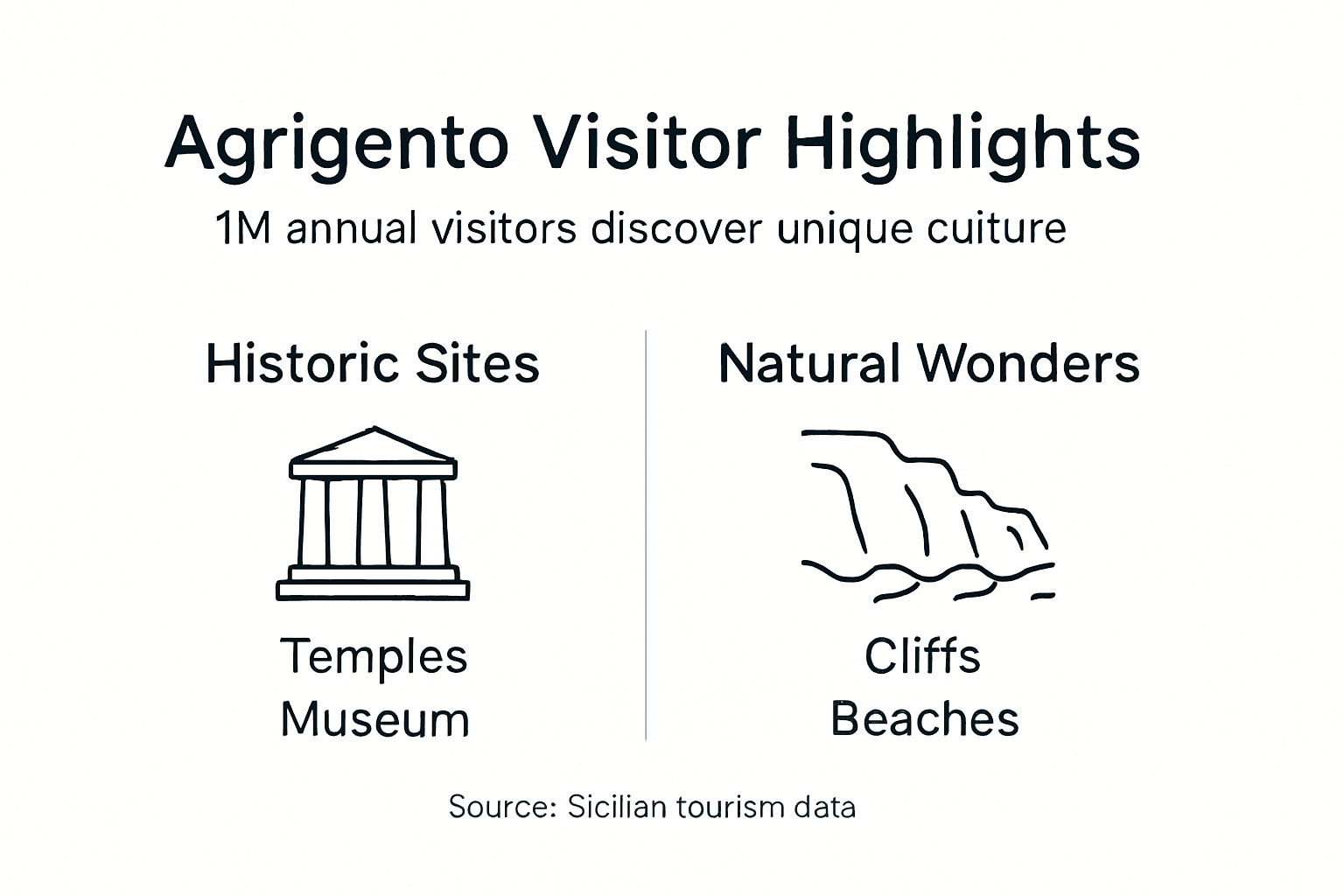
Agrigento attracts one million visitors annually to the Valley of the Temples, significant numbers that nonetheless remain manageable compared to Rome or Florence. Peak crowding occurs July through August when both international tourists and Italian vacationers converge. Cruise ship arrivals can temporarily flood popular sites, but these groups typically visit between 10 AM and 2 PM, leaving early mornings and late afternoons relatively peaceful.
Guided tours provide historical context that transforms temple ruins from attractive stone structures into meaningful cultural monuments. Professional guides explain architectural details, historical events, and mythological connections that bring ancient civilization to life. Many speak multiple languages and tailor presentations to visitor interests, whether focused on architecture, religion, or daily life in ancient times.
Practical recommendations for your visit:
- Purchase combined tickets covering archaeological park and museum for better value and comprehensive understanding
- Wear sturdy walking shoes as paths include uneven ancient paving stones and gravel surfaces
- Bring sun protection and water as shade is limited and summer temperatures exceed 35 degrees Celsius
- Allow minimum four hours for thorough temple exploration plus additional time for the museum
- Book accommodations in advance during peak seasons as Agrigento’s hotel capacity is limited compared to larger cities
Public transportation from major Sicilian cities includes regular bus and train service, though rental cars provide greatest flexibility for exploring surrounding areas. The archaeological park offers parking, though spaces fill quickly during peak hours. Consider staying in Agrigento rather than day-tripping from other cities to experience evening light on the temples and enjoy local restaurants after tour groups depart.
Common Misconceptions About Agrigento
Many travelers mistakenly assume Agrigento consists solely of ancient ruins without contemporary cultural interest. This narrow view misses the dynamic urban culture including festivals and community events that define modern Agrigento. The historic center, local markets, and neighborhood life offer rich experiences independent of archaeological attractions. Sicilian communities maintain vibrant traditions that exist alongside rather than merely in the shadow of ancient monuments.
Tourism crowd levels generate another common misconception. While Agrigento receives substantial visitors, numbers remain modest compared to Venice, Rome, or even Palermo. You’ll rarely encounter the overwhelming masses that plague Italy’s most famous destinations. Strategic timing avoids even modest crowds, allowing contemplative engagement with monuments rather than rushed photo opportunities.
Key misconceptions to dismiss:
- Agrigento lacks appeal beyond temples: Urban architecture, natural sites, and culinary traditions provide diverse attractions
- Summer is the only viable visiting season: Spring and fall offer superior weather and cultural programming
- All ancient sites look identical: Each temple displays distinct architectural features and historical significance
- Modern Agrigento has nothing to offer: Contemporary art, street culture, and festivals reveal living Sicilian identity
The perception that Agrigento represents exclusively historical rather than experiential tourism fails to account for how ancient and modern Sicily intersect. Archaeological context enriches appreciation of contemporary culture, while modern traditions illuminate how ancient practices evolved rather than disappeared. This integration creates layered experiences where multiple historical periods remain simultaneously visible and relevant.
Understanding these realities allows you to approach Agrigento with appropriate expectations. The city rewards travelers seeking depth over superficial highlights, those willing to explore beyond obvious attractions, and anyone interested in how Mediterranean civilizations influenced European culture. Dismissing common misconceptions opens possibilities for authentic engagement with one of Sicily’s most historically significant yet approachable destinations.
Plan Your Agrigento Visit with Sicilian Traveler
Ready to experience Agrigento’s archaeological wonders and cultural richness firsthand? Sicilian Traveler specializes in authentic Sicily tours that connect you with local guides, hidden culinary gems, and experiences beyond typical tourist circuits. Our insider knowledge helps you navigate visiting seasons, avoid crowds, and discover aspects of Agrigento that most visitors miss entirely.

Whether you’re planning your first Sicilian adventure or returning to explore deeper, our curated itineraries balance major attractions with neighborhood discoveries. We understand that meaningful travel requires more than checking off monuments. Our Sicily travel tips and expert recommendations ensure your Agrigento visit becomes a highlight of your entire Sicilian journey, combining historical depth with contemporary cultural immersion.
Frequently Asked Questions
Why is Agrigento considered a must-visit destination in Sicily?
Agrigento combines exceptional archaeological preservation with living Sicilian culture in ways few destinations match. The Valley of the Temples represents Mediterranean antiquity at its finest, while urban areas reveal centuries of architectural evolution. Natural beauty, authentic cuisine, and the 2026 Capital of Culture designation add contemporary relevance to ancient significance.
When is the best time to visit Agrigento?
Spring from March through May and fall from September through November provide ideal conditions with mild temperatures and manageable crowds. These shoulder seasons offer comfortable weather for extended walking through archaeological sites. Cultural festivals and harvest celebrations during these months add authentic local experiences unavailable during peak summer tourist season.
What can I expect besides ancient ruins in Agrigento?
Agrigento’s historic center features medieval and Baroque architecture, contemporary street art, and vibrant neighborhood life. The Scala dei Turchi cliffs provide stunning natural scenery within easy reach. Local markets, family-run trattorias serving authentic Sicilian cuisine, and cultural festivals reveal how ancient traditions persist in modern contexts beyond purely archaeological interest.
How crowded is Agrigento compared to other Sicilian cities?
Agrigento attracts significantly fewer tourists than Palermo, Taormina, or Syracuse, making it relatively uncrowded even during busy seasons. Strategic timing avoids even modest concentrations of visitors at major sites. The archaeological park’s large area disperses crowds effectively, and urban attractions remain pleasantly accessible without the overwhelming masses affecting Italy’s most famous destinations.