
Planning a hiking trip in Sicily can feel overwhelming. You’re excited about volcanic trails and coastal paths, but unsure which routes match your fitness level or how to stay safe on active volcano terrain. This guide cuts through the confusion, showing you exactly how to prepare, which trails to choose, and how to hike confidently across Sicily’s stunning landscapes while avoiding common mistakes that trip up first-time visitors.
Table of Contents
- Introduction To Hiking In Sicily
- Prerequisites: What You Need Before You Start
- Top Recommended Hiking Trails In Sicily
- Safety And Preparation Tips
- Guided Hike Vs Independent Hiking: Choosing Your Approach
- Common Mistakes And How To Avoid Them
- Expected Results And Outcomes
- Plan Your Sicilian Hiking Adventure With Expert Tips And Tours
- Can Beginners Hike Safely In Sicily?
- Do I Need A Guide To Hike Mount Etna?
- What’s The Best Season For Hiking In Sicily?
- How Difficult Are Sicily’s Hiking Trails?
- What Should I Pack For A Day Hike In Sicily?
Key takeaways
| Point | Details |
|---|---|
| Trail variety matches all skill levels | Sicily offers beginner coastal walks, moderate forest trails, and advanced volcanic summit climbs requiring guides. |
| Essential preparation prevents safety issues | Sturdy shoes, 2+ liters water, sun protection, and fitness assessment are mandatory before any hike. |
| Guided vs independent hiking trade-offs | Guides provide safety and cultural insights; solo hiking offers flexibility but requires self-reliance and legal compliance. |
| Common mistakes include ignoring volcanic alerts | Skipping volcanic activity checks, insufficient hydration, and midday hiking cause most preventable incidents. |
| Expected outcomes include fitness gains and cultural enrichment | Hikes range from 1.5 to 6 hours, improving endurance while deepening appreciation of Sicilian heritage. |
Introduction to hiking in Sicily
Sicily transforms hiking into a multisensory adventure where you’re not just walking trails but stepping through layers of history and geology. Sicily offers diverse terrain including volcanoes, coastal trails, and forests combined with historical sites, creating experiences you won’t find anywhere else in the Mediterranean. One morning you’re navigating black volcanic rock on Mount Etna, watching steam vents hiss around you, and the next you’re tracing turquoise coastline through the Zingaro Nature Reserve.
The island’s hiking landscape breaks down into three main categories. Volcanic mountain routes challenge experienced hikers with steep ascents and lunar-like terrain, while coastal paths offer moderate difficulty with swimming breaks and cliff-top views. Forested inland trails provide shade and cooler temperatures, perfect for summer hikes when beaches become crowded. Each trail type connects to archaeological sites, Byzantine churches, or traditional villages, blending physical activity with Sicilian culture and natural landscapes.
What makes Sicilian hiking unique is this constant intersection of nature and human history. You’re rarely far from a Greek temple ruin, a Norman castle, or a family-run trattoria where locals share stories over homemade pasta. The trails themselves often follow ancient trade routes or pilgrimage paths, adding narrative depth to your physical journey. This combination attracts hikers who want more than just exercise. They seek local cultural insights woven naturally into outdoor exploration.
Key features across Sicilian hiking terrain include:
- Active volcanic landscapes with ongoing geological activity
- Mediterranean coastal paths with sea access and dramatic cliffs
- Mountain ranges reaching over 3,300 meters elevation
- Protected nature reserves with endemic flora and fauna
- Archaeological sites directly accessible from hiking routes
Prerequisites: What you need before you start
Before you lace up your boots, understanding what Sicily’s terrain demands from your gear and fitness saves you from painful lessons mid-trail. Hikers need sturdy hiking shoes, sun protection, hydration, fitness matched to trail difficulty, and awareness of volcanic risks. The rocky, uneven paths across most Sicilian routes will destroy regular sneakers within hours and leave your ankles vulnerable to twists.
Your water strategy matters more here than in cooler climates. Carry at least 2 liters per person for any hike longer than 90 minutes, and double that for summer outings or volcanic trails where shade disappears. The Mediterranean sun reflects off light colored rock, intensifying UV exposure even on cloudy days. Reapply SPF 50+ sunscreen every 90 minutes, wear a wide-brimmed hat, and pack lightweight long sleeves for shoulder coverage.
Physical preparation varies dramatically by trail choice. A coastal walk through Zingaro requires basic cardiovascular fitness and comfortable walking for 3 hours. Mount Etna summit attempts demand advanced endurance, altitude acclimatization, and mental readiness for challenging terrain. Honestly assess your current fitness level against trail ratings before committing. Check your Sicily hiking preparation checklist to avoid overestimating your capabilities.
Volcanic trail planning adds unique requirements. You must check Mount Etna’s current activity status through official channels before any volcanic hike. Eruptions or heightened activity close trails without warning. Learn to recognize volcanic hazard signs like increased steam emissions or ground temperature changes. For detailed guidance on hiking safety and preparation in Sicily, familiarize yourself with local emergency protocols and shelter locations.
Essential gear checklist:
- Hiking boots with ankle support and aggressive tread
- Moisture-wicking base layers and sun protective clothing
- First aid kit including blister treatment and pain relievers
- Topographic maps or GPS device with downloaded offline maps
- Emergency whistle and fully charged mobile phone
Pro Tip: Avoid hiking during peak midday heat between 12pm and 4pm, when temperatures soar and most heat-related emergencies occur. Start early morning hikes by 7am to complete challenging sections before the sun reaches full intensity.
Top recommended hiking trails in Sicily
Choosing the right trail transforms your Sicilian hiking experience from mediocre to memorable. Each route offers distinct challenges, scenery, and cultural touchpoints that appeal to different hiker profiles. Understanding what each trail delivers helps you match your goals with the terrain.
| Trail Name | Distance | Difficulty | Duration | Unique Features |
|---|---|---|---|---|
| Rocca di Cefalù | 3.4 km | Moderate | 2 hours | Panoramic coastal views, Temple of Diana ruins |
| Mount Etna Summit | 12-15 km | Advanced | 6 hours | Active volcano, lunar landscape, guided only above 2500m |
| Zingaro Nature Reserve | 7 km | Moderate | 3-4 hours | Coastal swimming coves, protected wildlife |
| Madonie Mountains | 8-10 km | Moderate to Difficult | 4-5 hours | Ancient forests, mountain villages |
| Valley of the Temples Loop | 5 km | Easy | 2-3 hours | Greek archaeological sites, flat terrain |
Rocca di Cefalù is a 3.4 km moderate hike with archaeological and panoramic views that rewards you with 360-degree vistas spanning the Tyrrhenian Sea to inland mountains. The trail climbs steadily through Mediterranean scrub, passing the Temple of Diana, a pre-Greek sanctuary dating to the 9th century BCE. Local guides recommend starting before 9am during summer months to avoid climbing in direct afternoon heat.
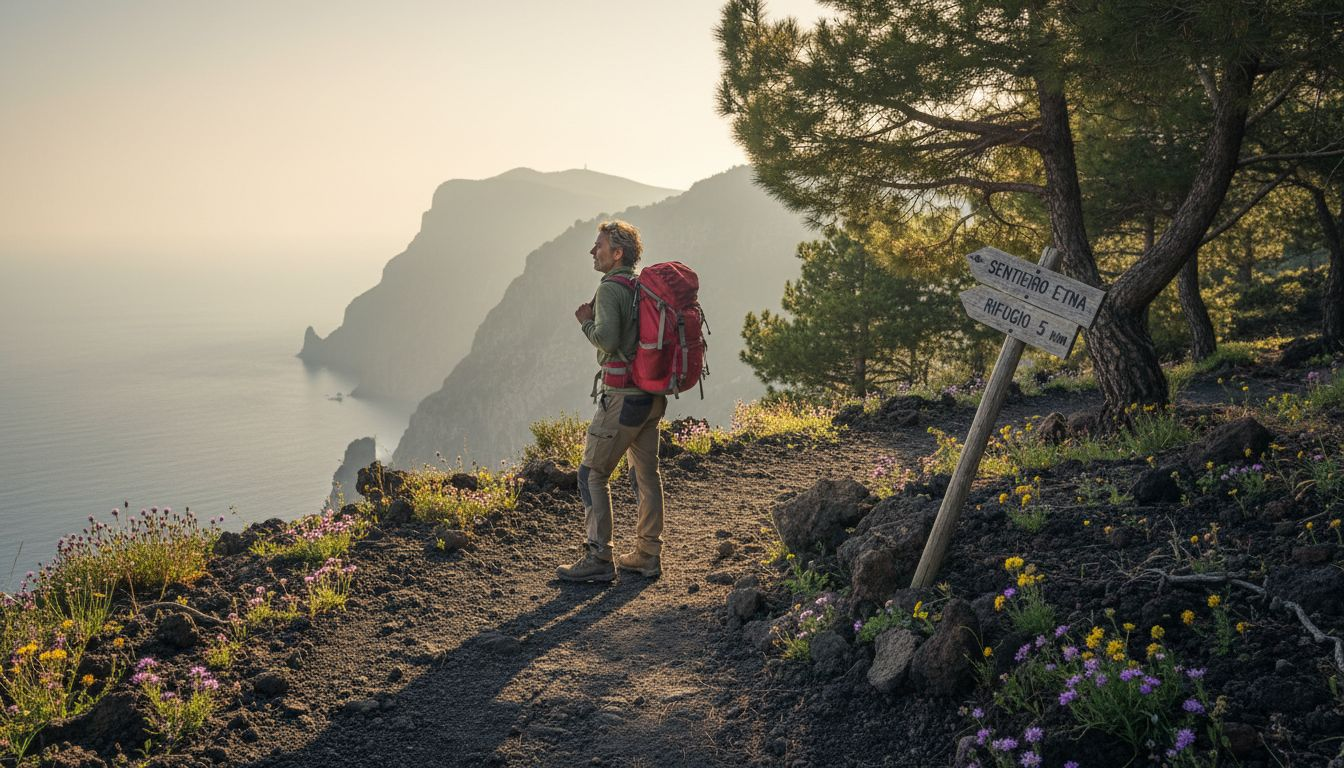
Mount Etna represents Sicily’s most iconic and challenging hiking destination. Mount Etna active volcano hikes require certified guides above 2500m and range up to 3300m elevation, with summit attempts taking 6 hours round trip from the upper cable car station. The landscape shifts from pine forests to barren lava fields as you ascend, with sulfur vents releasing yellow mineral deposits around crater edges. This isn’t a trail for casual hikers. Advanced fitness, altitude tolerance, and mental preparation for exposed terrain are non-negotiable.
Zingaro Nature Reserve delivers the perfect balance of coastal beauty and moderate physical challenge. The main trail hugs cliffsides high above crystalline waters, descending periodically to secluded coves where you can swim and rest. Wildlife includes Bonelli’s eagles, wild orchids, and the dwarf palm, Europe’s only native palm species. The reserve prohibits motor vehicles, preserving an untouched Mediterranean ecosystem.
For comprehensive Sicily hiking trail planning tips, consider seasonal variations in trail accessibility. Winter snow closes high elevation routes on Mount Etna and the Madonie peaks, while summer heat makes coastal trails more appealing despite larger crowds. Spring wildflowers peak in April and May, transforming hillsides into botanical displays.
Trail selection factors:
- Match difficulty ratings to your documented fitness achievements
- Consider cultural interests alongside physical challenge
- Factor in transportation logistics and trailhead access
- Check current trail conditions and seasonal closures
- Reserve guided tours for technical or legally restricted routes
For detailed hiking trail specifics and recent condition reports, consult multiple current sources. Trail maintenance and accessibility change yearly. Regarding Mount Etna hiking safety, never attempt to circumvent guide requirements or closed trail markers.
Safety and preparation tips
Safety consciousness separates successful Sicilian hikes from dangerous misadventures that end in rescue operations or medical emergencies. The combination of volcanic terrain, Mediterranean heat, and remote trail sections creates hazards absent from typical European hiking destinations. Guided hikes are mandatory above 2500m on Mount Etna for safety; check volcanic activity before hiking. This isn’t bureaucratic overreach but recognition that volcanic environments kill unprepared hikers through gas exposure, unstable ground, and sudden weather changes.
Volcanic trail safety requires specific knowledge and vigilance. Before any Mount Etna hike, check the official volcano observatory for current activity levels and trail status. Increased seismic activity, gas emissions, or lava flow can close sections without advance notice. Certified guides carry gas detectors, communication equipment, and emergency oxygen, resources you lack when hiking independently. The legal requirements exist because tourists have died ignoring them.
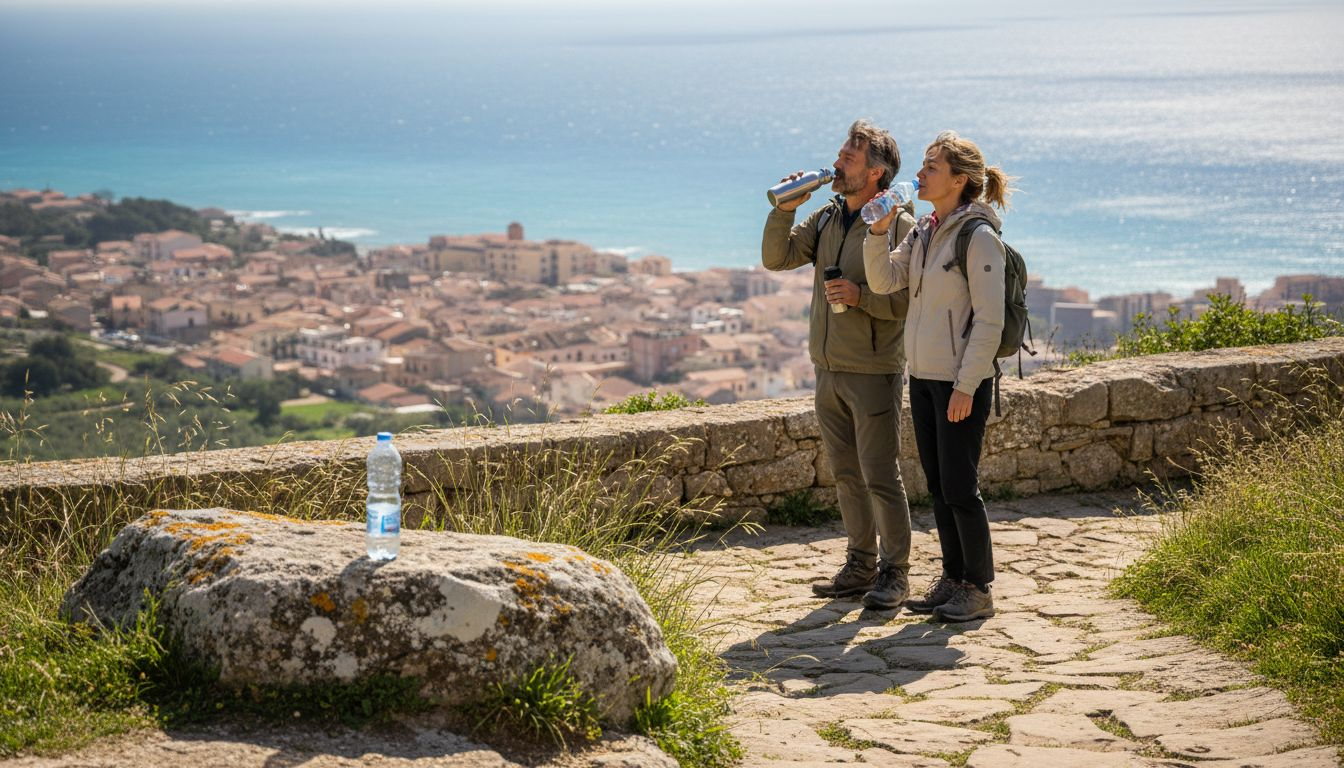
Heat management prevents the most common hiking emergencies in Sicily. Avoid hiking during the hottest hours (12pm to 4pm) to prevent heat exhaustion and dehydration. Symptoms of heat exhaustion include dizziness, nausea, rapid heartbeat, and confusion. By the time you feel thirsty, you’re already mildly dehydrated. Drink water steadily throughout your hike, roughly 250ml every 20 minutes during active hiking.
Start hydrating the night before a challenging hike, not the morning of. Your body needs 12-24 hours to fully absorb and distribute water to tissues. Morning-only hydration leaves you starting from a deficit.
Your Sicily hiking safety tips should include telling someone your planned route and expected return time. Cell coverage exists on popular trails but disappears in remote valleys and high mountain sections. Carry a physical map as backup to GPS devices, which fail when batteries die or signals vanish.
Critical safety measures:
- Never hike alone on advanced or volcanic trails
- Pack emergency shelter like a lightweight space blanket
- Know how to recognize and respond to heat exhaustion symptoms
- Carry high-energy snacks to maintain blood sugar during exertion
- Learn basic Italian phrases for emergencies and directions
Pro Tip: Download offline maps through apps like Maps.me or Gaia GPS before leaving your accommodation. Test the offline functionality in airplane mode to confirm maps load correctly without cellular data.
For specific Mount Etna volcanic safety protocols, understand that volcanic gases including sulfur dioxide and carbon dioxide accumulate in depressions and low-lying areas. Avoid lingering in crater depressions where gas concentrations reach dangerous levels. Regarding heat and hydration safety, recognize that altitude compounds dehydration effects, requiring increased water intake on mountain hikes.
Guided hike vs independent hiking: Choosing your approach
The choice between guided and independent hiking shapes your entire Sicilian trail experience, affecting safety, cultural depth, and flexibility. Guided hikes improve safety, especially on volcanoes and rugged paths, and enhance cultural understanding. Guides bring local knowledge about trail conditions, weather patterns, and cultural context that enriches what could otherwise be just physical exercise.
| Factor | Guided Hiking | Independent Hiking |
|---|---|---|
| Safety oversight | Professional monitoring, emergency response capability | Complete self-reliance, personal risk assessment |
| Cultural learning | Local stories, historical context, insider perspectives | Self-researched information, limited local interaction |
| Flexibility | Fixed schedule, group pace | Custom timing, personal pace control |
| Cost | €50-150 per person depending on route | Only transportation and park entry fees |
| Legal compliance | Automatic for restricted trails | Your responsibility to verify requirements |
Guided tours excel on technical terrain and legally restricted routes. Mount Etna summit attempts above 2500 meters legally require certified guides who understand volcanic hazards, carry safety equipment, and maintain communication with volcano monitoring stations. Trying to bypass this requirement risks fines, trail bans, and serious injury. Beyond legal mandates, guides prevent common mistakes like choosing unstable routes, missing weather warnings, or hiking during unsafe volcanic activity.
The cultural dimension often surprises hikers who initially view guides as unnecessary expenses. A knowledgeable guide transforms anonymous ruins into vivid historical scenes, explains how volcanic soil creates Sicily’s unique agriculture, and points out medicinal plants locals still harvest. You’re not just seeing the landscape but understanding how Sicilians have lived within it for millennia. For those seeking guided hiking tours in Sicily, this cultural immersion justifies the cost beyond safety considerations.
Independent hiking offers advantages for experienced, well-prepared hikers on accessible trails. You set your own pace, take breaks when you want, and modify routes based on energy levels and interests. Coastal paths like Zingaro Nature Reserve and moderate mountain trails in the Madonie work well for independent exploration. You maintain complete schedule flexibility, crucial when traveling with varying fitness levels or spontaneous itinerary changes.
Decision factors for your approach:
- Choose guided for volcanic trails, technical routes, or first Sicily visit
- Go independent for well-marked coastal and forest trails below 2000m
- Consider guides for cultural depth even on technically easy routes
- Factor in group dynamics and whether you prefer social or solitary hiking
- Verify legal requirements specific to your chosen trails
For comprehensive guided vs independent hiking comparison, weigh your experience level honestly. Overconfidence causes more hiking accidents than lack of fitness. If you’re uncertain, start with a guided hike to assess Sicilian trail conditions before attempting independent exploration.
Common mistakes and how to avoid them
Learning from others’ mistakes costs less than making them yourself, especially when hiking in an unfamiliar environment with unique hazards. Ignoring volcanic alerts and insufficient hydration are common mistakes leading to danger or hike failure. These errors seem obvious in hindsight but happen repeatedly to tourists who underestimate Sicilian trail demands.
The volcanic activity mistake appears in multiple forms. Some hikers skip checking current Mount Etna status, assuming conditions match their pre-trip research from weeks earlier. Others see closed trail signs and ignore them, believing restrictions don’t apply to experienced hikers. Volcanic environments change rapidly. What was safe yesterday becomes deadly today when gas emissions increase or new fissures open. Always verify current conditions the morning of your hike through official sources.
Water miscalculation represents the most frequent preparation error. You estimate you’ll need one liter for a 3-hour hike because that’s sufficient in your home climate. Sicily’s combination of sun intensity, reflective terrain, and low humidity increases water requirements by 50-100% compared to temperate regions. Dehydration symptoms impair judgment, creating cascading problems as you make poor decisions about continuing versus turning back.
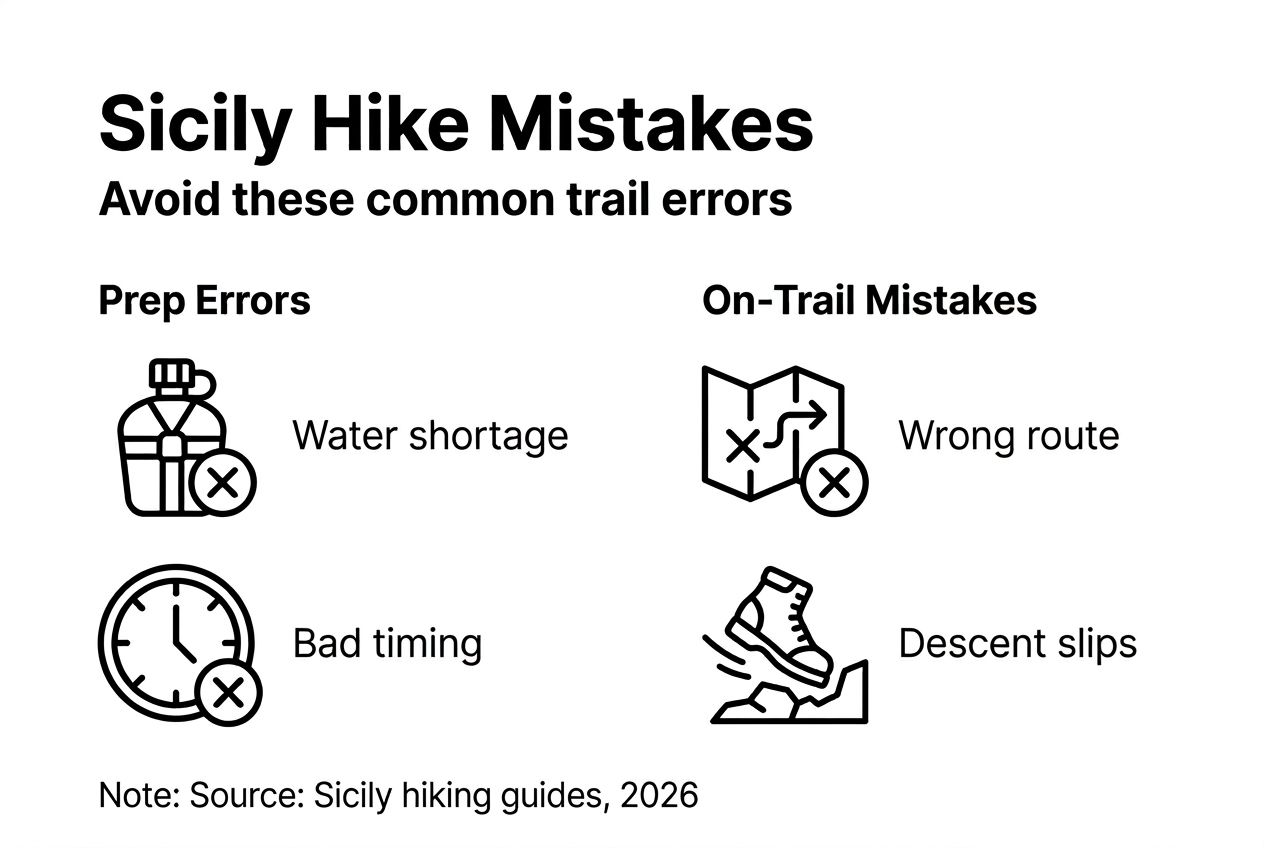
Midday hiking during summer months seems manageable until you’re 90 minutes into a trail with no shade and temperatures exceeding 35°C (95°F). The heat doesn’t just cause discomfort but genuine danger through heat exhaustion and heat stroke. Starting late seems convenient when you’re on vacation, but it places you on exposed trails during the most dangerous hours.
Trail difficulty underestimation happens when hikers confuse distance with challenge. A 5-kilometer trail sounds easy until you’re climbing 600 vertical meters over loose volcanic rock. Elevation gain, terrain type, and altitude effects multiply difficulty beyond what flat-ground distance suggests. Research total elevation change and terrain characteristics, not just linear distance.
Frequent mistakes to avoid hiking mistakes:
- Wearing new boots on long hikes without proper break-in period
- Relying solely on phone GPS without backup navigation
- Skipping breakfast before morning hikes, causing energy crashes
- Ignoring early warning signs of blisters or hot spots
- Underestimating descent time and difficulty on return routes
Pro Tip: Calculate hiking time using Naismith’s Rule as a baseline, then add 50% for Sicilian summer conditions. Naismith’s Rule estimates one hour per 5 kilometers distance plus one hour per 600 meters elevation gain. The Sicily adjustment accounts for heat, terrain roughness, and photo stops.
For detailed information on common hiking pitfalls in Sicily, recognize that most accidents happen during descent when fatigue compromises attention and knee strain increases stumble risk. Maintain focus and use trekking poles if you have any knee vulnerability.
Expected results and outcomes
Setting realistic expectations about what Sicilian hiking delivers helps you measure success appropriately and stay motivated when trails challenge you more than anticipated. Popular Sicilian hikes typically range from 1.5 to 6 hours, producing fitness gains and richer cultural appreciation. Your outcomes depend heavily on preparation quality, trail selection matching your abilities, and willingness to engage with the cultural landscape beyond just physical achievement.
Physical outcomes from regular Sicilian hiking include improved cardiovascular endurance, leg strength, and core stability from navigating uneven terrain. A week of daily moderate hikes noticeably improves your ability to handle elevation gain and extended walking periods. You’ll return home with better balance, stronger ankles, and increased stamina for everyday activities. Don’t expect dramatic weight loss from hiking alone, but the calorie burn combined with active vacation lifestyle contributes to overall fitness.
Successful hike completion means finishing comfortably without injury, excessive fatigue, or safety incidents. You should feel pleasantly tired rather than completely exhausted. If you can’t hold a conversation during the hike, you’re pushing too hard for sustainable enjoyment. Proper pacing allows you to appreciate surroundings rather than just surviving until the endpoint.
Cultural enrichment outcomes exceed what most hikers anticipate. Walking ancient paths used by Greek colonists, Byzantine monks, and Arab traders creates tangible connection to Sicily’s layered history. You gain understanding of how geography shaped settlement patterns, why villages occupy specific locations, and how volcanic soil enabled agriculture supporting millennia of civilization. This depth transforms Sicily from a vacation destination into a place with genuine meaning.
Recognize successful outcomes through these markers:
- Completing planned routes within estimated timeframes
- Maintaining energy for cultural site exploration after hikes
- Gaining confidence to attempt progressively challenging trails
- Developing preferences for specific trail types and landscapes
- Building knowledge enabling you to recommend routes to others
For help with planning realistic Sicily hikes that deliver satisfying outcomes, track your hikes in a simple journal noting distance, elevation, time, and how you felt. This data helps you understand your current capabilities and set appropriate goals for future hikes.
Mental and emotional outcomes often surprise first-time Sicilian hikers. The combination of physical challenge, natural beauty, and cultural richness creates memorable experiences that outlast typical vacation activities. You’ll remember specific trail moments, particular views, and conversations with guides or fellow hikers years after forgetting which restaurant served which meal.
Regarding Sicily hike durations and outcomes, expect your first few hikes to take longer than estimated as you adjust to Sicilian terrain and climate. Build buffer time into your schedule, especially when coordinating with other activities or accommodation check-out times.
Plan your Sicilian hiking adventure with expert tips and tours
Transforming hiking knowledge into actual trail experiences becomes easier when you tap into local expertise and organized resources. Sicilian Traveler connects you with certified guides who know every trail’s current condition, seasonal variations, and hidden viewpoints tourists miss when hiking independently. These guides grew up hiking these mountains, learning from parents and grandparents who treated trails as extensions of their villages.

Booking through established local operators ensures safety standards, proper equipment, and cultural authenticity missing from generic tour companies. When you book authentic Sicily tours, you’re supporting Sicilian families who depend on tourism while gaining access to insider knowledge no guidebook captures. Your guide knows which family runs the best trattoria near the trailhead, where to find spring wildflowers, and how to read weather patterns specific to local microclimates.
For travelers seeking deeper connection beyond standard itineraries, slow travel experiences in Sicily pair hiking with cultural immersion activities. Spend mornings on trails, afternoons at cooking classes learning to prepare what you’ll eat for dinner, and evenings in village squares where locals gather. This rhythm creates sustainable travel that enriches both you and host communities. Visit experience Sicily like a local for comprehensive planning resources covering everything from trail selection to accommodation booking near popular hiking areas.
Can beginners hike safely in Sicily?
Yes, Sicily welcomes beginner hikers with numerous trails designed for moderate fitness levels and limited technical experience. Routes like Rocca di Cefalù cater to beginners with moderate difficulty and cultural points, offering achievable challenges without requiring advanced skills. The key is choosing appropriate trails, preparing thoroughly, and knowing your limits.
Beginners should start with coastal and forest trails before attempting volcanic terrain. These routes provide gentler introduction to Sicilian hiking conditions while building confidence and fitness. Consider joining guided groups initially to learn proper pacing, navigation, and safety practices from experienced leaders. Following proven tips for beginner hikers prevents common mistakes that discourage newcomers or create dangerous situations.
Do I need a guide to hike Mount Etna?
Yes, certified guides are mandatory above 2500m on Mount Etna’s summit due to volcanic risks. Legal regulations require professional guidance for safety and environmental protection. Independent hiking is possible on lower elevation trails below this threshold, but guides still provide valuable safety oversight and volcanic hazard monitoring. For complete information on Mount Etna guide requirements, consult official park websites before planning your hike.
What’s the best season for hiking in Sicily?
The best hiking seasons in Sicily are spring (April to June) and early autumn (September to October). These periods offer moderate temperatures between 18-25°C (64-77°F), fewer tourists on popular trails, and comfortable conditions for extended hiking. Spring brings wildflower blooms and green hillsides, while autumn delivers stable weather and harvest season cultural experiences. Summer months from July through August present heat challenges that make hiking uncomfortable and potentially dangerous during midday hours. For seasonal details, check best hiking seasons in Sicily.
How difficult are Sicily’s hiking trails?
Sicilian trail difficulty spans the complete spectrum from easy coastal walks to extremely challenging volcanic summit climbs. Most popular routes fall into moderate difficulty, requiring basic fitness and 2-4 hours hiking time. Difficulty factors include elevation gain, terrain roughness, trail length, altitude, and sun exposure. Volcanic trails rate higher difficulty due to steep grades, loose rock, and altitude effects. Coastal paths typically offer easier terrain but can include challenging cliff sections. Always research specific trail ratings, read recent condition reports, and match difficulty to your documented fitness level rather than aspirational goals.
What should I pack for a day hike in Sicily?
Essential items for Sicilian day hikes include 2+ liters of water per person, high SPF sunscreen reapplied frequently, wide-brimmed sun hat, and moisture-wicking clothing in light colors. Pack high-energy snacks like nuts, dried fruit, and energy bars to maintain blood sugar during exertion. Bring a basic first aid kit with blister treatment, pain relievers, and any personal medications. Carry a physical map or GPS device with downloaded offline maps, plus a fully charged mobile phone in a protective case. Include a lightweight rain jacket even during summer, as mountain weather changes rapidly. Sturdy hiking boots with ankle support and aggressive tread are non-negotiable for rocky Sicilian terrain.