
Exploring authentic Sicilian cuisine goes far beyond sampling a few dishes in a restaurant. Travelers from North America and Europe discover food as a gateway to Sicily’s cultural and natural heritage, where culinary tours reveal centuries-old traditions and connect visitors to the island’s vibrant history. This guide clarifies what makes these immersive experiences unique, addresses common misconceptions, and helps you find ways to truly understand Sicilian identity through food.
Table of Contents
- Culinary Tours In Sicily—Core Concepts And Misconceptions
- Types Of Culinary Tours—Street Food, Cooking Classes, Wine
- How Culinary Tours Immerse Travelers In Sicilian Culture
- Costs, Safety, And Practical Considerations For Visitors
- Alternatives To Culinary Tours In Exploring Sicilian Food
Key Takeaways
| Point | Details |
|---|---|
| Culinary tours offer immersive experiences | More than just dining, these tours connect travelers to Sicilian culture, history, and local producers through food. |
| Misconceptions about culinary tours | Many travelers think these tours focus on gourmet food or are only for food enthusiasts, when in fact they explore traditional, simple dishes accessible to all. |
| Diverse tour types cater to interests | From street food to cooking classes and wine tastings, Sicily offers varied culinary experiences that provide unique cultural insights. |
| Personal interaction enriches understanding | Engaging with local producers and participating in hands-on activities deepens cultural appreciation and fosters genuine connections. |
Culinary tours in Sicily—core concepts and misconceptions
Culinary tours in Sicily are far more than restaurant hopping or sampling local dishes. They’re structured experiences designed to connect you directly with Sicilian culture, history, and identity through food.
Here’s what makes them different from standard sightseeing:
- Immersive learning: You’ll understand why certain dishes exist, not just taste them
- Direct access: Meet farmers, home cooks, and family-run producers who shape the food
- Cultural storytelling: Food reveals centuries of Arab, Norman, and Spanish influence on the island
- Seasonal awareness: Tours highlight what grows and thrives at different times of year
Understanding the Core Concept
Food in Sicily isn’t separate from daily life—it’s woven into social and cultural identity. Research on culinary tourism and local identity shows that regional menus and meat-based dishes express deep connections to the land and traditions.
This means a culinary tour reveals how Sicilians live, celebrate, and preserve their heritage through food choices.
Common Misconceptions Worth Addressing
Many travelers misunderstand what these tours actually deliver. Let’s clear up the biggest ones:
Misconception 1: “It’s just eating fancy food.”
Actually, culinary tours often focus on humble, traditional fare. You’ll eat street food, peasant dishes, and family recipes passed down for generations—not haute cuisine pretending to be Sicilian.
Misconception 2: “I can experience the same things on my own.”
Yes and no. A guide unlocks doors and stories you won’t find independently. They connect you with producers, explain historical context, and navigate language barriers in markets and family kitchens.
Misconception 3: “It’s only for serious foodies.”
Wrong. These tours welcome anyone curious about culture and connection. You don’t need culinary expertise—just genuine interest in how people live.
Why This Matters for Your Trip
Food’s role as both cultural product and economic driver transforms how you understand Sicily beyond postcards. Supporting local producers directly funds preservation of traditional methods.
You’re not just consuming—you’re investing in cultural continuity.
Pro tip: Choose tours led by local guides (preferably Sicilian-born) who have family ties to producers and markets—they offer authentic access that imported tour leaders simply cannot provide.
Types of culinary tours—street food, cooking classes, wine
Sicily offers three distinct types of culinary tours, each revealing different layers of food culture. Knowing the differences helps you choose what matches your interests and travel style.
Here’s a quick comparison of the main types of culinary tours in Sicily to help you decide which suits your interests:
| Tour Type | Typical Activities | Unique Cultural Insight | Price Range (per person) |
|---|---|---|---|
| Street Food Tour | Market sampling, vendor talks | Daily life and historical food origins | $40–80 |
| Cooking Class | Hands-on meal preparation | Family recipes and local techniques | $80–150 |
| Wine Tour | Vineyard visits, tastings | Regional terroir and ancient traditions | $60–120 |
Street Food Tours
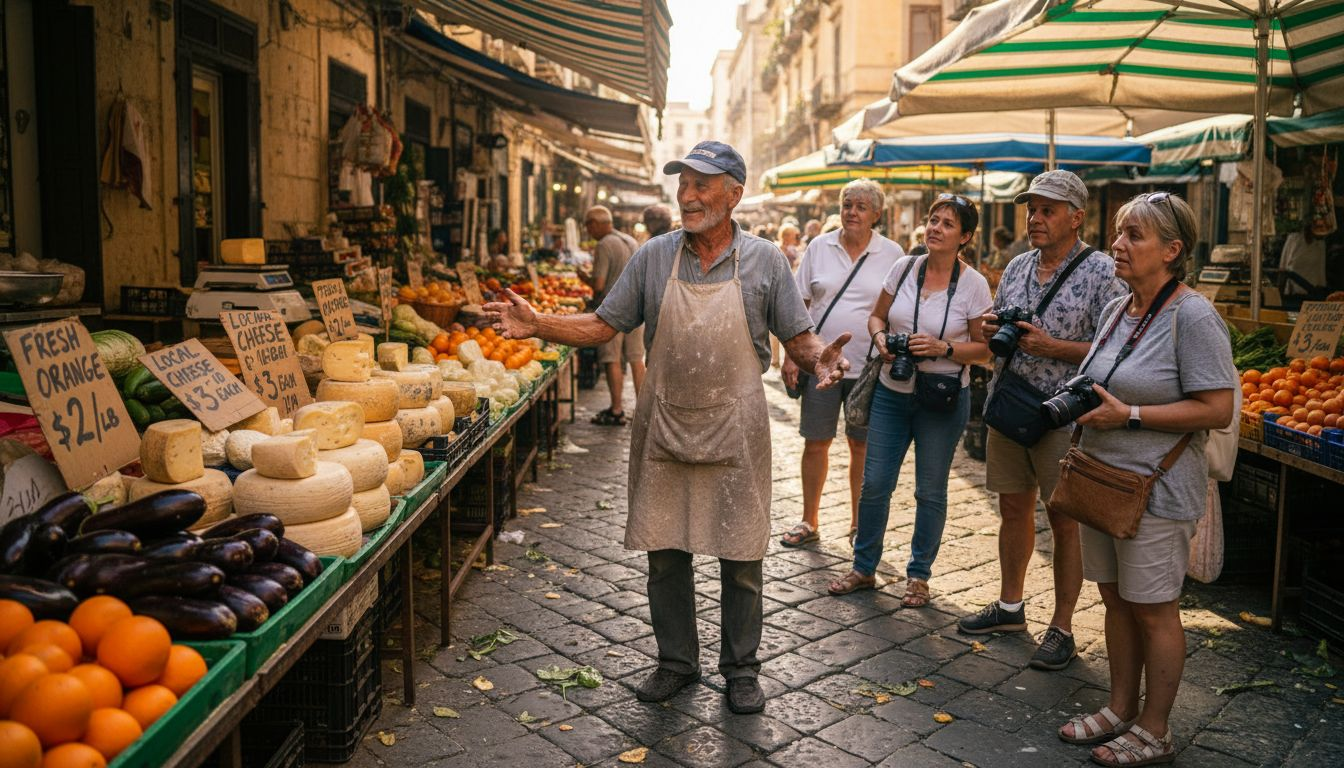
Popular street food tours in Palermo showcase centuries-old traditions still alive in markets and narrow alleys. These tours combine history, flavor, and authentic urban culture in one experience.
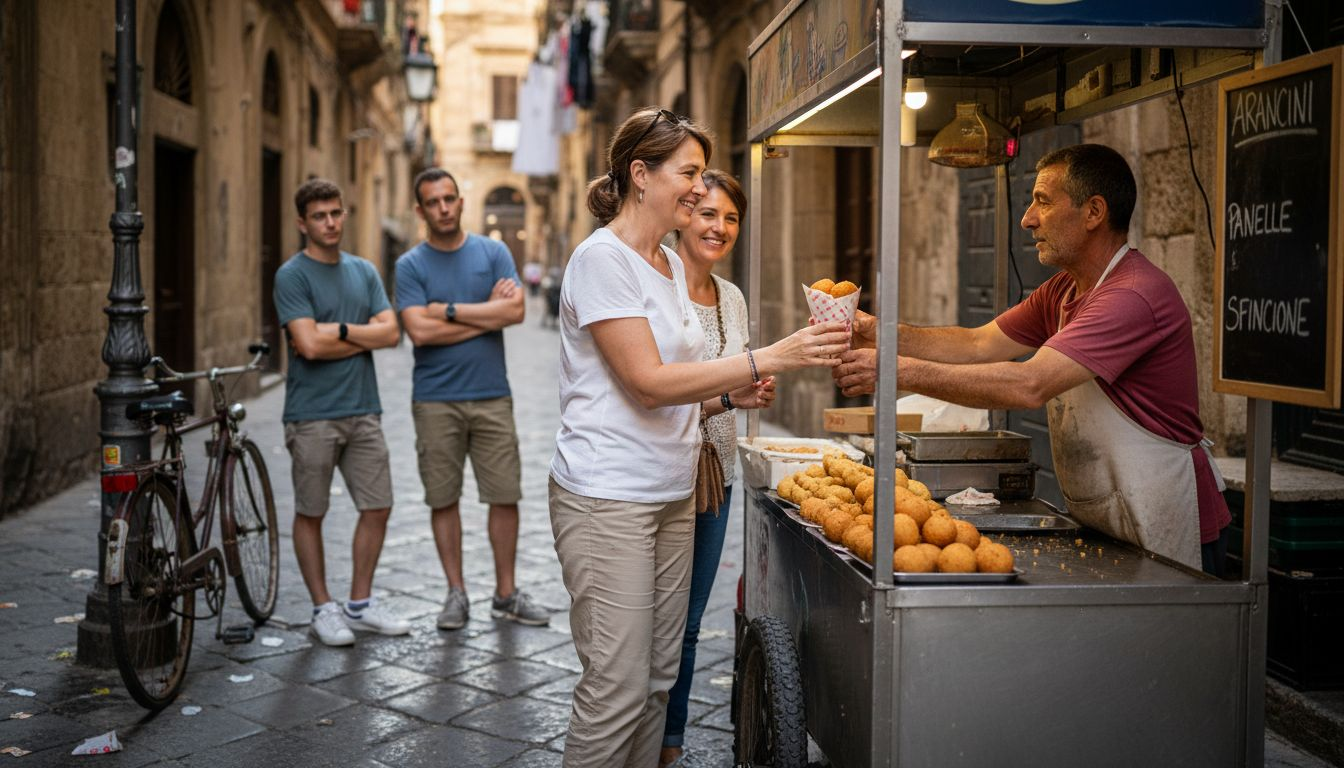
You’ll taste arancini, panelle, and caponata from vendors who’ve operated the same carts for generations. Guides explain the why behind each dish—why certain ingredients pair together, why specific foods emerged during particular historical periods.
Street food tours offer:
- Authentic flavors: You eat what locals actually eat daily, not tourist versions
- Historical context: Food tells stories of Arab, Norman, and Spanish occupation
- Direct producer connection: Meet vendors, learn their family recipes
- Affordable pricing: Street food costs less than sit-down restaurants
Cooking Classes
These hands-on experiences turn you into the cook, not just the eater. You’ll learn pasta-making, sauce preparation, and traditional techniques in home kitchens or cooking schools.
Most classes run 3-4 hours and end with eating what you’ve made. You’ll discover why Sicilian cooks do things specific ways—the timing, the ingredient ratios, the philosophy behind each step.
What you’ll actually do:
- Learn pasta dough basics and shaping techniques
- Prepare sauces using seasonal ingredients
- Master traditional dishes like caponata or arancini
- Share meals with instructors and fellow participants
Cooking classes provide sustainable, authentic experiences that connect you directly to producers and local food systems.
Wine Tours and Tastings
Sicily produces exceptional wines that reflect regional terroir and ancient winemaking traditions. Wine tours typically combine vineyard visits with tastings and food pairings.
You’ll visit family-owned wineries, learn about Nero d’Avola and Grillo grapes, and understand how volcanic soil shapes flavor profiles. Tastings pair wines with local cheeses, cured meats, and seasonal dishes.
Key differences from casual wine bars:
- Educational depth: Learn about soil chemistry, fermentation, and aging processes
- Producer meetings: Talk directly with winemakers about their philosophy
- Paired experiences: Food and wine combinations show how they complement each other
- Regional focus: Explore specific zones like Mount Etna or western Sicily
Pro tip: Book tours that combine all three types—a street food morning, cooking class afternoon, and wine tasting evening—to experience Sicilian food culture from multiple angles in a single day.
How culinary tours immerse travelers in Sicilian culture
Culinary tours do more than feed you—they transform how you understand Sicily by connecting sensory experiences directly to history, identity, and community. This immersion happens through storytelling, hands-on participation, and face-to-face interactions with people whose families have shaped Sicilian food for generations.
The Power of Sensory Connection
Authentic sensory experiences through culinary tourism create emotional memory that reading about Sicily cannot match. When you taste arancini from a vendor who explains her grandmother’s recipe, you’re not just eating—you’re accessing lived history.
Your senses become the bridge between past and present. The smell of jasmine at a market, the texture of homemade pasta, the taste of wild herbs—these details stick with you and anchor cultural understanding.
Learning Through Storytelling
Every dish carries a story waiting to be told. Guides and producers share how Arab influences shaped Sicilian sweets, how Norman traditions created pasta dishes, how Spanish occupation introduced new ingredients.
Food production storytelling connects travelers to landscape, history, and traditions, transforming meals into lessons about Sicily’s complex past.
You learn not just what to eat, but why Sicily eats it. This context deepens appreciation and makes the food meaningful rather than forgettable.
Building Genuine Social Connections
Culinary tours foster social inclusion by putting you in real conversations with locals. You’re not observing from a tour bus—you’re sitting at kitchen tables, standing in markets, sharing meals.
These interactions reveal:
- How families preserve traditions in modern life
- What locals actually care about regarding their food heritage
- The challenges and pride behind sustainable, local food production
- Personal stories that tourist guidebooks never capture
When you sit down to eat what you’ve learned to cook alongside your instructor, cultural exchange becomes personal and transformative.
Understanding Sicilian Identity Through Food
Food is identity. Sicilian cuisine reflects 2,500 years of invasion, trade, and cultural mixing. Culinary tours decode this identity by explaining food choices as cultural statements.
You understand why Sicilians prize seasonal eating, why certain ingredients are sacred, why family recipes matter more than restaurant prestige. This knowledge shifts how you see the region beyond beautiful landscapes.
The Sustainability Connection
Many culinary tours emphasize sustainable practices and local food systems. You visit small producers, learn about crop rotation, understand water management on an island with scarcity challenges.
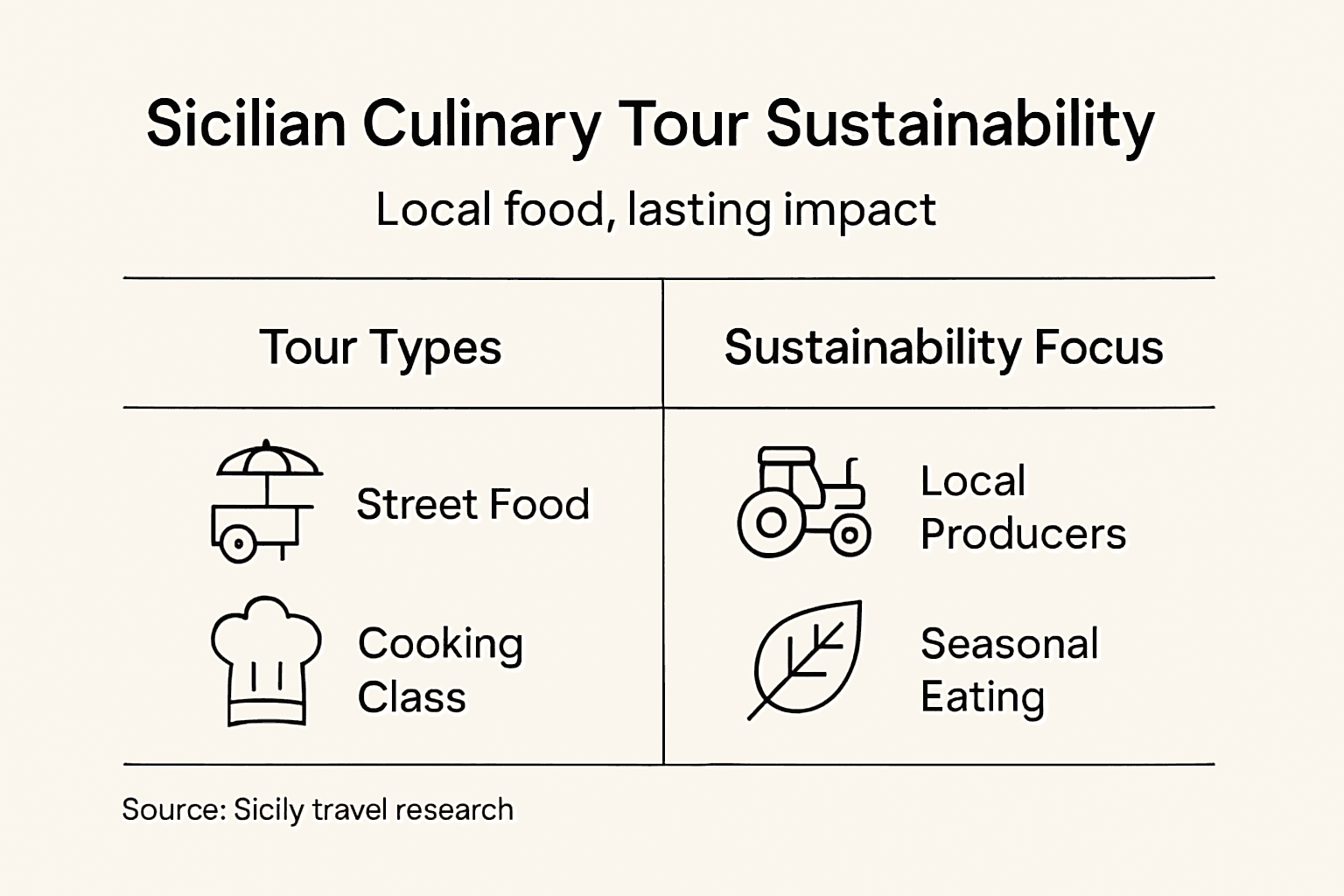
This context transforms you from tourist consumer into conscious participant in a food system worth protecting.
Pro tip: Seek tours that include visits to the same producer for multiple meals during your stay—repeated interaction with one family or vendor deepens cultural understanding far more than sampling many different places once.
Costs, safety, and practical considerations for visitors
Planning a culinary tour in Sicily means balancing authentic experiences with budget realities and health safety. Understanding these practical concerns upfront prevents disappointment and keeps your trip enjoyable.
Understanding Tour Costs
Culinary tour prices vary dramatically based on experience type and operator quality. Street food tours run $40-80 per person, while cooking classes cost $80-150 and wine experiences range $60-120.
Private tours cost more but offer personalized attention. Group tours split costs, making them budget-friendly. Affordable pricing alternatives and authentic experiences balance tourist budgets when you choose transparent operators.
Where your money goes matters. Quality tours invest in direct producer partnerships, limiting middlemen markups.
Typical tour price breakdown:
- Street food tour: $50-70
- Half-day cooking class: $90-130
- Wine tasting with food: $75-110
- Multi-day culinary experiences: $800-1,500
Food Safety and Health Considerations
Sicilian street food is delicious but demands attention to hygiene standards. Choose vendors with visible foot traffic—high turnover means fresh ingredients and clean practices.
Well-organized tours ensure safe food handling standards and reduce health risks significantly. Operators prioritizing safety train with local health authorities.
Before booking, verify operator credentials and read recent reviews mentioning food safety. Ask about their food handling practices directly.
Safety checklist:
- Operators carry food safety certifications
- Tours use licensed producers and vendors
- Water and ice come from safe sources
- Reviews mention no illness complaints
- Guides explain hygiene practices
Accessibility and Timing
Culinary tours involve walking markets, climbing stairs in cooking schools, and standing for 2-4 hours. If mobility is limited, request accessible alternatives before booking.
Timing matters too. Summer heat (May-September) makes long food tours uncomfortable. Spring and fall offer better conditions. Early morning street food tours beat crowds and heat.
Choosing accredited operators and understanding regional food customs ensures a safe, enjoyable visit aligned with your physical abilities.
Dietary Restrictions and Allergies
Sicilian cuisine relies heavily on seafood, gluten, and dairy. Inform operators about restrictions weeks ahead, not days before.
Some producers accommodate vegan, gluten-free, or allergy-conscious requests, but not all. Verify availability before committing payment.
What to Bring and Prepare
Practical items maximize comfort and safety:
- Comfortable walking shoes (markets have uneven surfaces)
- Small backpack for market purchases
- Water bottle (refill at public fountains)
- Sunscreen and hat (markets are exposed)
- Cash (many vendors don’t accept cards)
- Translation app (helpful in family kitchens)
Pro tip: Book tours during shoulder seasons (April-May or September-October) for smaller groups, better weather, and lower prices than peak summer months.
For easy planning, here’s a summary of practical tips and factors to consider before booking a culinary tour:
| Consideration | What to Know | Best Practice |
|---|---|---|
| Season & Timing | Spring/fall offer mild weather | Book early morning or shoulder months |
| Dietary Needs | Gluten, dairy, seafood common | Notify operator well in advance |
| Accessibility | Markets may have stairs/walking | Request adaptations for mobility issues |
| Safety & Credentials | Hygiene standards vary | Choose certified, reputable operators |
Alternatives to culinary tours in exploring Sicilian food
Culinary tours aren’t the only way to connect with Sicilian food culture. Independent travelers can explore alternatives that offer flexibility, deeper producer relationships, and often lower costs.
Farm Visits and Agricultural Experiences
Direct engagement with Sicilian agricultural practices and farms provides educational insight into food origins and sustainable practices. You’ll see where ingredients grow, meet farmers directly, and understand seasonal rhythms that shape the cuisine.
Many farms near Palermo, Catania, and the Aeolian Islands welcome visitors for half-day or full-day experiences. Some offer harvest participation, allowing you to pick citrus, olives, or vegetables yourself.
Farm visits include:
- Walking orchards and vegetable fields
- Learning about crop rotation and water management
- Tasting produce at peak ripeness
- Understanding organic and traditional farming methods
- Meeting multi-generational farming families
Self-Guided Market Exploration
Wander Sicilian markets on your own without a guide. Ballarò in Palermo, Vucciria, and Capo markets operate daily and pulse with authentic local activity.
Arrive early (7-9 a.m.) for best selection. Chat with vendors directly. Ask about seasonal specialties. Try free samples they offer. This unscripted approach reveals how locals actually shop and interact with food.
Markets cost nothing to explore. You only spend money on purchases you choose. This beats paying for curated tours when you want independence.
Direct Producer Relationships
Identify specific producers—cheese makers, pasta artisans, wine families—and visit them directly. Call ahead or email to ask about visits.
Many small-scale producers welcome visitors who show genuine interest. You get personal attention, stories told by actual makers, and the chance to buy directly at lower prices than retail shops.
Supporting small-scale local producers strengthens sustainable food systems while giving you direct access to knowledge that tours can’t replicate.
Cooking at Your Rental or Vacation Home
Book accommodations with kitchen access. Buy ingredients from markets and small shops. Cook traditional Sicilian dishes in a real Sicilian kitchen.
This approach costs less than cooking classes while building genuine kitchen skills. You eat on your own schedule, experiment without judgment, and preserve recipes for home use.
Restaurant Conversations and Chef Interactions
Eat at family-run trattorias rather than tourist restaurants. Talk to owners and chefs about menu items, ingredient sourcing, and family history.
Many chefs love explaining their food to genuinely curious diners. This creates memorable cultural exchange without formal tour structure.
Combinations Work Best
Most travelers benefit from mixing approaches:
- One guided street food tour (for access and context)
- Farm or producer visits (for agricultural understanding)
- Self-guided market time (for independence)
- Cooking in your rental (for hands-on learning)
- Restaurant conversations (for ongoing discovery)
Pro tip: Use online platforms like Airbnb Experiences, Withlocals, or Agriturismo websites to find independent producers and farmers offering casual visits without expensive formal tour bookings.
Discover Authentic Sicilian Culinary Journeys with Sicilian Traveler
The article highlights the challenge many travelers face in truly connecting with Sicily beyond just tasting its cuisine. If you want to avoid misconceptions like “it’s just eating fancy food” or struggling to access genuine local stories and producers, the key lies in immersive experiences that reveal the deep cultural identity behind Sicilian dishes. Understanding how culinary tours unlock history, seasonal rhythms, and community bonds is essential to make your trip meaningful.
Ready to transform your Sicily visit into a sensory and cultural adventure Explore Sicilian Traveler for expert guidance on the best culinary tours, local market explorations, and authentic cooking classes. Learn how to connect with producers and enjoy sustainable food experiences that preserve Sicilian traditions. Don’t settle for ordinary; let us help you uncover Sicily’s rich food heritage with trusted insights at Sicilian Traveler. Start planning your immersive food adventure now and experience why Sicilian cuisine is truly a window into its soul.
Frequently Asked Questions
What are culinary tours in Sicily?
Culinary tours in Sicily are structured experiences that connect travelers with Sicilian culture, history, and identity through food. They go beyond mere eating by providing insights into the origins of traditional dishes and showcasing local producers.
What types of culinary tours are available in Sicily?
Sicily offers various culinary tours, including street food tours, cooking classes, and wine tours. Each type provides unique insights into the local food culture, such as market sampling, hands-on cooking experiences, or vineyard visits.
Are culinary tours suitable for people without culinary experience?
Yes, culinary tours are designed for anyone interested in connecting with local culture and cuisine. You don’t need to be a food expert—just an open mind and a curiosity about how Sicilians live and eat.
How do culinary tours contribute to sustainability in Sicilian food culture?
Culinary tours emphasize local producers and sustainable practices, helping to preserve traditional methods. By supporting small-scale farmers and food artisans, these tours contribute to the longevity of local food systems and cultural continuity.