
Choosing the perfect beach sometimes means looking beyond the obvious hotspots. Sicily stands apart as the Mediterranean’s largest island, where volcanic origins, ancient history, and stunning coastal diversity converge. Here, you swap crowds for authenticity and find beaches that blend dramatic geology, rich biodiversity, and genuine Sicilian culture. This guide gives you the insider knowledge needed to truly experience what makes a Sicilian beach journey unlike any other Mediterranean adventure.
Table of Contents
- What Makes A Sicilian Beach Unique
- Types Of Sicilian Beaches And Coastlines
- Natural Wonders And Cultural Attractions
- Local Customs And Sustainable Tourism
- How Sicilian Beaches Compare To Other Destinations
Key Takeaways
| Point | Details |
|---|---|
| Unique Beach Characteristics | Sicilian beaches feature volcanic rock formations, turquoise waters, and rich cultural heritage, offering a distinctive experience compared to other Mediterranean destinations. |
| Diverse Beach Types | The island’s coastline includes sandy, pebble, and black sand beaches, each catering to different traveler preferences and activities. |
| Cultural and Historical Richness | Beachgoers can explore significant historical sites like Greek temples and medieval towns, enhancing the beach experience through cultural immersion. |
| Sustainable Tourism Practices | Visitors are encouraged to support local businesses and respect natural environments to ensure the preservation of Sicily’s coastal beauty and community integrity. |
What Makes a Sicilian Beach Unique
Sicilian beaches stand apart from Mediterranean destinations across Spain, Greece, and Croatia because of their singular geological and cultural character. The island’s volcanic origins create distinctive features you won’t find at typical resort beaches elsewhere in Europe.
Here’s what sets Sicilian shores apart:
- Volcanic rock formations: Dark sand and towering lava cliffs frame the coastline, creating dramatic backdrops.
- Turquoise-to-emerald waters: The mineral content and shallow shelves produce colors that rival Caribbean destinations.
- Cultural layering: Centuries of Arab, Norman, and Italian influences shape local beach traditions and food culture.
- Biodiversity hotspots: Mediterranean flora and marine life thrive in protected coastal areas.
- Less commercialized atmosphere: Many beaches remain quieter than crowded Spanish or Greek equivalents.
The volcanic character runs deep. Sicily’s diverse coastal environments stem from the island being the Mediterranean’s largest landmass with active geological processes. This means you get towering cliffs that change color throughout the day, from golden amber at sunset to deep rust at dawn.
Unlike beaches in Portugal or southern France, Sicilian shores blend natural drama with historical depth. You’re swimming near ancient Greek temples, medieval towns, and Norman castles. The beaches aren’t just scenic—they’re gateways to three-thousand years of human history.
Water temperature varies seasonally. Summer months (June through September) deliver warm Mediterranean swimming, while spring and fall offer refreshing conditions for travelers who prefer cooler water.
Local beach culture matters too. Sicilians gather for long lunches, family afternoons, and evening strolls. You’ll experience genuine seaside traditions rather than tourist-focused operations. Small beach bars serve fresh seafood and local wine directly to sunbathers.
Sicilian beaches combine dramatic geology, warm Mediterranean waters, and authentic cultural traditions—a combination rare elsewhere in Southern Europe.
The volcanic landscape creates natural pools, sea caves, and rock formations perfect for snorkeling and exploring. These formations develop uniquely because of Sicily’s tectonic position and volcanic history spanning millennia.
Pro tip: Visit Sicilian beaches during May or September when water temperatures hover around 72-75°F, crowds thin significantly compared to August, and local restaurants operate at full capacity without summer rush chaos.
Types of Sicilian Beaches and Coastlines
Sicily’s coastline isn’t uniform. Different stretches offer dramatically different experiences depending on geology, geography, and local culture. Understanding beach types helps you choose destinations matching your travel style.
Here’s what you’ll find across the island:
- Sandy beaches: Soft, golden shores perfect for families and relaxation; found mainly on southern and western coasts.
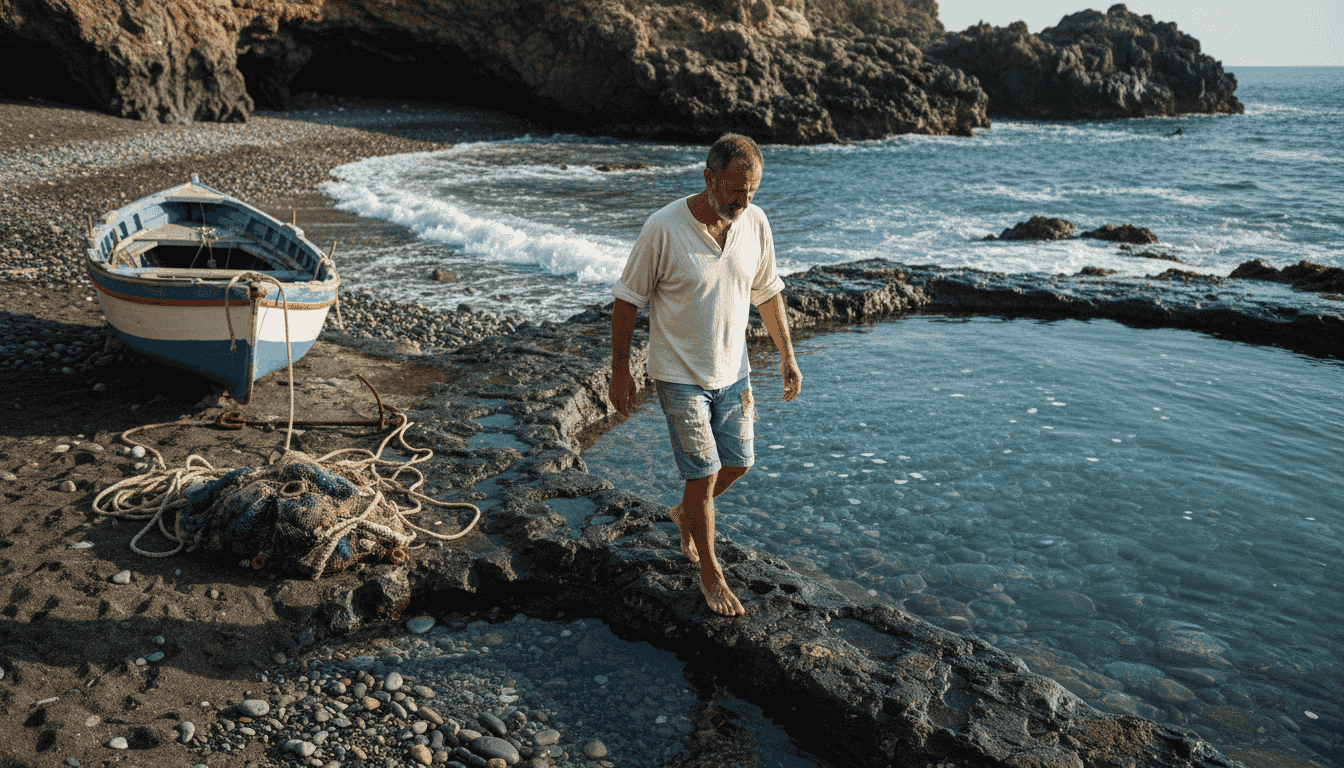
- Pebble and rocky beaches: Dramatically scenic with turquoise water; common on eastern coasts near Mount Etna.
- Volcanic black sand beaches: Dark, mineral-rich sand creating unique landscapes; concentrated in northeastern regions.
- Cliff-backed beaches: Dramatic backdrops with caves and coves; scattered throughout the northern coast.
- Sheltered coves: Small, protected areas ideal for snorkeling and swimming; hidden along western shores.
The Sicilian coast encompasses diverse geological formations shaped by volcanic activity, tectonic movement, and centuries of erosion. This diversity means you can experience Mediterranean swimming in multiple ways during a single trip.
Sandy beaches dominate the south. Mondello near Palermo and Mazzaro near Taormina draw swimmers seeking classic Mediterranean resort vibes. These stretches feature gradually sloping entries, calm waters, and nearby restaurants.
Pebble beaches characterize the east. These aren’t uncomfortable—smooth stones warm in the sun and provide excellent grip underwater. Water clarity surpasses sandy beaches because pebbles don’t cloud the sea.
Volcanic black sand appears spectacular but requires care. The dark sand absorbs intense heat, making barefoot walking uncomfortable during summer. Bring water shoes or sandals.
Cliff coastlines create drama. Towering rock formations frame narrow beaches and sea caves. Northern routes like Cefalù and Mondello showcase these formations perfectly.
Different beach types serve different travel goals—choose based on your priority: relaxation, exploration, or dramatic scenery.
Eastern coasts near Taormina offer authentic coastal culture beyond beach tourism. You’ll find fishing villages alongside famous swimming spots.
Western coves provide seclusion. Many require hiking or boat access, rewarding adventurous travelers with private swimming spots and untouched Mediterranean views.
Seasonal variation affects beach character. Winter transforms peaceful shores into dramatic seascapes with powerful waves. Spring and fall offer mild temperatures and manageable crowds.
Pro tip: Rent a scooter or small car to explore multiple beach types in one day—drive from sandy Mondello to pebble Cefalù to volcanic black sand beaches, discovering which type suits your preferences best.
Here’s how Sicilian beach types suit various traveler interests:
| Beach Type | Best For | Notable Locations |
|---|---|---|
| Sandy beaches | Families, relaxation | Mondello, Mazzarò |
| Pebble beaches | Snorkeling, scenery | East coast, near Etna |
| Black sand beaches | Unique landscapes | Northeast Sicily |
| Cliff-backed beaches | Adventure, exploration | Cefalù, northern coast |
| Sheltered coves | Seclusion, swimming | Western coast |
Natural Wonders and Cultural Attractions
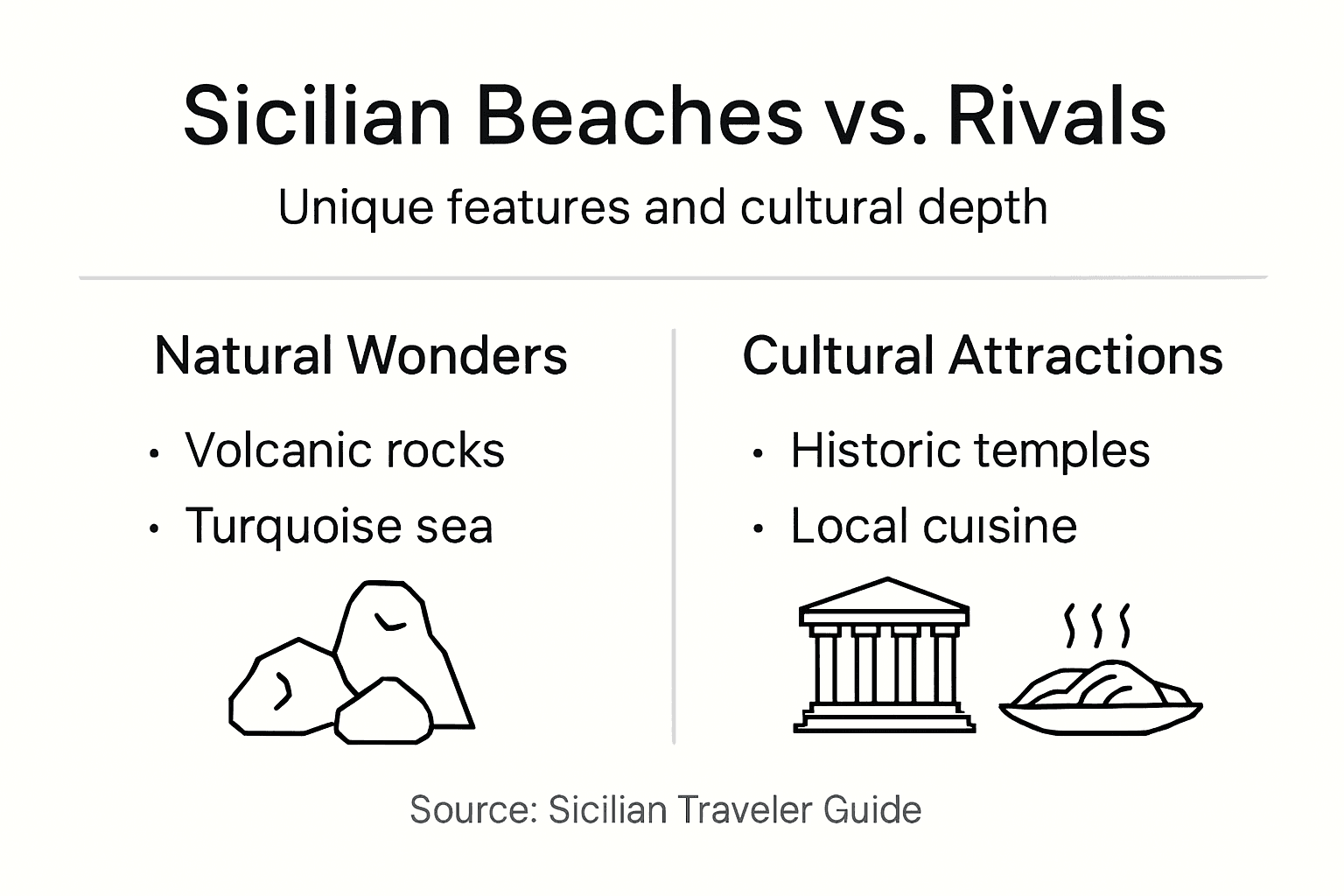
Sicilian beaches aren’t isolated natural features—they’re gateways to some of Europe’s most significant archaeological and geological sites. This combination of natural drama and human history makes beach visits exponentially more rewarding than typical Mediterranean swimming.
Here’s what surrounds the coastline:
- Mount Etna: Europe’s most active volcano looms over northeastern beaches, creating otherworldly black sand shores.
- Ancient Greek temples: Agrigento’s Valley of the Temples overlooks Mediterranean cliffs with 2,500-year-old ruins.
- Roman amphitheaters: Taormina’s Teatro Antico provides beachfront views from a 2,000-year-old performance venue.
- Medieval hilltop towns: Cefalù and Mondello blend beach relaxation with cobblestone exploration.
- Marine reserves: Protected underwater ecosystems teem with Mediterranean fish, octopus, and sea life.
Mount Etna and diverse marine environments create stunning visual contrasts. You swim in turquoise water while gazing at a smoking volcano. Few destinations globally offer this geological drama combined with accessible swimming.
The Greek temples near Agrigento sit roughly 90 minutes inland from beaches, but coastal towns provide access to similar archaeological heritage. Ancient columns frame modern Mediterranean life—restaurants operate literally within sight of 2,500-year-old stone structures.
Taormina exemplifies the blend perfectly. The Teatro Antico perches above Mazzaro beach, offering post-swim cultural exploration. Climb the ancient stone steps, absorb the history, then descend back to swimming.
Medieval towns dot the coastline. These aren’t tourist traps—they’re functioning communities where locals shop, eat, and work. Beach days transform into cultural immersion when you explore narrow streets, visit local bakeries, and eat family-run seafood restaurants.
Sicilian beaches uniquely combine swimming with archaeology, geology, and authentic Mediterranean culture in single locations.
Marine biodiversity rivals the natural wonders above water. Snorkeling reveals Mediterranean fish species, octopus dens, and underwater rock formations. Protected areas maintain pristine conditions for exploration.
Palermo’s famous cultural and culinary traditions extend to nearby Mondello beach. City culture and coastal swimming exist within 20-minute drives of each other.
Mt. Etna’s presence shapes regional identity. The volcano influences local wine production, soil composition, and even beach character. Understanding this connection deepens appreciation for what you’re experiencing.
Seasonal volcano activity varies. Winter offers occasional small eruptions visible from northern beaches. Summer provides clear views without atmospheric haze.
Pro tip: Visit Greek temples during early morning hours before heat peaks, then head to nearby beaches for afternoon swimming—this sequence combines cultural exploration with physical recovery in refreshing water.
Local Customs and Sustainable Tourism
Visiting Sicilian beaches responsibly means understanding local customs and protecting the environments you’re exploring. Your choices directly impact communities that depend on tourism revenue while preserving coastal beauty for future travelers.
Here’s how to travel thoughtfully:
- Eat at family-run restaurants: Support local economies instead of international chains operating near beaches.
- Respect beach hours and zones: Many beaches close at sunset; honor fishing areas and marine reserves.
- Use reef-safe sunscreen: Chemicals damage coral and underwater ecosystems that snorkelers explore.
- Purchase from local vendors: Artisans selling crafts near beaches rely on direct sales for income.
- Learn basic Italian greetings: Sicilians appreciate effort to communicate in their language.
- Avoid single-use plastics: Bring reusable water bottles and bags to reduce ocean pollution.
Sustainable tourism practices minimize environmental impact and support local communities through cultural exchange and economic benefit. Your beach vacation can actively strengthen—rather than strain—Sicilian society.
Local customs emphasize community and respect. Sicilians value greeting neighbors, engaging in conversation, and taking time over meals. Beach culture reflects these values: afternoons stretch leisurely, families gather for long lunches, and evening passeggiata (strolls) are sacred social time.
Dressing respectfully matters. While swimwear at beaches is normal, cover up when entering towns, restaurants, or visiting archaeological sites. This shows cultural awareness beyond typical tourist behavior.
Beach etiquette differs from North American norms. Sunbathing topless is acceptable for women on many beaches, but aggressive behavior or excessive drinking violates local standards. Observe how locals behave and match their tone.
Marine protection zones exist throughout Sicily. These areas prohibit fishing, swimming, or anchoring to preserve biodiversity. Signage marks boundaries—respect these designations even if enforcement seems minimal.
Sustainable tourism transforms your beach visit into active participation in protecting Sicilian culture and nature.
Local fishermen operate early mornings. Avoid swimming in harbors during dawn hours; you’ll encounter working boats and nets. Mid-morning through evening provide clear swimming windows without interference.
Booking authentic tours with local guides ensures tourism revenue reaches community members rather than outside operators. Local guides share genuine stories about their homeland.
Waste management challenges persist. Pack out everything you bring—trash bins near beaches fill quickly during summer. Carrying a small bag for personal waste prevents littering.
Seasonality affects sustainability. Visiting during May, June, or September reduces strain on infrastructure and services compared to peak August tourism.
Pro tip: Ask restaurant servers about daily specials featuring local catch rather than ordering menu items—this directs your money toward fishermen and supports sustainable fishing practices while guaranteeing the freshest seafood possible.
How Sicilian Beaches Compare to Other Destinations
Sicilian beaches occupy a unique position globally. They’re not as famous as Spanish or Greek destinations, yet they offer advantages that savvy travelers increasingly recognize. Understanding these differences helps you make informed vacation decisions.
Here’s how Sicily stacks up:
- Less crowded: Popular Greek islands experience 3-5 million annual visitors; Sicily welcomes roughly 4 million across the entire island.
- More affordable: Hotel rates and restaurant prices run 20-30% lower than Santorini or Côte d’Azur equivalents.
- Richer cultural integration: Archaeological sites exist within 30 minutes of most beaches, versus separated museum experiences elsewhere.
- More varied coastlines: Volcanic, sandy, and cliff beaches coexist regionally—most destinations offer singular landscape types.
- Longer season: May through October provides excellent conditions; Mediterranean resorts struggle with winter availability.
- Authentic infrastructure: Family-run tavernas outnumber chains dramatically compared to Croatia or southern France.
Sicilian beaches combine volcanic landscapes with historical context and diverse marine ecosystems differently than other Mediterranean hotspots. Spanish beaches emphasize party culture and infrastructure; Greek islands highlight whitewashed aesthetics; Sicily balances natural drama with authentic living.
Spain’s Costa del Sol offers comparable affordability but sacrifices cultural depth. Endless development and crowded beach clubs dominate, whereas Sicilian shores maintain working fishing villages and family traditions alongside tourism.
Greece’s popularity surged after reality television exposure. Santorini and Mykonos now charge premium prices for mediocre experiences. Sicily remains underdiscovered, offering superior value and fewer selfie-stick crowds.
Croatian beaches rival Sicily’s beauty but lack historical richness. You get dramatic coastlines without ancient temples, Renaissance villages, or millennia of layered culture.
Year-round favorable climate and heritage conservation practices distinguish Sicily from seasonal European destinations and commercialized tropical resorts. You’re swimming where history happened, not where tourism was engineered.
Turkey’s Mediterranean coast offers lower prices but geopolitical concerns deter some North American and European travelers. Sicily provides cost advantages without safety hesitations.
Sicilian beaches deliver the Mediterranean experience without the Instagram-dominated crowds, commercial excess, or inflated prices of famous alternatives.
Florida beaches attract families seeking theme parks and hurricanes; Caribbean options demand long flights and high costs; Sicily provides immediate Mediterranean access from North America with 7-8 hour flights and European pricing.
Caribbean islands offer tropical heat but lack cultural attractions. You’re swimming in paradise without historical context or local engagement.
Mediterranean rivals exist, yet most sacrifice authenticity. Sicilian attractions and travel experiences balance beach relaxation with genuine exploration in ways Ibiza or Mykonos cannot match.
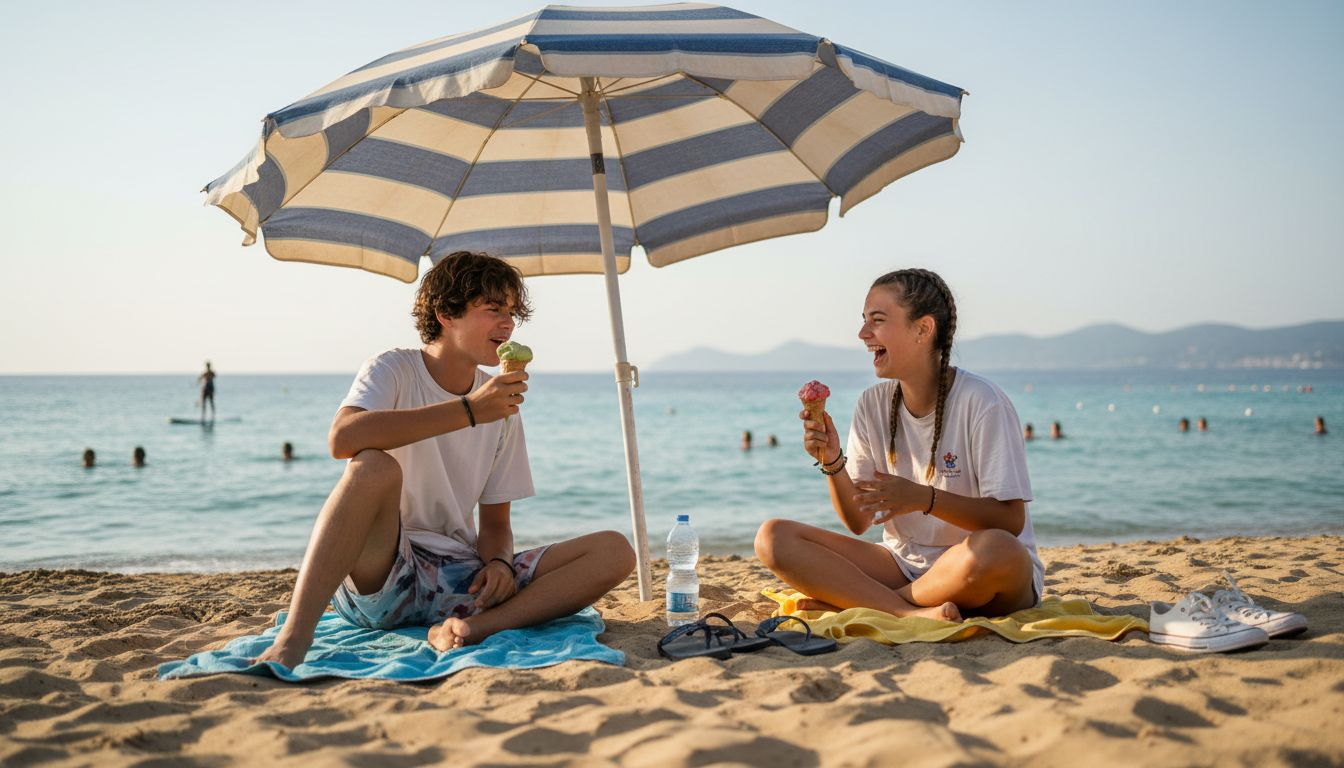
August tourism peaks everywhere, but May and September in Sicily deliver ideal conditions with minimal crowds. European summer holidays concentrate visitors July-August; visiting slightly earlier maximizes experience quality.
Compare how Sicily stands out among top Mediterranean destinations:
| Feature | Sicily | Greece | Spain (Costa del Sol) |
|---|---|---|---|
| Crowds | Fewer, more local vibe | Heavy, tourist-driven | Very crowded summers |
| Average hotel cost | 20-30% lower | Highest in summer | Moderate |
| Historical sites access | 30 min from beaches | Often separate | Limited, mostly inland |
| Landscape diversity | Volcanic, cliffs, sand | Mostly sand/cliffs | Mainly sandy beaches |
| Authentic cuisine | Small family eateries | Tourist-focused venues | International chains |
Pro tip: Book mid-May or early September trips when European school calendars keep families away—you’ll experience Sicilian beaches at their finest with 40-50% fewer tourists and weather identical to peak summer.
Discover the True Essence of Sicilian Beaches with Expert Guidance
Are you ready to move beyond crowded beaches and tourist traps to experience Sicily’s dramatic coastlines, volcanic landscapes, and rich cultural heritage firsthand? Many travelers struggle to find authentic experiences that combine stunning natural scenery with meaningful local traditions and history. This article highlights the unique volcanic shores, seaside customs, and archaeological treasures that make Sicilian beaches famous worldwide. Now it’s time to turn that knowledge into a thrilling and well-planned journey.

Unlock insider tips on where to go and what to do during your Sicilian beach adventure by exploring Sicilian Traveler. Dive into hidden gems beyond typical resorts and discover how to fully embrace the island’s vibrant culture and sustainable tourism practices. Don’t wait for peak season crowds to arrive—start planning now with detailed guides that blend natural wonders with local life. Visit Sicilian Traveler today and take your Sicilian vacation from a dream to reality.
Frequently Asked Questions
What makes Sicilian beaches different from other Mediterranean destinations?
Sicilian beaches feature unique volcanic rock formations, turquoise-to-emerald waters, and a rich cultural heritage that combines historical influences from various civilizations. These aspects create a distinctive atmosphere not found in standard resort areas.
What types of beach environments can I find in Sicily?
Sicily offers a variety of beach environments including sandy beaches, pebble beaches, volcanic black sand beaches, cliff-backed beaches, and sheltered coves, allowing travelers to choose based on their preferences for relaxation or adventure.
How is the water temperature at Sicilian beaches?
Water temperatures at Sicilian beaches generally range from warm in the summer (June to September) between 75°F and 80°F to cooler conditions in spring and fall, which are ideal for those who prefer refreshing swims during these seasons.
What cultural experiences can I expect while visiting Sicilian beaches?
Visitors can enjoy local customs such as long family lunches, evening strolls, and traditional beachside seafood dining, all of which allow for an immersive cultural experience that goes beyond the typical tourist experience.