
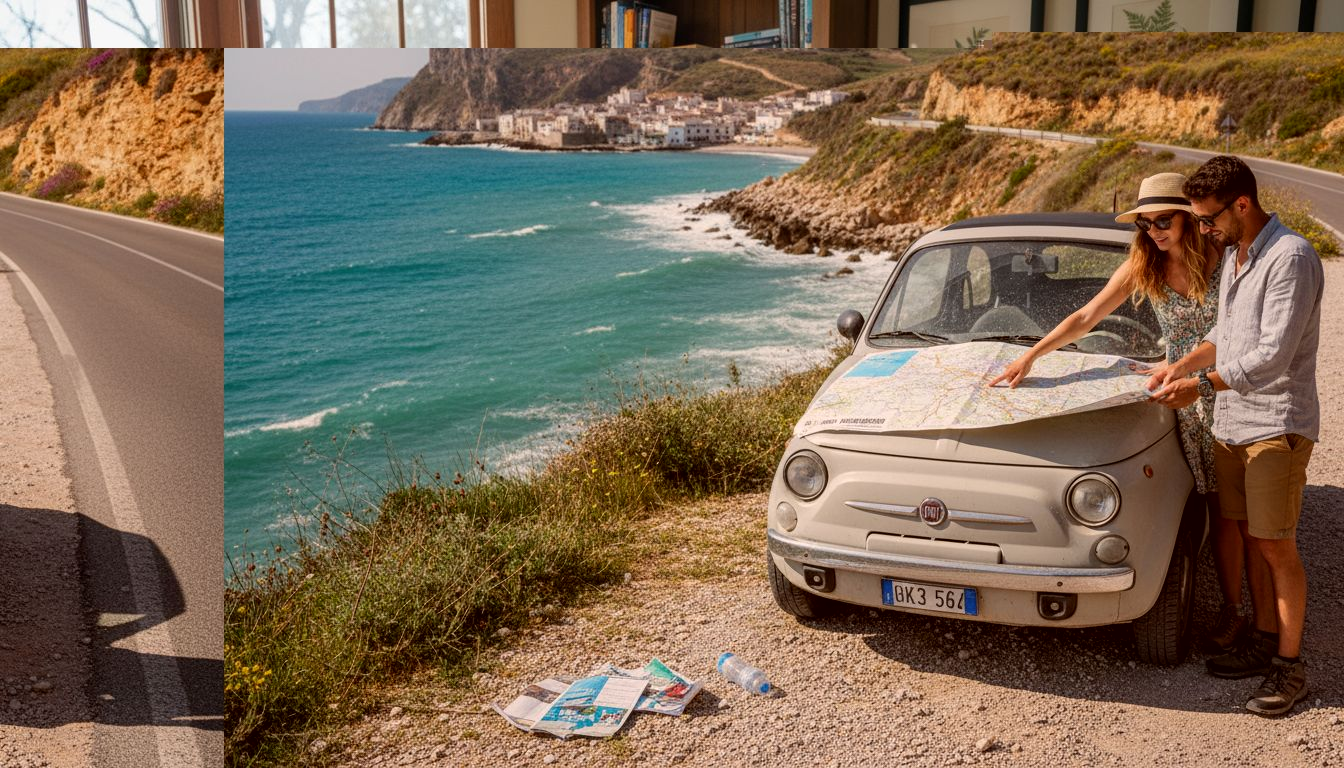

Planning a road trip across Sicily sounds exciting until you face the reality: how do you fit ancient Greek temples, active volcanoes, baroque cities, and world class seafood into one journey without exhausting yourself? Sicily spans over 25,000 square kilometers with attractions scattered across dramatically different regions. A well structured itinerary transforms this challenge into an enriching adventure, letting you drive through history, savor authentic cuisine, and explore hidden corners at a comfortable pace.
Table of Contents
- Prerequisites And What You Need Before Starting
- Step By Step Itinerary Planning For Your Sicily Road Trip
- Cultural And Culinary Highlights To Enrich Your Journey
- Driving And Safety Tips For Navigating Sicily’s Roads
- Common Mistakes To Avoid For A Smooth Sicily Road Trip
- Expected Outcomes Of A Well Planned Sicily Road Trip
- Plan Your Sicily Adventure With Expert Tips And Tours
- Frequently Asked Questions
Key Takeaways
| Point | Details |
|---|---|
| Balance driving and sightseeing | Limit daily drives to under 3 hours to prevent fatigue and preserve energy for exploration. |
| Include cultural and culinary diversity | Experience multiple regions to taste varied dishes and visit key historical sites. |
| Secure car rental early | Book at Palermo or Catania airports for better rates and vehicle selection. |
| Choose optimal travel seasons | Spring and autumn offer ideal weather and fewer crowds than summer. |
| Allow itinerary flexibility | Build in rest time and space for spontaneous discoveries along your route. |
Prerequisites and What You Need Before Starting
Before mapping your route, handle essential logistics that determine your trip’s success. Start by securing a rental car in advance at Palermo or Catania airports for best rates and availability, especially during peak season when vehicles book out quickly. These airports serve as ideal starting points for eastern or western Sicily loops.
Timing matters significantly for comfort and experience. Spring (April to June) and autumn (September to October) deliver pleasant temperatures, blooming landscapes, and thinner tourist crowds compared to scorching July and August. You’ll find accommodations more affordable and attractions less congested.
Technology serves as your copilot on Sicilian roads. GPS navigation combined with offline maps protects you when cell signals weaken in mountainous or rural areas. Download map data for the entire island before departure.
Legal requirements vary by nationality. Many travelers need an International Driving Permit alongside their home license. Research Sicily’s specific driving laws, including speed limits, ZTL (limited traffic zones) in historic centers, and parking regulations to avoid fines.
Familiarize yourself with road conditions before you go. Sicily features narrow mountain passes, coastal highways, and urban streets that differ vastly from mainland European roads. Check our essential Sicily travel tips for comprehensive preparation guidance.
- Book rental cars at least 2 months ahead for summer travel
- Verify your insurance covers Sicily’s roads and potential damage
- Pack a physical road atlas as backup navigation
- Learn basic Italian phrases for asking directions
- Confirm your phone plan includes adequate international data
Step by Step Itinerary Planning for Your Sicily Road Trip
Constructing your itinerary requires balancing ambition with reality. A typical Sicily road trip route covers approximately 1158 km with about 18.5 hours driving time over two weeks, but raw distance tells only part of the story. Winding coastal roads and mountain passes mean actual travel takes longer than GPS estimates.
Choose your trip duration based on available time and interests. Seven days suits travelers focusing on eastern Sicily (Taormina, Syracuse, Mount Etna) or western highlights (Palermo, Trapani, Agrigento). Ten days allows a partial loop connecting both coasts. Fourteen days enables a complete circuit with deeper regional exploration and rest time.
Design your route to minimize backtracking and daily driving stress. Eastern loops typically start in Catania, covering the Ionian coast and inland baroque towns. Western routes begin in Palermo, exploring the Tyrrhenian coast and ancient sites. Full island itineraries follow a clockwise or counterclockwise circuit, stopping at strategic base locations.
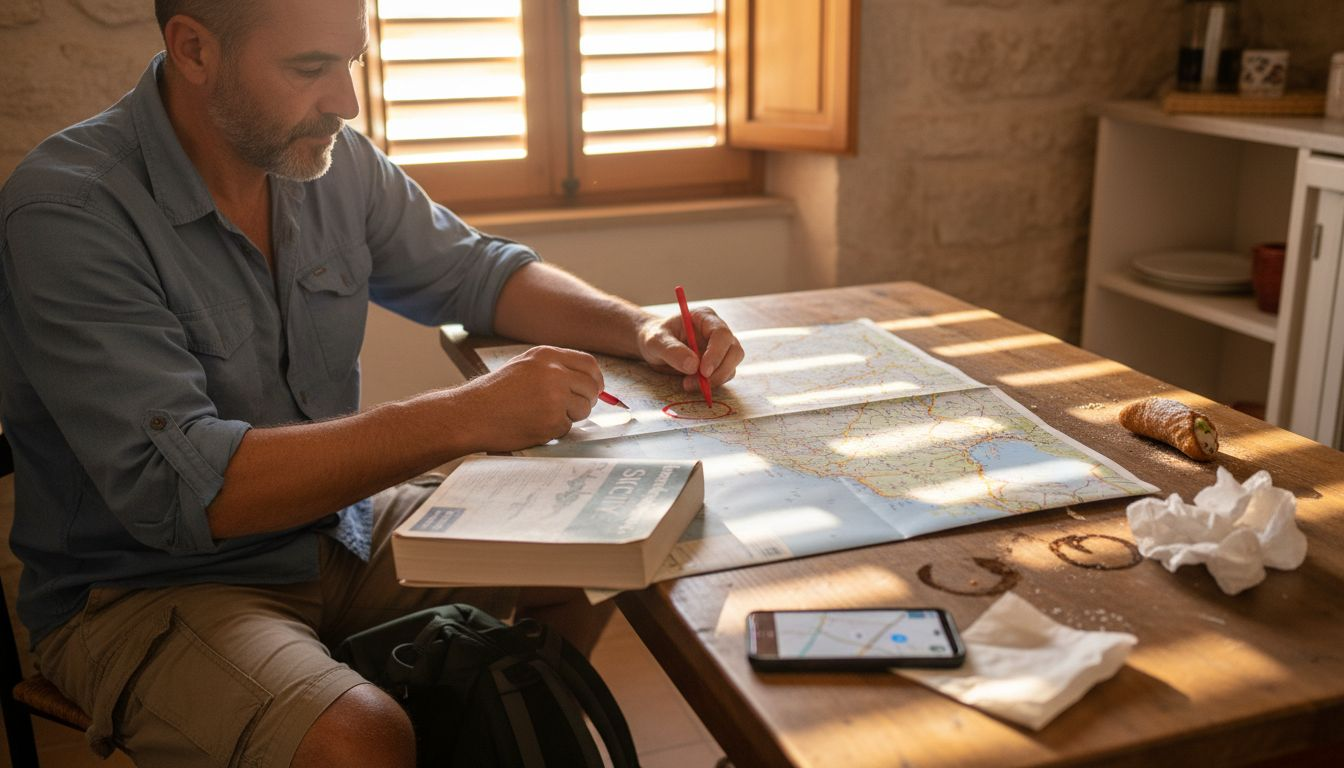
Pro Tip: Establish 2 to 3 base locations for multiple night stays rather than changing hotels daily. This approach reduces packing stress and lets you explore surrounding areas through day trips.
Daily driving should never exceed 3 hours to preserve energy for walking tours, museum visits, and meals. Sicily’s attractions demand time and attention; rushing between destinations defeats the purpose. Check our Sicily itinerary checklist for detailed planning frameworks.
- Select your entry and exit airports (same or different)
- Identify must see destinations based on personal interests
- Map the logical connection sequence between locations
- Calculate realistic driving times using terrain adjusted estimates
- Assign 1 to 3 nights per base depending on nearby attractions
- Build rest days for laundry, spontaneous exploration, or beach time
- Review the complete itinerary for pacing and adjust as needed
| Trip Length | Recommended Regions | Daily Drive Average | Base Locations |
|---|---|---|---|
| 7 Days | Eastern Sicily only | 1.5 to 2 hours | 2 bases |
| 10 Days | East + South Sicily | 2 to 2.5 hours | 3 bases |
| 14 Days | Complete island loop | 2 to 3 hours | 3 to 4 bases |
Understand that flexibility matters more than rigid schedules. Weather, local festivals, or unexpected discoveries should influence your daily plans. For transportation options and alternatives, explore how to get around Sicily for comprehensive guidance.
Cultural and Culinary Highlights to Enrich Your Journey
Your route determines which experiences become possible, so integrate cultural and culinary priorities during the planning phase. Sicily’s Greek, Roman, Arab, and Norman heritage created archaeological treasures scattered across the island. The Valley of the Temples near Agrigento preserves some of the Mediterranean’s finest Greek architecture. Mount Etna offers volcano hikes and wine tasting on Europe’s most active volcano. Palermo’s street markets showcase centuries of cultural fusion through food and atmosphere.
Architectural enthusiasts should prioritize baroque towns like Noto, Ragusa, and Modica in the southeast. These UNESCO sites feature ornate churches and palaces rebuilt after a devastating 1693 earthquake. Ancient theaters in Syracuse and Taormina still host performances against Mediterranean backdrops.
Culinary exploration forms an essential part of any Sicily road trip. Regional specialties vary dramatically across the island. Arancini (stuffed rice balls) take different shapes and fillings depending on location. Palermo excels in street food like panelle (chickpea fritters) and sfincione (Sicilian pizza). Coastal towns serve incredibly fresh seafood, from grilled swordfish to pasta with sea urchin.
Pro Tip: Schedule meals at local trattorias rather than tourist zone restaurants. Ask locals for recommendations or follow where you see Italian families dining.
Desserts deserve dedicated attention. Granita with brioche forms a traditional Sicilian breakfast, particularly in Catania and eastern towns. Cannoli vary by region, with Piana degli Albanesi near Palermo claiming the finest versions. Modica produces unique chocolate using ancient Aztec methods introduced during Spanish rule.
Wine enthusiasts should explore Mount Etna’s volcanic slopes, where Nerello grapes produce distinctive reds. The western Marsala region produces its famous fortified wine. Many wineries welcome visitors for tastings and tours. Discover more about these flavors through our guide on why Sicilian cuisine is unique.
- Arancini in Palermo and Catania (different styles)
- Fresh seafood in fishing villages like Marzamemi
- Granita and brioche for breakfast in Catania
- Nero d’Avola and Etna Rosso wines at local vineyards
- Pistachios from Bronte used in countless dishes
- Traditional sweets from historic pasticcerie
Timing your visit during local festivals adds cultural depth. Each town celebrates patron saints with processions, music, and special foods. Research festival dates when planning your itinerary. For guided experiences that reveal hidden cultural gems, review options for booking authentic Sicily tours.
Driving and Safety Tips for Navigating Sicily’s Roads
Sicilian roads demand different skills than driving in Northern Europe or North America. Narrow streets in historic centers barely accommodate modern cars. Mountain roads wind through hairpin turns with dramatic elevation changes. Local driving culture tends toward assertive maneuvering that surprises cautious visitors.
Avoid nighttime driving outside major cities whenever possible. Rural roads lack adequate lighting, and mountain routes become hazardous in darkness. Wildlife crosses roads unpredictably, and some areas have minimal shoulders or barriers. Plan your daily schedule to arrive at destinations before sunset.
Parking requires careful attention to signage and local rules. ZTL zones in historic centers restrict vehicle access to residents and permit holders. Cameras automatically fine violators, with tickets arriving weeks or months later. Blue lined spaces require payment, white lines indicate free parking, and yellow lines are reserved. Always use official parking areas rather than improvising.
Fuel availability varies by region. Coastal highways offer frequent service stations, but inland routes may have long gaps between options. Fill your tank when passing through larger towns rather than waiting until you’re running low. Many stations close on Sundays and during afternoon siesta hours.
“Sicily’s roads tell stories through their curves and climbs, but respecting local driving customs and conditions keeps those stories from becoming cautionary tales.” Local Driving Instructor, Palermo
- Keep emergency numbers saved: 112 for general emergencies, 113 for police
- Expect roundabouts to operate with fluid rules; yield but be assertive
- Watch for scooters and motorcycles passing on either side in traffic
- Carry physical copies of rental documents, insurance, and licenses
- Learn key Italian road signs before your trip
- Use hazard lights when stopping briefly on narrow roads
- Give wide berth to buses on mountain roads
Insurance deserves careful consideration. Standard rental coverage may exclude certain damage types common on Sicilian roads. Review your credit card benefits and consider supplemental coverage for peace of mind. Our comprehensive guide on driving tips in Sicily provides additional safety strategies.
Common Mistakes to Avoid for a Smooth Sicily Road Trip
First time Sicily road trippers frequently underestimate local conditions and overestimate daily capacity. Overambitious daily driving and sightseeing leads to fatigue, transforming a dream vacation into an exhausting obligation. Packing too many destinations into each day leaves no room for the spontaneous discoveries that make Sicily magical.
Accommodation booking timing matters more than many realize. Summer months (July and August) see Sicily flooded with Italian and European tourists. Hotels in prime locations fill months in advance, forcing late bookers into suboptimal areas or inflated prices. Book at least three months ahead for summer travel, six months for popular towns like Taormina.
Underestimating driving time creates cascading schedule problems. GPS calculates distance but ignores Sicily’s reality: slow moving trucks on mountain roads, congested town centers, and scenic routes that demand stops for photos. Add 30% to GPS estimates for realistic arrival times.
Ignoring local regulations leads to expensive fines. Speed cameras operate extensively on highways and in towns. ZTL violations can generate multiple tickets for a single day if you drive through restricted zones repeatedly. Traffic police actively enforce parking rules in tourist areas.
Budget management fails when travelers don’t account for Sicily’s cash preference. Many family restaurants, small shops, and parking meters accept only cash. ATMs exist throughout Sicily, but relying solely on cards creates unnecessary stress. Carry reasonable cash amounts and plan ATM stops.
- Trying to see the entire island in one week creates rushed, unsatisfying experiences
- Skipping travel insurance that covers driving and health emergencies
- Failing to research town specific parking rules before entering historic centers
- Neglecting to check restaurant and attraction hours, especially on Sundays
- Assuming highway speeds apply on all roads marked as main routes
- Overlooking afternoon closure times at shops and some restaurants
- Relying entirely on GPS without backup navigation methods
Food mistakes diminish Sicily’s greatest pleasure. Tourist trap restaurants near major attractions serve mediocre food at inflated prices. Walk a few blocks away from landmarks to find where locals eat. Don’t skip street food, which often surpasses formal restaurant meals in authenticity and flavor.
Expected Outcomes of a Well Planned Sicily Road Trip
Thorough preparation transforms your Sicily road trip into a rewarding journey that balances structure and spontaneity. You’ll visit UNESCO World Heritage sites like the Valley of the Temples and baroque towns without feeling rushed or stressed. Adequate time at each location lets you absorb history, take meaningful photos, and engage with local culture rather than checking boxes.
Culinary exploration reaches beyond tourist menus when you build dining into your itinerary. You’ll taste regional specialties in their places of origin: arancini in Palermo, cannoli in Piana degli Albanesi, seafood in fishing villages along the coast. Understanding meal timing and local preferences helps you eat when and where Sicilians do, accessing authentic flavors.
Driving becomes manageable rather than stressful with proper preparation. Knowing traffic rules, parking systems, and road conditions prevents fines and frustration. Legal compliance with documentation and permits protects you from complications. Comfortable daily driving distances mean you arrive at destinations relaxed and ready to explore.
Flexibility remains possible within your structured plan. Buffer time between activities accommodates unexpected discoveries: a ceramics workshop in Caltagirone, a beach stop along the southern coast, or an extra hour at a vineyard. Well planned itineraries include enough slack to embrace these moments without derailing your overall schedule.
Cultural connections deepen through intentional scheduling. Visiting during local festivals, timing market visits for morning freshness, and allocating adequate time at archaeological sites creates meaningful experiences rather than superficial tourism. You’ll return home with stories beyond standard tourist photos.
Budget control improves with advance planning. Early bookings secure better accommodation rates. Understanding when to use cash versus cards prevents ATM desperation. Knowing authentic restaurant locations saves money while improving food quality. Proper insurance and legal compliance avoid expensive fines.
Plan Your Sicily Adventure with Expert Tips and Tours
You’ve absorbed the framework for planning an exceptional Sicily road trip, but sometimes expert guidance accelerates your preparation and enhances on site experiences. Our essential Sicily travel tips dive deeper into practical strategies that smooth your journey from arrival to departure.
Authentic cultural experiences often hide from independent travelers. Professional guides reveal hidden neighborhoods, introduce you to artisan workshops, and share historical context that transforms ancient stones into vivid stories. Explore options for booking authentic Sicily tours that complement your self drive itinerary with expert led experiences.
Food tours and cooking classes unlock unique Sicilian cuisine through hands on learning and insider access. You’ll understand why ingredients taste different here, learn preparation techniques passed through generations, and gain appreciation for regional variations that reflect Sicily’s complex history.
Frequently Asked Questions
How long should a Sicily road trip be to see the main sites?
Ten to fourteen days provides ideal time to experience eastern, western, and southern Sicily without excessive rushing. This duration allows visits to major archaeological sites, baroque towns, coastal areas, and Mount Etna while maintaining comfortable driving days. Shorter seven day trips work well if you focus on either the eastern or western half of the island.
Is renting a car necessary in Sicily, or can I rely on public transport?
Public transportation in Sicily operates irregularly with limited routes that miss many key destinations and scenic areas. Car rental offers essential flexibility to explore hilltop towns, coastal drives, and archaeological sites on your own schedule. Driving lets you stop at viewpoints, adjust timing based on weather, and discover places inaccessible by bus or train.
What are some safety tips for driving in Sicily?
Avoid driving at night in mountainous or rural areas where visibility drops and road conditions become hazardous. Watch for narrow winding roads, aggressive local driving habits, and scooters passing unexpectedly in traffic. Always park in designated areas with proper payment to avoid substantial fines from automated enforcement systems. Carry emergency contact numbers and keep insurance documents accessible.
When is the best time of year for a Sicily road trip?
Spring (April through June) and autumn (September and October) offer optimal conditions with pleasant temperatures, less crowded attractions, and lower accommodation prices. Summer brings intense heat, packed tourist sites, and higher costs but provides reliable beach weather. Winter works for budget travelers and culture focused trips but limits some mountain access and reduces daylight hours for driving.
What should I budget per day for a Sicily road trip?
Budget €100 to €150 per person daily for mid range experiences including accommodation, meals, fuel, parking, and attraction fees. This assumes shared rental car costs and staying in three star hotels or agriturismos. Luxury travelers should budget €200+ per person, while budget conscious visitors can manage on €60 to €80 by choosing hostels, cooking some meals, and limiting paid attractions.